
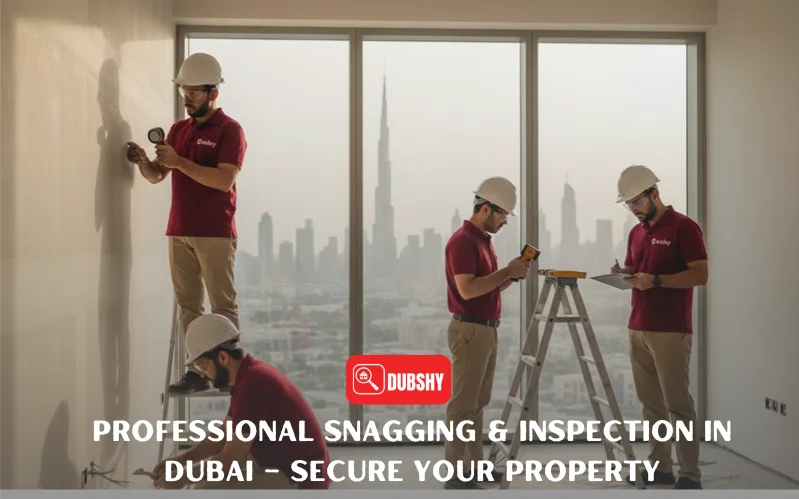
Purchasing real estate in Dubai is not merely a life choice, it is often a multi-million dirham one. You are an off-plan customer waiting to receive handover, you are a villa owner taking possession, and you are an investor in real estate expanding your portfolio. The only golden rule is to never take a property without a professional snagging inspection in the UAE real estate market.
The architecture of Dubai can represent a sign of excellence, yet even high-quality projects may conceal some flaws under the shiny surfaces. Hasty construction schedules, anomalies of the subcontractors, and intricate MEP systems commonly lead to snags that cannot be easily detected by the untrained human eye.
That is where professional snagging checks in Dubai are significant, not as a ritual, but as a risk management tool that ensures your investment, as well as your safety and your future property value.
What Is Property Snagging?
Property snagging is a planned, technical survey that is undertaken before handover (or resale) with the objective of determining defects, non-conformance, and workmanship problems in a property.
In Dubai, a snagging check is undertaken by a certified home inspection specialist and not a casual walkthrough. It employs professional equipment such as checklists, measuring instruments, moisture meters, thermal cameras, and standards of compliance to reveal concealed defects.
In Professional terms, Snagging Covers:
- Structural integrity
- Architectural finishes
- Electrical Systems—Mechanical, Electrical, and Plumbing (MEP) System.
- Stability and compliance with the UAE standards
- Test of the installed components
A professional snagging services provider in Dubai provides a detailed defect report; this legally enables the buyer to demand correction before final handover when the developer is liable.
Why You Need a Professional Snagging Company in Dubai
The Risk Shifts to You After Handover
The Dubai real estate market is developed by the building industries and marked by high-paced development. The time you sign the handover papers, the legal and financial burden of the property is passed to you fully. The defects that are found later on, regardless of the severity, are generally fixed at your cost. An expert snagging check is taken to make sure that all problems are detected when the developer remains responsible.
Key Risks of Skipping Snagging
In Dubai, the failure to carry out a professional snagging inspection may result in:
- Undetectable construction defects are becoming costly in thousands of repairs.
- Substandard insulation is raising the electricity bills of DEWA.
- Structural and mold damage are happening because of plumbing leaks.
- Electrical defects are hazardous.
- Less resale value and rental value
Such problems are usually covered with finishes and cannot be seen by untrained buyers.
Why DIY Inspections Fail
A large population of buyers does not possess technical knowledge of construction, professional diagnosis equipment, familiarity with Dubai building codes, and familiarity with area defects. A snagging company in Dubai is a professional firm that has your best interest represented technically, without the interest of the developer.
This is the reason why hiring highly qualified snagging specialists in Dubai is not a choice but a necessity in ensuring that your money is safe.
The RERA Factor: Why Certification Matters
The Real Estate Regulatory Agency (RERA) in Dubai establishes norms of transparency and professionalism and adherence to standards in the property industry.
By selecting a property inspection company that is approved by RERA, you are guaranteed of:
- There are regulated procedures that are followed by the inspectors
- Reports are of a legal and technical quality
- Findings are not ignored by developers
- You have credibility in conflict resolution
Why Developers Respect RERA-Approved Reports
A professionally issued snagging report:
- Utilizes business-acceptable vocabulary.
- Cites the UAE construction standards.
- Paperwork malfunctions with photo evidence.
- Very clear in assigning responsibility
This goes a long way in ensuring that you are fully rectified before your handover.
Common Snags in Dubai Properties
Defects are prevalent even in the case of luxury developments. According to actual inspection information from snagging experts in Dubai, the common problems are
- Finishing and architectural defects
- Plumbing Issues
- Electrical Problems
- HVAC & Insulation
- Safety & Compliance Failures
Early detection of such issues in the UAE occurs at a pre-handover inspection stage, when the cost involved does not add up to a significant expense.
The Inspection Process: What Happens During a Technical Audit?
Professional snagging is a structured and methodical practice in Dubai.
Step 1: Pre-Inspection Planning
- Review of floor plans
- Interpretation of developer specifications
- Formulation of compliance checklists
Step 2: Physical Inspection of Site
- Room-by-room inspection
- Systems functional testing
- Finishes and alignments measurement
- Moisture and thermal checks
Step 3: Technical Documentation
- High-resolution photographs
- Defect categorization
- Priority severity tagging
Step 4: Step-by-Step Snagging Report
- Clear defect descriptions
- Location-based references
- Rectification recommendations
This report is now a formal tool of negotiation with the developer.
Snagging in the Secondary Market vs. New Builds
New Builds (Pre-Handover)
In the case of off-plan or recently finished properties, developers have the legal responsibility for any defects. A professional snagging inspection prior to the handover of the property makes sure that any problem noted is rectified at no cost to the buyer. The rectification is normally compulsory, and this will enable the buyers to have a clear mind that the property is of quality before taking possession.
Secondary (Resale) Market
The snagging is also needed in the secondary market, where the property has been used. Proper inspection aids in the determination of the concealed wear and tear, averting overpayments, and enabling price renegotiation on the basis of recorded defects.
In either of the situations, a home inspection professional in Dubai will help in making informed decisions.
Snagging in Abu Dhabi: Regional Considerations
Local Building Standards & Regulations
Snagging of property in Abu Dhabi is regulated following slightly different rules in comparison to Dubai, as it is determined by the regulations of the municipality. The inspections would have to follow the Abu Dhabi Quality and Conformity Council (QCC) regulations, particularly safety, fire compliance, and structural integrity. These local standards are to be satisfied by professional inspection of the property before handover or purchasing.
Construction Materials & Design Differences
Most projects in Abu Dhabi rely on various building materials and exterior systems, especially when it comes to villas and government projects. The snagging specialists tend to pay attention to the thermal performance, the quality of insulation, and the exterior finishes, which react differently to the climatic conditions in the regions.
Climate & Environmental Situation
The elevated humidity and exposure to the coastline contribute to higher rates of waterproofing, corrosion, and inefficiency of the HVAC. The snagging check performed in Abu Dhabi is particularly sensitive to moisture intrusion, roof covering, and air-conditioning efficiency.
Why Local Expertise Matters
The involvement of experienced inspectors in the audit of property in Abu Dhabi. They guarantee the proper identification of defects and an easier passage through the local government.
Post-Inspection: How to Deal with Developers
The snagging report would only be useful when properly handled. Follow-up is necessary to ensure every defect is resolved before the handover and to safeguard your investment.
-
Submit the Report Formally
Present a documented snagging report to the developer. It must be concise and professional and have photographs, defect descriptions, and suggestions for fixes.
-
Ask to Get a Timeline of Rectification
Request the developer to provide a timeline according to which every defect should be resolved. This avoids wastage of time and creates the responsibility for any repair.
-
Re-Inspect After Fixes
After making the repairs, reinspect to ensure that every problem has been solved. This is a service that professional snagging firms in Dubai normally offer.
-
Do Not Sign Handover Not Resolved
The handover should not be finalized before all major snags have been corrected. Early signing may make you liable for defects, which the developer should have corrected.
These measures will make your property snagging check in Dubai as safe and peaceful as possible.
FAQs
Why is a professional snagging inspection important?
A certified inspection protects your investment, identifies hidden defects, and ensures developers fix issues before handover. It prevents costly repairs later.
When should I schedule a snagging inspection?
Schedule it before signing the handover documents for new builds or before purchase for resale properties. Early inspection maximizes developer accountability.
How much does a snagging inspection cost in Dubai?
Costs vary by property size, type, and complexity, but professional inspections are a small investment compared to potential repair costs and property devaluation.
Is snagging only for new properties?
No, snagging is equally critical for resale properties. It helps detect wear and tear, supports price negotiation, and ensures long-term property safety.
What should I do after receiving the snagging report?
Submit the report to the developer, request a rectification timeline, and reinspect after repairs. Never sign the handover until major defects are resolved.
Conclusion
In Dubai’s competitive real estate market, a property snagging inspection is not a luxury—it is an essential step for every buyer. A professional inspection safeguards your financial investment, ensures safety and compliance, and strengthens your negotiating position with developers. It also helps preserve the long-term value of your property by identifying and rectifying issues early.