
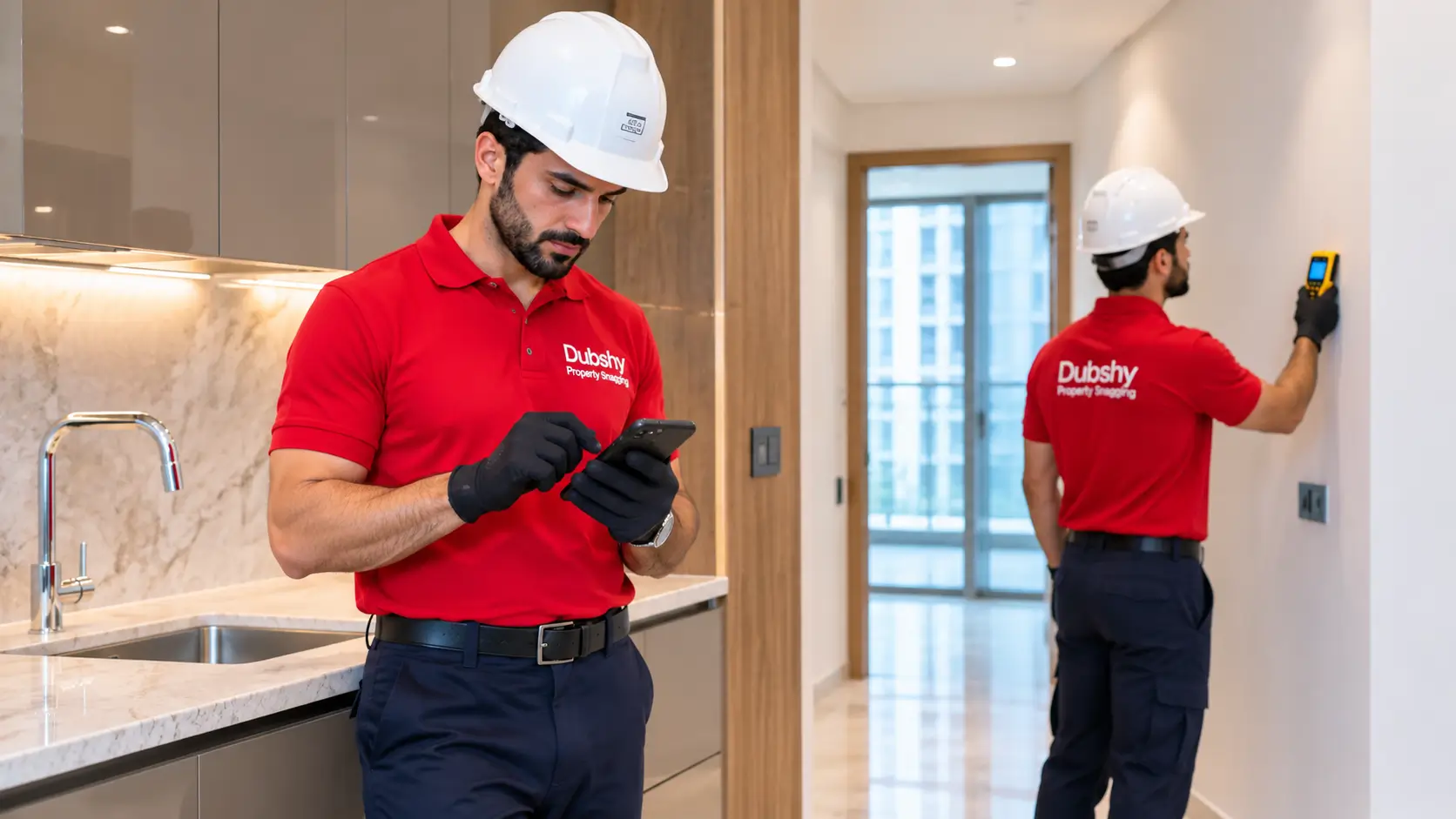
Can I Do Snagging Myself in Dubai? DIY vs Professional
Yes, you can do snagging yourself in Dubai, and a careful buyer will catch many visible defects such as damaged finishes, sticking doors and dripping taps. What DIY usually misses are the problems you need tools and training to find: hidden moisture, electrical faults, uneven floors and AC performance. Many buyers do both.
- You can check
- Finishes, doors, windows, taps, switches
- Needs tools
- Moisture, electrics, levels, AC output
- Best for DIY
- A first walk-through with your own list
- Best for a pro
- Hidden defects and a written report
This comparison from Dubshy's site engineers shows where your own checks work well and where they stop.
Can I Do Snagging Myself? What You Can Check
Anything you can see, touch or operate without special equipment. Work room by room with a list, using a snag list template you can use so nothing is skipped.
- Walls, ceilings and floors. Scratches, chips, stains, uneven paint, cracked or loose tiles.
- Doors and windows. Open and close each one; check locks, handles, hinges and seals.
- Kitchen and wardrobes. Doors aligned, drawers running smoothly, worktops undamaged.
- Taps, showers and drains. Run each one and watch for leaks, weak flow or slow draining.
- Switches and lights. Every switch works and every light comes on.
Take a photo of each issue and note the room, so your list is clear when you send it.
What Does DIY Snagging Usually Miss?
Defects that are invisible to the eye or need measuring. These are often the ones that cost most if they show up later.
| What gets missed | Why it's missed | What finds it |
|---|---|---|
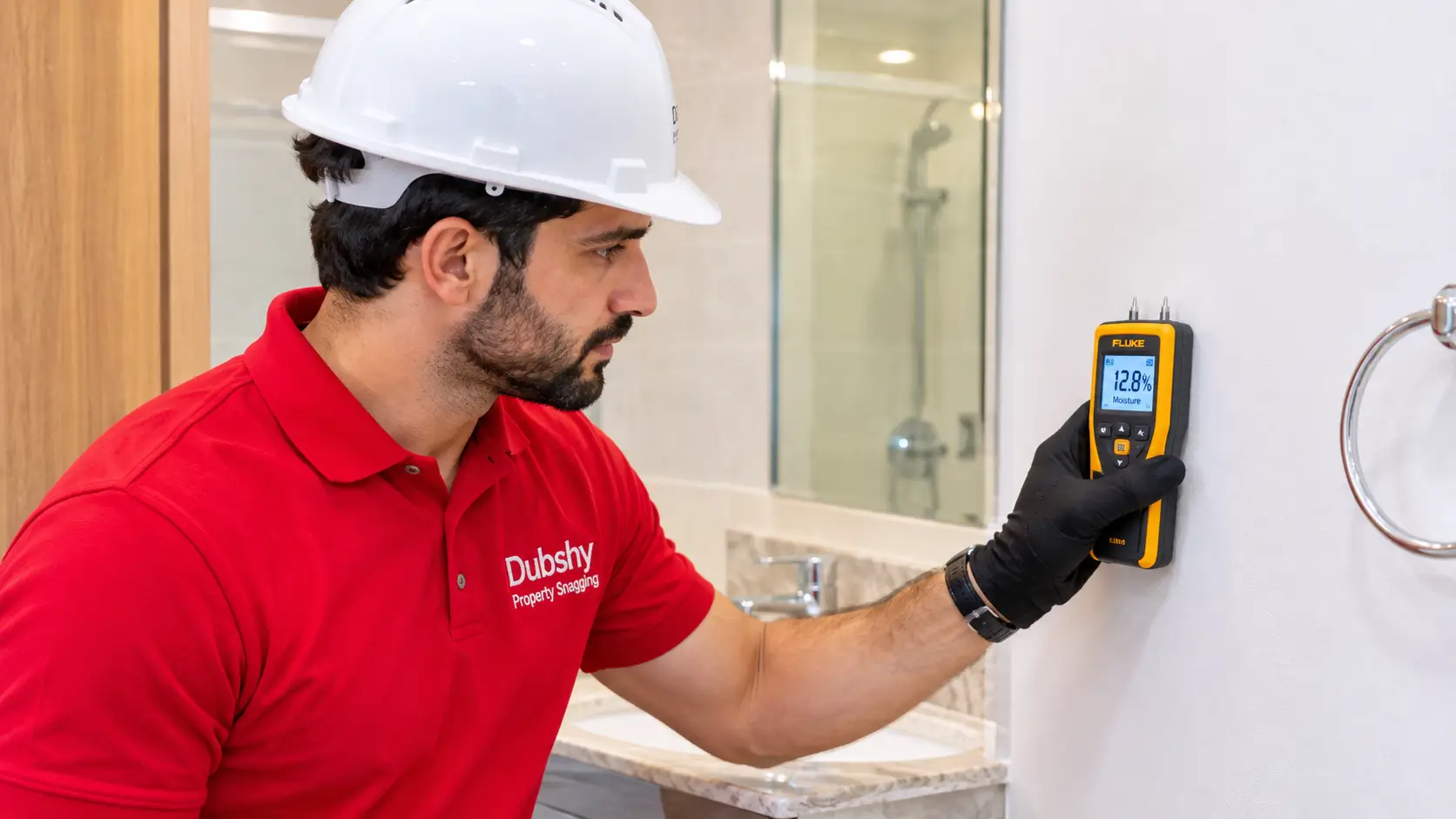
| Hidden moisture | Walls can look dry while damp sits behind the paint | Moisture meter, thermal camera |
| Electrical faults | A socket can work but be wired incorrectly | Socket and circuit testing |
| Uneven floors and walls | Small slopes are hard to see by eye | Laser level |
| AC performance | Air feels cool even when output is weak | Temperature readings at each outlet |
| Waterproofing in wet areas | Failures show only after water has run for a while | Controlled water tests and moisture checks |
DIY vs Professional Snagging at a Glance
The biggest differences are the tools used and the report the developer receives.
| Point | DIY | Professional |
|---|---|---|
| Tools | Eyes, phone, a basic list | Moisture meter, thermal camera, laser level, test equipment |
| Time on site | As long as you can spare | A planned visit by an engineer |
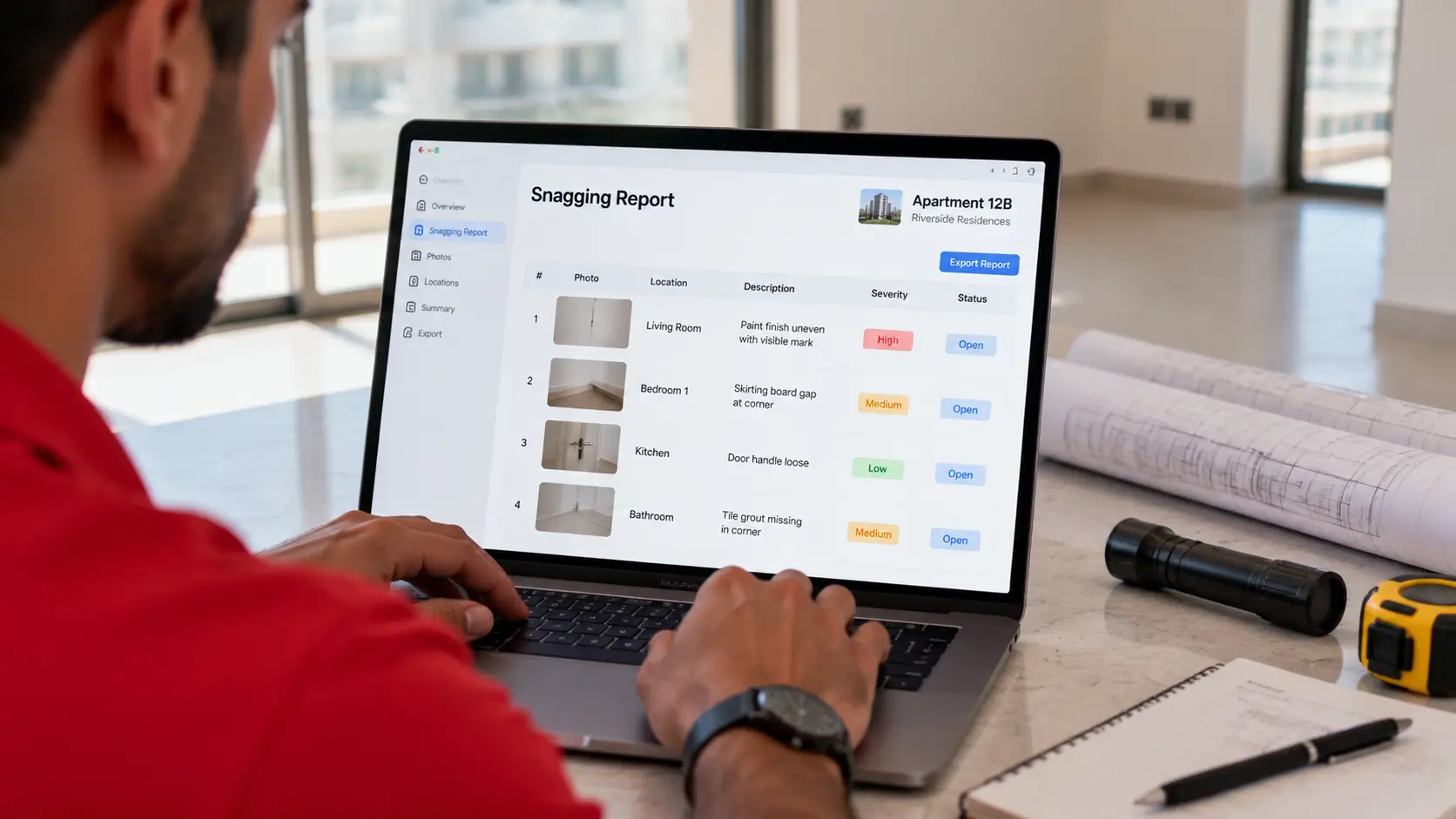
| What you send the developer | Your own list and photos | A written report with photos, locations and severity |
| Re-check after repairs | You check again yourself | A re-inspection against the original report |
Our professional snagging reports follow the right-hand column. If you are unsure how a list differs from a report, read the difference between a snag list and a report.
Can You Combine DIY and a Professional Check?
Yes, and it is often the most practical route. Do your own walk-through first and note what you see. Then book a professional inspection for the parts you cannot test, such as moisture, electrics, levels and AC. Share your list with the engineer so nothing you spotted is lost.
Done your own walk-through?
book the tool checksShould You Do It Yourself? A Quick Checklist
DIY alone may be enough if all of these are true. If any are not, add a professional check.
- The unit is a small apartment, not a villa or townhouse.
- You can attend in person and spend several hours on site.
- You are comfortable testing every tap, drain, switch and door yourself.
- You do not need a formal report to send to the developer.
What any inspection can't do
Whether you snag yourself or hire someone, the check is visual and non-destructive, so it cannot see inside walls beyond what tools show. It also cannot force the developer to carry out repairs.
FAQs
Can I do snagging myself?
Yes. You can walk the unit, test what you can operate and send the developer a list with photos. What you will likely miss are hidden defects such as damp behind paint, wiring faults and uneven floors, which need tools to find. Many buyers do their own check first and then book a professional for those.
How long does snagging take?
It depends on the size of the property and how thorough you are. A DIY walk-through of a small apartment can take a few hours if you test every outlet and fitting. Allow more time for villas and townhouses, and plan a second visit to check that repairs have been completed.
What does snagging mean in real estate?
Snagging means checking a new property for defects before or soon after handover and recording them for the developer to fix. A snag can be cosmetic, like a scratched door, or functional, like a leaking pipe. The result is a snag list or report that you send to the developer in writing.
How much does snagging cost in Dubai?
A DIY check costs only your time. A professional inspection is priced on the property type, its size and the tests included, so ask for a written quote that lists everything covered. You can read more about what professional snagging costs before you compare quotes.
Want the Hidden Defects Checked Too?
Send us your handover date and property type, and we will plan an inspection for the tests you can't do yourself. Fees are quoted after a short scope call, with all costs listed upfront.