
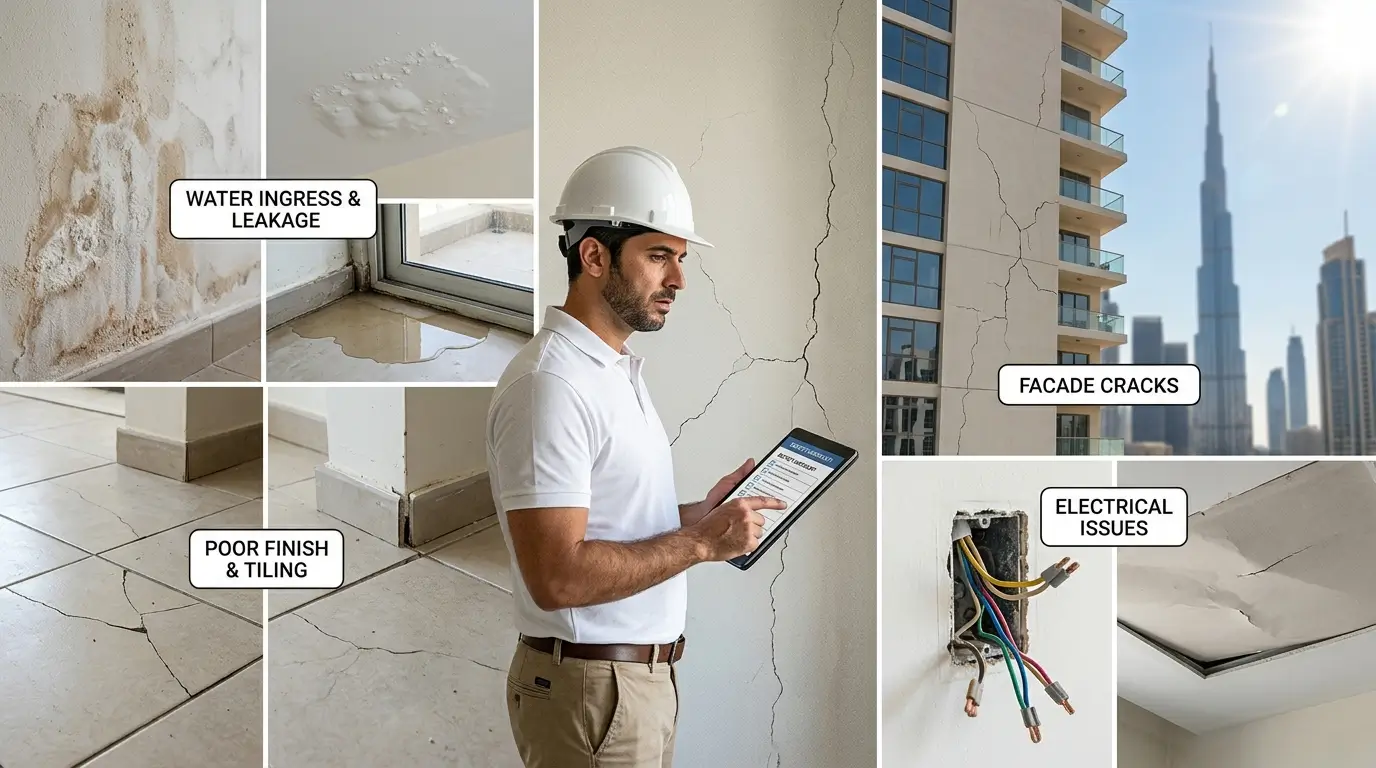
Common Defects in Dubai New Build Homes: Don't Miss These
Getting the keys to a brand-new Dubai apartment is thrilling, but most buyers miss dozens of hidden defects, even at handover, in developments across Downtown Dubai, Dubai Marina and Business Bay. 2026 inspection data shows a one-bedroom apartment averages 45 to 75 defects, and a two-bedroom can have up to 90. Anything missed before you move in becomes yours to fix.
- One-bedroom apartment
- 45 to 75 defects on average
- Two-bedroom apartment
- Up to 90 defects
- Non-structural cover
- 1-year Defect Liability Period
- Structural cover
- 10 years (decennial liability)
That is exactly why snagging inspections exist. This guide covers the 10 defects most often found in Dubai's new build apartments, what causes them, why they matter, and how to make sure they are corrected before you sign for handover.
What Is a Snagging Inspection, and Why Does It Matter in Dubai?
A snagging inspection is a professional, room-by-room check of your new home before or at handover. A certified inspector examines every surface, system and fitting, and records anything that falls short of Dubai's construction quality standards.
Under UAE law, defects reported during the one-year Defect Liability Period (DLP) after handover must be resolved, and the UAE Decennial Liability Law extends developer liability for structural defects to 10 years. Miss these windows and you lose your legal right to free rectification.
This is not just about looks. Snagging issues affect your safety, comfort, energy bills and long-term property value.
The 10 Most Common Defects in Dubai New Build Apartments
1. Paint defects and poor wall finishing
This is the most reported defect in Dubai's new-build market and shows up in virtually every inspection. Buyers often accept poor paint as "minor", but it is a strong sign of overall workmanship.
- Uneven coverage, with patchy or streaky sections.
- Paint drips, roller marks and overspray on ceilings.
- Cracked or hollow plaster beneath the paint.
- Wrong paint colour or finish in certain rooms.
- Flaking paint near windows and bathroom edges from poor preparation.
These are quick to fix when reported during the DLP. If you move in without flagging them, they become your expense.
2. Tile lippage, hollow tiles and cracked flooring
Tiling is one of the more skilled finishing jobs, and Dubai inspections often find significant problems. Lippage is when one tile edge sits higher than its neighbour, which is a tripping hazard as well as a messy finish.
Hollow tiles have air pockets underneath from poor bonding. They crack under foot traffic, absorb water and can eventually pop up, damaging surrounding tiles. Watch for:
- A hollow sound when tiles are tapped.
- Visible height differences between tiles.
- Cracks at grout lines or tile edges.
- Loose tiles in wet rooms such as bathrooms and kitchens.
3. Plumbing leaks and water pressure problems
Plumbing faults are among the costliest problems in new construction. A drip under a sink or a leaking pipe joint can cause serious water damage, mould and structural harm within months. Low water pressure is also a common complaint, often caused by undersized pipes, poorly set fixtures or a failed pressure regulator.
- Leaks under kitchen and bathroom sinks.
- Sanitary fittings that are not tightly fitted or sealed.
- Blocked drains and slow-running fixtures.
- Faulty toilet flushing systems.
- Missing or poor waterproofing in wet areas.
4. HVAC and air conditioning faults
In Dubai, air conditioning is a necessity for roughly nine months of the year, yet HVAC defects are among the most reported and most expensive to fix after handover. One documented case in Dubai Marina involved a faulty AC drainage system that caused AED 12,000 of internal masonry damage before anyone noticed.
- AC units sized incorrectly for the room.
- Blocked or poorly installed condensate drainage lines.
- Poor ductwork insulation, causing energy loss.
- Units that fail to reach the set temperature.
- Noise, vibration or uneven airflow from indoor units.
A certified AC inspection, like the one Dubshy provides, tests every unit under load to catch these issues before handover.
Want an engineer to check all 10 areas for you?
book a snagging inspection5. Electrical faults and non-compliant wiring
Electrical defects are more common than buyers expect, and some carry real safety risks. Non-working sockets, wrongly labelled breakers, loose switches and faulty light fixtures turn up regularly. More serious issues include:
- Exposed or incorrectly terminated wiring.
- Overloaded circuits without adequate protection.
- Circuit breakers that trip under normal load.
- Missing or damaged electrical cover plates.
- Installations that fail UAE DEWA standards.
These are not cosmetic. Undetected electrical faults create fire risks and can complicate future sales or tenancies.
6. Door and window misalignment
Doors and windows that do not open, close or seal properly are among the most visible quality failures, and they appear in most Dubai snagging inspections. Causes include poor installation, rushed joinery and settlement after construction.
- Doors that do not close flush or drag on the frame.
- Loose handles, damaged hinges or faulty locks.
- Scratched or dented doors from construction traffic.
- Misaligned window frames that are hard to operate.
- Broken seals causing condensation between double-glazed panes.
- Air gaps around frames letting in heat and dust.
In Dubai's climate, a poorly sealed window also raises your cooling costs every month.
7. Structural cracks in walls and ceilings
Some cracks matter more than others. Fine hairline cracks along material lines are usually caused by shrinkage and are easy to repair. Larger cracks, especially diagonal ones, cracks along structural joints, or cracks that keep returning after re-plastering, are more likely to signal a serious problem.
Dubai's heat, humidity and fast construction pace often make settlement appear sooner and more visibly than in cooler climates. If you accept a home with known cracks and do not document them, you have very few options if they later prove serious.
8. Inadequate waterproofing in bathrooms and balconies
Waterproofing problems are common in Dubai's new builds and easy to overlook. They are usually found weeks or months later, after moisture has travelled through the structure and caused stains, mould or damage to the ceiling below.
Inspection data consistently points to bathrooms, balconies and roof terraces as the key areas. Common causes are thin waterproofing membranes, and membranes that are badly installed or missing at joints and corners.
9. Poor carpentry and built-in furniture quality
Fitted wardrobes, kitchen cabinets, built-in storage and vanity units come with a new-build apartment, yet carpentry defects remain common, from cosmetic flaws to units that are barely usable.
- Warped or misaligned cabinet doors.
- Missing or faulty soft-close hinges and runners.
- Visible gaps at countertops or poor silicone sealing.
- Scratches, dents and surface damage from construction work.
- Kitchen cupboards that will not shut or pull away from the wall.
10. Fire safety and mechanical system deficiencies
This is likely the most serious category, and the one buyers are least likely to check. Typical issues include missing or faulty smoke alarms, fire doors that do not self-close, obstructed fire exits and misconfigured suppression systems. Inspections also regularly find defective intercom or access control devices, and broken extractor and ventilation fans.
The developer must address these items within UAE regulatory requirements during the DLP.
Why You Should Not Rely on a Self-Inspection in Dubai
It is tempting to walk through your new home and assume everything is fine. But the more serious problems, such as AC drainage faults, hollow tiles, waterproofing gaps and wiring issues, are not visible to the average person. Professional engineers use thermal imaging, moisture meters, pressure testing equipment and level gauges to find what no walk-through can.
A self-inspection will always be incomplete
A simple visual check is better than nothing, but without specialist equipment it will miss the defects that cost the most to repair later.
How Dubshy Can Help You
Dubshy's certified team has completed over 15,000 inspections across Dubai. Our engineers are RERA and InterNACHI certified, and every report is delivered in a clear, photo-backed format you can submit straight to your developer. Whether you are accepting a new handover, nearing the end of your DLP, or buying a resale property, we identify every defect before it becomes your financial problem. Our services cover:
- New handover snagging inspections
- End of Defect Liability Period (DLP) inspections
- Plumbing, electrical, HVAC and civil inspections
- Bathroom, kitchen, flooring, carpentry and finishing checks
- Full snagging report delivered within 24 hours
FAQs
How many defects are typically found in a new Dubai apartment?
2026 inspection data shows an average of 45 to 75 defects in a one-bedroom apartment and up to 90 in a two-bedroom. Many of these issues are never noticed by buyers without a professional inspection.
Does Dubai law require developers to fix defects after handover?
Yes. UAE law requires developers to fix non-structural defects free of charge during a one-year Defect Liability Period (DLP). The UAE Decennial Liability Law covers structural defects for up to 10 years.
Can I carry out a snagging inspection myself?
You can do a simple visual check, but professionals use specialist equipment such as thermal imaging cameras, moisture meters and pressure gauges to find defects the naked eye cannot. Any self-inspection will be incomplete.
When is the best time to book a snagging inspection in Dubai?
Before you formally accept the unit from the developer. An inspection during the DLP, the first year after handover, is also important: defects found and recorded then must be repaired at the developer's cost.
What happens if I find defects after my DLP has expired?
Most non-structural repairs become the owner's responsibility once the DLP ends, although the 10-year decennial liability still applies to structural defects. That is why a professional inspection before the DLP expires is so important.
Don't Pay for the Developer's Mistakes
New-build apartments are being handed over faster than ever, and buyers who accept keys without an inspection often pay the price. All of these defects are fixable, but only if they are found and reported within your Defect Liability Period. Share your handover details and we will plan the inspection.