 Skip to main content

What Developers Are Not Responsible to Repair in Dubai
You have the keys, you have started living in the property, and the list of problems keeps growing. Before you email the developer about all of them, it helps to know what developers are not responsible to repair. Dubai law gives buyers strong protection for structural defects and faulty installations, but it does not make the developer pay for everything.
In short, developers are generally not responsible for normal wear and tear, damage caused by owners or their contractors, appliances covered by a manufacturer's warranty, consumable parts, and non-structural defects reported after the one-year installation period. This guide explains each exclusion, the grey areas where most disputes start, and how to protect your claim.
- Developer must fix
- Structural defects and faulty MEP installations, within the legal periods
- Owner usually pays for
- Wear and tear, misuse, modifications, appliances and consumables
- Key time limits
- 1 year for installations, 10 years for structural parts
- Best protection
- A dated inspection report and written notice to the developer
What Developers ARE Responsible For
To understand the exclusions, start with the baseline. For apartments and other jointly owned properties, Dubai Law No. 6 of 2019 (Article 40) sets two minimum developer obligations:
- 10 years for structural parts: foundations, columns, load-bearing walls and other structural elements, counted from the date the project received its completion certificate.
- 1 year for installations: mechanical, electrical, plumbing, sanitary and sewerage installations, counted from the date the unit was handed over. If the owner refuses to take possession, the year runs from the completion certificate instead.
Any agreement that tries to cut these protections is void, and your Sale and Purchase Agreement (SPA) may add further warranties on top. For the wider picture of what you can demand at handover, see your handover rights under RERA.
Worth knowing
Under the UAE Civil Transactions Law, contractors and supervising engineers can also be liable for serious structural defects for 10 years, with claims to be brought within 3 years of discovering the defect. If you suspect a structural problem, do not wait. Confirm your position with a lawyer.
What Developers Are Not Responsible to Repair
Outside those obligations, here is what developers are not responsible to repair, Dubai handover by handover. These are the exclusions that come up most often.
Normal wear and tear
Once you live in a property, it ages. Scratched flooring, marks from moving furniture, chipped paint, sun-faded finishes and worn grout are part of ordinary use. They are the owner's responsibility, even inside the first year.
Damage from misuse or poor maintenance
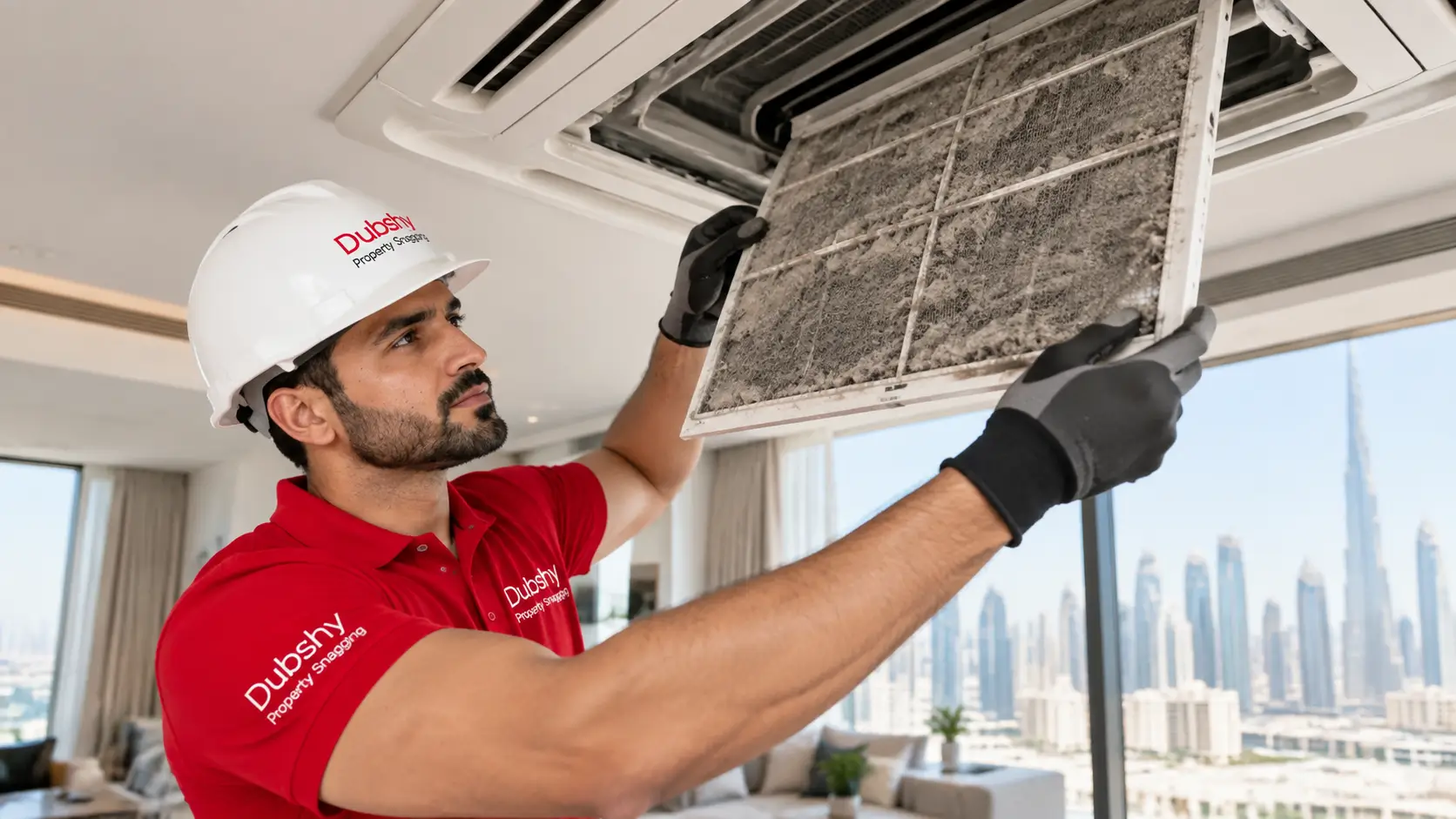
Developers are not liable for problems caused by how a property is used or maintained. Typical examples are AC units that fail because they were never serviced, drains blocked by grease or debris, mould caused by closed-up rooms with no ventilation, and leaks from sealants that were never renewed.
Owner modifications and outside contractors
Kitchen remodels, false ceilings, extra lighting, partition walls and smart-home installations all change the property from what the developer delivered. If that work damages pipes, wiring, waterproofing or finishes, the developer is not responsible, and it may refuse related claims in the same area.
Appliances under the manufacturer's warranty
Built-in ovens, hobs, dishwashers, washing machines and water heaters usually carry the manufacturer's warranty, not the developer's. Faults go to the manufacturer or its local agent, and once that warranty ends the cost is yours.
Consumable parts
Light bulbs, AC filters, batteries, shower heads, tap cartridges and periodic silicone renewal are routine maintenance items. They are the owner's cost from day one.
Cosmetic issues accepted or reported late
Minor shade differences in tiles, small scratches and hairline paint cracks should be recorded before or at handover. Raised months later, they are hard to prove as pre-existing, and developers often reject them.
Installation defects after the first year
This is the exclusion many owners miss. Once the one-year installation period ends, a failing pump, faulty wiring or a leaking pipe connection is usually no longer the developer's cost, unless it is structural or your SPA gives a longer warranty. That is why it pays to inspect before the first year ends.
Outdoor wear on villas and townhouses
Gardens, paving, boundary walls and external paint take the full force of Dubai's sun, heat and occasional heavy rain. Faded exterior paint, landscaping that dies back, minor paving movement and irrigation damaged by use are usually treated as maintenance, not construction defects. Poor drainage slopes or cracked boundary walls from bad construction are a different matter, so have them checked early.
Leaks from neighbours and common areas
Water coming through your ceiling from the unit above is normally the neighbour's responsibility, or their insurer's. Common areas are maintained by the building's management company, funded through service charges. Unless the cause is a construction defect within the legal periods, it is not a developer repair.
Grey Areas: Where Most Disputes Start
The same symptom can be the developer's problem or the owner's, depending on the cause. The cause is what matters, and it usually takes an engineer to prove it.
| Issue | Usually the developer's if… | Usually the owner's if… |
|---|---|---|
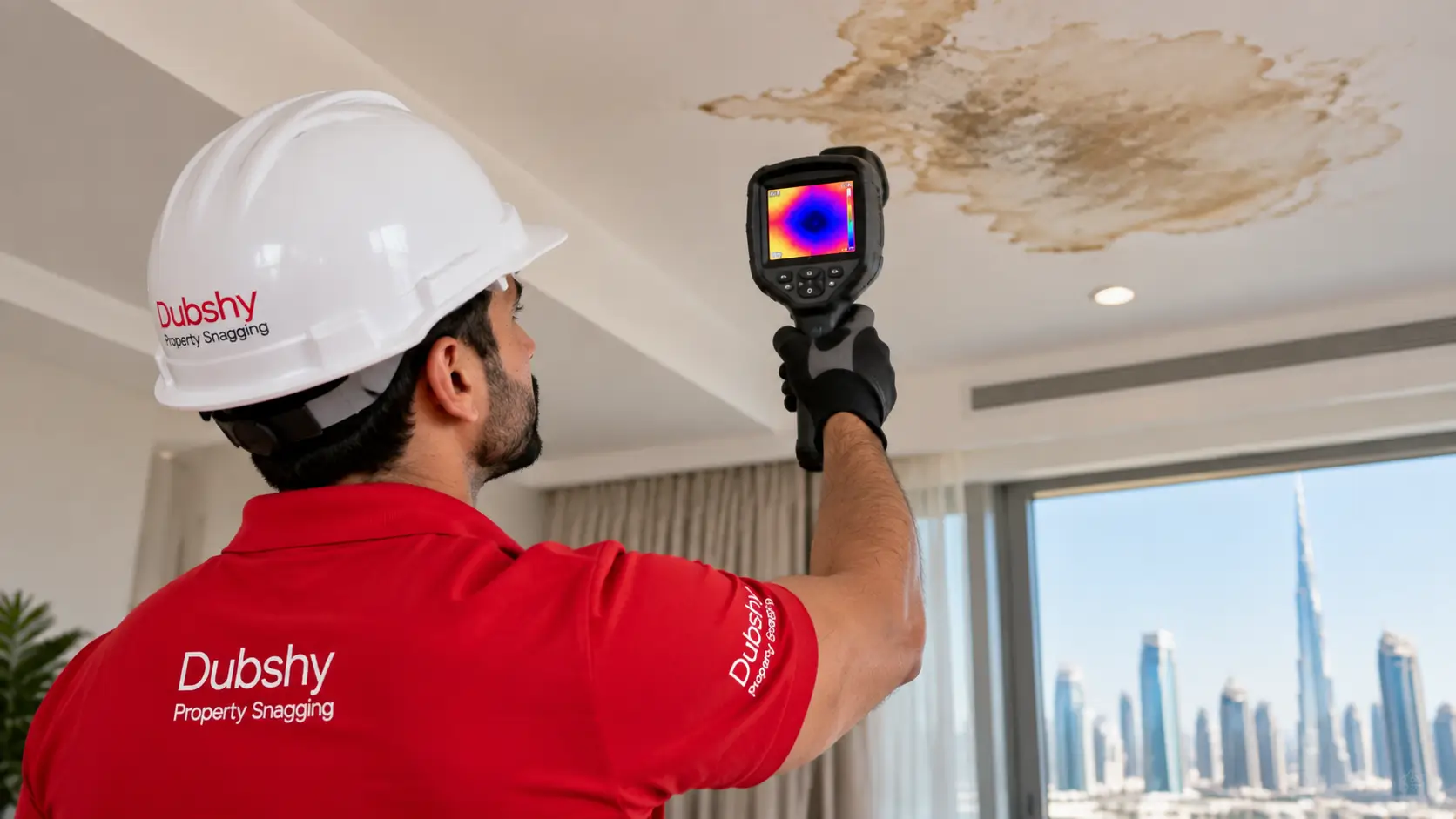
| Water leak | A pipe joint or waterproofing failed within the first year | Sealants were not maintained, or a contractor damaged a pipe |
| AC not cooling | Poor installation, undersized units or duct leaks from the start | No servicing, blocked filters or drains |
| Wall cracks | Structural, recurring or widening | Hairline plaster cracks after year one, or from renovation work |
| Peeling paint | Poor surface preparation, visible early | Sun exposure or moisture from lack of ventilation |
| Blocked drains | Wrong slope or faulty installation | Grease, hair or debris from use |
When a developer rejects a claim as "maintenance" or "misuse", the answer is technical evidence. An engineer looks at where the fault starts, how it developed and whether it matches a construction error, such as a missing waterproofing layer, a badly sloped drain or an undersized AC unit. Photos with dates, moisture readings and thermal images turn an argument into a documented finding. That is often enough for the developer to accept the repair without any formal complaint.
If You Bought Resale
Resale buyers step into the original owner's position. The one-year installation clock started at the first handover, so it has usually already run out, but the 10-year structural period still counts from the completion certificate. If you are buying a resale property, an inspection before transfer is your main protection.
How to Protect Your Claim
Knowing what developers are not responsible to repair, Dubai owners can focus their energy on the defects that are covered, and make those claims hard to reject:
- Inspect before accepting handoverRecord every defect while the developer is still obliged to fix it. Cosmetic items especially must be logged at this stage.
- Get a dated, photo-based reportA documented snagging report with exact locations and severity ratings is the evidence developers, RERA and courts respond to.
- Report in writing, earlyEmail the developer with the report attached and keep every reply. Do not rely on phone calls.
- Keep maintenance recordsAC servicing and repair receipts show a failure was not caused by neglect.
- Get approval before modificationsUnapproved works give the developer an easy reason to reject related claims.
If a covered defect is ignored, you can escalate through the RERA complaint process.
Handover coming up, or your first year nearly over?
book a handover inspectionKnow What Is Covered Before You Claim
An independent inspection separates developer defects from owner costs, with the evidence to back it up. Tell us about your property and handover date.
FAQs
Is the developer responsible for my AC after handover?
For the first year, faulty AC installations are generally the developer's responsibility. Failures caused by lack of servicing are not, so keep your service records and check the AC before the year ends.
Who pays for a leak coming from the apartment above?
Usually the owner of the unit above, or their insurer. If the leak comes from a construction defect in the building within the legal periods, the developer may be responsible. An inspection can identify the source.
Does renovating void the developer's warranty?
Not entirely, but defects in or caused by the modified areas are normally excluded. Unapproved works in particular give developers grounds to reject related claims.
How long is a developer responsible for structural defects in Dubai?
For jointly owned properties, 10 years from the project's completion certificate under Article 40 of Dubai Law No. 6 of 2019.
Can I still claim after the one-year period ends?
For structural defects, yes, within the 10-year period. For non-structural installation defects, usually not, unless your SPA gives a longer warranty or you reported the defect in writing within the first year.
Why Owners Choose Dubshy
Dubshy's inspection team works for owners, not developers. We inspect at handover and before the first year ends, test with proper instruments, and deliver photo reports that separate developer defects from owner items, so your claim starts on firm ground.
