 Skip to main content

Snagging Guide for Real Estate Agents in Dubai 2026

Snagging Guide for Real Estate Agents in Dubai Updated 17 October 2026Industry guide4 min read This snagging guide for real estate agents in Dubai covers when to recommend an inspection, how to coordinate it, and how to pass the report on. Your job is to advise and organise, not to judge defects. An independent report gives your client, and the other side of the deal, one clear list to work from. In this guide When to recommend snagging How to coordinate an inspection Reading and passing on the report Using the report in a deal What agents should not do FAQs Written by Dubshy’s engineering team for agents and brokers who want to handle the snagging stage of a deal smoothly. When Should an Agent Recommend Snagging? Recommend it whenever your client is about to accept, buy or let a property and the condition matters. The right inspection depends on the deal. Deal type When to inspect Guide Off-plan handover Before your buyer signs the handover snagging report service Resale purchase Before your buyer commits resale property inspection Landlord before letting Before the tenant moves in landlord inspection Tenant moving in At move-in, before items are unpacked tenant move-in inspection How Do You Coordinate an Inspection? Most delays come down to access and timing, which is where an agent can help most. Agree who the client isConfirm who books the inspection, who receives the report and who else it will be shared with. Share the datesPass on the handover notice, viewing or move-in date as soon as you have it. Arrange accessKeys, building passes and any developer or building management appointments. Get services onPower, water and AC need to run so the inspector can test them. Decide who attendsYour client, you, or the inspector alone with the handover team. Agents often help most with access: keys, building passes and getting services switched on. How Should You Read and Pass On the Report? Read it the way the other side will: item by item. Each entry should have a photo, an exact location and a severity rating, so it can be found and fixed without another visit. Our guide on how to read a snagging report explains the ratings. Each item in a report has a photo, a location and a severity rating. When you pass it on, send the full report rather than a summary, and keep a record of when it was sent and acknowledged. How Can the Report Be Used in a Deal? The report describes condition. How it is used is your client’s decision, with your advice on the deal. Off-plan handover Ask the developer to fix listed items before your buyer accepts the unit. Resale Your buyer can ask the seller to repair items, or take them into account in the offer. Letting The landlord can fix items before move-in; the report also records condition at the start. Have a handover or viewing coming up? book an inspection What Should Agents Not Do? Don’t inspect it yourself. An independent inspector’s report is easier for every party to accept. Don’t rate defects. Leave severity and causes to the inspector. Don’t give legal advice. Questions about rights and obligations belong with a lawyer. Don’t edit the report. Pass it on in full, as issued. What a snagging report is not A snagging report records the condition of a property on the day. It is not a valuation and does not set a price. For official information on property transactions in Dubai, see the Dubai Land Department. FAQs Should agents carry out snagging themselves? No. An agent’s role is to advise and coordinate, not to judge building defects. An independent inspection gives your client a report from someone with no stake in the deal, which is easier for a developer, seller or landlord to accept. You can still attend and help with access on the day. Is a snagging inspection useful for resale deals? It can be. On a resale, the inspection records the current condition before your buyer commits, so there are fewer surprises after the deal closes. The report describes defects; how your client uses it in the negotiation is their decision, with your advice on the deal itself. Who should book and pay for the inspection? Usually the person who needs the report, such as the buyer, landlord or tenant, but it depends on what the parties agree. Make clear at the start who the client is, because the report goes to them, and agree in advance who else it will be shared with. Can the agent attend instead of an overseas client? Yes, if your client agrees. An agent on site can help with keys and access, and the inspector can walk you through the main findings. Your client still receives the full photo report, so they see every item even though they were not there in person. Working on a Handover, Resale or Letting? Send us your client’s date and the property type, and we will plan the visit. Fees are quoted after a short scope call, with all costs listed upfront. arrange an inspection
Office Fit-Out Snagging in Dubai: A Tenant’s Guide 2026

Image: FeaturedRatio: 16:9 (1200 x 675)Situation: Engineer with a tablet looking up at an open ceiling tile in a newly fitted open-plan office, desks and glass partitions in the backgroundTitle: Office Fit-Out Snagging DubaiAlt text: Engineer inspecting an office fit-out ceiling in Dubai Office Fit-Out Snagging in Dubai: A Tenant’s Guide Updated 16 October 2026Commercial guide5 min read Office fit-out snagging in Dubai is the check a tenant makes before signing off a newly fitted office or shop: ceilings, partitions, doors, floors, electrical and data, AC and finishes. Do it in stages, not only on the last day. Collect the handover documents before you sign, so problems are fixed while the contractor is still on the job. In this guide When to inspect What to check Handover pack Retail units Who checks what FAQs This guide from Dubshy’s team is for business tenants. If you are renovating a home instead, see our home renovation checks. When Should a Tenant Inspect a Fit-Out? Inspect at more than one stage. Fit-out quality teams check work before it is covered up, and a tenant benefits from doing the same. Before ceilings and walls closeLook at what will be hidden: cables, ducts and fixings above the ceiling and inside partitions. At practical completionCheck the finished space trade by trade against the approved drawings and specification. Before staff move inRe-check the items that were fixed, and confirm every system works on a normal working day. After the first weeks of useNote anything new while the contractor’s defects obligations still apply under your agreement. Image: Internal 1 (after the when-to-inspect steps)Ratio: 16:9 (1200 x 675)Situation: Ceiling grid with some tiles removed, cables and ducts visible above, before the ceiling is closedTitle: Office Ceiling Void Before ClosingAlt text: Open office ceiling void checked before the ceiling is closed Problems above the ceiling are easiest to see and fix before the tiles go back in. Office Fit-Out Snagging in Dubai: What to Check Use this table for your walk-through. A civil and fit-out inspection covers each area with photos and exact locations. Area What to check Ceilings Tiles sit flat and clean in the grid; access panels open; no stains, gaps or damaged tiles Partitions and glazing Walls straight and finished; glass free of scratches; frames and seals complete Doors and ironmongery Every door opens, closes and latches; closers, locks and handles work Floors Carpet, vinyl or tiles laid flat and joined neatly; no damage at doorways Electrical and data Every socket, switch and floor box works; data points labelled; distribution board labelled to the layout Lighting All fittings work and match; emergency lights present where fitted AC Every zone cools; grilles fitted straight; thermostats work Fire and life-safety items Visual only: equipment fitted, not blocked or damaged; signs in place Washrooms and pantry Taps, drains, sealant, extract fans and appliances work Power and data are where offices most depend on the fit-out working first time; see our electrical systems inspection for what that check covers. Image: Internal 2 (after the trade checklist table)Ratio: 16:9 (1200 x 675)Situation: Engineer opening and closing a glass partition door in a new meeting room, checking the hinge and closerTitle: Glass Partition Door CheckAlt text: Checking a glass office partition door at fit-out handover Test every glass door: it should swing, close and latch without help. Planning a staged fit-out inspection? talk to an engineer What Should Be in the Handover Pack? Ask the fit-out contractor for these before you sign off. Treat the list as questions; what applies depends on your contract and the works done. O&M manuals. Operation and maintenance information for installed equipment. Warranties. For equipment, finishes and workmanship, with who to contact. Asset list. What was installed, where, and with what model details. As-built drawings. Where cables, data and services actually run. Test and commissioning records. For the systems that were tested. Approvals. Ask which authority approvals the works needed, for example involving Dubai Civil Defence or DEWA, and for copies. What Changes for a Retail Shop Handover Inspection in Dubai? A retail unit adds customer-facing items to the same checklist: Shopfront. Glazing, doors and locks work and are undamaged. Customer areas. Floors, lighting and finishes are complete where customers walk and look. Power for signage and displays. Supply points are where your layout needs them and work. Who Checks What? Who Typically responsible for Independent snagging engineer Independent check of the finished work, with a photo report for the contractor Fit-out contractor Fixing snags, testing systems and handing over documents Landlord The base building, as set out in your lease Specialist contractors Testing fire systems and commissioning MEP equipment For inspecting a commercial unit you are buying or leasing as it stands, see our commercial property inspection checklist. Where a snagging inspection stops A snagging inspection does not issue authority approvals or certificates, and it does not test fire systems or commission MEP equipment. Lease, payment and responsibility questions need a lawyer. For official building rules, see Dubai Municipality. FAQs Should the tenant or the landlord pay for fit-out snagging? That depends on your lease and fit-out agreement, so check what they say about inspections and defects. Whoever books it, the report should go to the fit-out contractor as one clear list. If responsibility is unclear, ask your lawyer before you sign off the fit-out or accept the space. Can snagging happen while the contractor is still on site? Yes, and it is often better. An early visit before ceilings and walls are closed lets problems be fixed while they are still visible. A final visit at practical completion then checks the finished space, and a re-check confirms the fixes before staff move in. Does a fit-out inspection check fire safety approvals? No. A snagging inspection can note visible items, such as damaged finishes or blocked equipment, but approvals and system testing belong to the authorities and specialist contractors. Ask the fit-out contractor which approvals the works needed and for copies of any certificates before you
Hollow Tiles in New Apartment Dubai: Test, Report, Fix

Image: FeaturedRatio: 16:9 (1200 x 675)Situation: Engineer kneeling on a large-format floor tile in a bright new apartment, tapping the tile corner with the handle of a screwdriverTitle: Hollow Tiles Tap TestAlt text: Engineer tap-testing a floor tile for hollowness in a new Dubai apartment Hollow Tiles in New Dubai Apartments: Test, Report, Fix Updated 15 October 2026How-to guide5 min read Hollow tiles in a new apartment in Dubai are tiles that are not fully bedded on adhesive, so they sound dull when tapped. You can find them yourself with a coin and a quiet room. Mark each one, photograph it and report it before handover, so the developer has a clear list to fix. Quick answer: tap, listen, mark. Tap each tile at the centre and corners, mark every dull-sounding one with tape, photograph it and add it to your snag list with its exact location. In this guide What a hollow tile is How to test How to mark and report When it matters more How they are fixed FAQs This guide from Dubshy’s team walks through the same tap-test-and-mark routine an inspector uses, in a form any owner can follow. What Is a Hollow Tile? A hollow tile is one with gaps in the adhesive underneath it. Tiles laid with the correct adhesive and full bedding sit solidly on the surface below; where the bed is incomplete, there is an air gap, and the tile sounds hollow when tapped. Hollowness is one of several floor problems to look for at handover. For cracks, grout gaps and other issues, see our guide to flooring defects in apartments. How to Test for Hollow Tiles in a New Apartment in Dubai All you need is a coin or the handle of a screwdriver, a roll of masking tape and a quiet room. Turn off noiseSwitch off the AC and close the windows so you can hear the difference clearly. Tap the centreTap the middle of each tile lightly. A solid tile gives a sharp, clear click. Tap the cornersTap near each corner. A hollow area gives a dull, drum-like sound, sometimes at one corner or edge only. Work in rowsGo row by row from one wall so you do not miss or repeat tiles. Do the walls tooRepeat on wall tiles in bathrooms and the kitchen, at reachable height. Image: Internal 1 (in the testing section)Ratio: 16:9 (1200 x 675)Situation: Close-up of a hand tapping the corner of a floor tile with a coin, grout lines visibleTitle: Tapping a Tile CornerAlt text: Tapping the corner of a floor tile with a coin to check for a hollow sound Tap near each corner, not just the centre: hollowness often shows at one edge first. How Should You Mark and Report Hollow Tiles? Mark every hollow tile so nobody has to find it again. Put a small tape cross on it, number it, and take one close photo and one wider photo showing where it sits in the room. Sample report entryFormat only Location Living room, third row from the balcony door, second tile from the left wall Finding Hollow sound at two corners; tile not cracked Marked Tape cross, number 4 Photos Close-up and wide shot attached Send the full list in writing and keep the acknowledgement. A floor and tile inspection tap-tests every tile and records each one in this format. Image: Internal 2 (in the reporting section)Ratio: 16:9 (1200 x 675)Situation: Floor with three tiles marked with masking tape crosses and numbers, a phone taking a photo of themTitle: Hollow Tiles Marked With TapeAlt text: Hollow tiles marked with numbered tape during a snagging inspection Numbered tape marks make it easy for the developer’s team to find every tile on your list. When Does a Hollow Tile Matter More? Report every hollow tile, but flag these first: Already cracked or chipped. Visible damage on a hollow tile makes it more urgent. Moves or rocks. A tile you can feel shift underfoot is a trip and damage risk. In wet areas. Bathrooms and balconies, where tiles and grout are meant to keep water out. In groups. Several hollow tiles together in one area. Where people walk most. Doorways, corridors and the kitchen. If the tiles sound solid but the floor feels sloped or dips, that is a different problem; see our guide to checking for an uneven floor. How Are Hollow Tiles Fixed? The repair method is the contractor’s decision, so ask the developer to confirm in writing which tiles will be repaired. Whatever is done, check each repaired tile yourself: Sound. Tap it again; it should now sound solid. Match. Colour and pattern should match the tiles around it. Level and grout. It should sit level with its neighbours, with full, matching grout. What a tap test cannot tell you A tap test finds hollow areas but cannot show what is underneath or why. Whether a hollow tile must be replaced depends on your sale agreement, not on the inspector. For official building rules, see Dubai Municipality. FAQs Are hollow tiles normal in a new apartment? A hollow sound means the tile is not fully supported by adhesive underneath. Whether a few hollow spots are acceptable is a question for the developer and your agreement, so do not decide alone. Mark and report every hollow tile you find, and let the developer’s team review the full list. Will hollow tiles crack later? Not always, and a tap test cannot predict it. What you can see is whether a hollow tile is already cracked, chipped or loose, which makes it more urgent. Report all hollow tiles at handover and recheck them later, so any that crack can be linked to your original report. Can I test hollow tiles myself? Yes. Tap each tile at the centre and corners with a coin or the handle of a screwdriver and listen for a dull, drum-like sound. Do it in a quiet room. You will find most hollow tiles this way, while
Emaar Beachfront Snagging: 8 Sea-Facing Tower Issues

Image: FeaturedRatio: 16:9 (1200 x 675)Situation: Engineer kneeling at an open balcony sliding door on a high floor, checking the door track, with the sea visible behindTitle: Emaar Beachfront Snagging Balcony CheckAlt text: Engineer checking a balcony door track in a sea-facing apartment at Emaar Beachfront Emaar Beachfront Snagging: 8 Sea-Facing Tower Checks Updated 14 October 2026Community guide4 min read Emaar Beachfront snagging covers the same basics as any new apartment, but a sea-facing tower needs extra time on the balcony, sliding doors, windows and railings. These are the parts that face the open sea and the weather. Below are 8 checks to make before you accept your unit. In this guide What makes it different 8 sea-facing tower checks Before you book FAQs This guide from Dubshy’s snagging team focuses only on what a sea-facing unit adds. For a full room-by-room tower inspection, see our guide to snagging in Dubai Creek Harbour. What Makes Emaar Beachfront Snagging Different? Emaar describes Emaar Beachfront as a restricted island destination in the Arabian Gulf, with direct access to Sheikh Zayed Road and Palm Jumeirah, a private beach for residents, and views over the Arabian Sea, Palm Jumeirah and Dubai Marina (Emaar). For a buyer, that means many units are built around sea views: balconies, large sliding doors and plenty of glass. Those openings are where water, dust and draughts can get in if anything is not fitted or sealed properly. That is why the checks below spend most of their time there. For how Emaar handovers work in general, see our Emaar snagging inspections guide. 8 Sea-Facing Tower Checks Work through these during your handover visit. Photograph anything wrong and note exactly where it is. 1. Balcony door tracks and sealsDoors Where Every sliding door onto a balcony How to check Open and close each door fully. It should slide smoothly, lock, and close tight against the seal with no gap or light showing. 2. Window seals and locksWindows Where All windows, especially full-height ones How to check Open, close and lock each window. Look for gaps in the seal and sealant around the frame. 3. Balcony drainageBalcony Where Balcony floor and outlet How to check Pour a bucket of water and watch it run to the drain. Water should not pool or run back towards the door. Image: Internal 1 (after check 3)Ratio: 16:9 (1200 x 675)Situation: Water poured on a tiled balcony floor flowing towards a floor drain, sea view in the backgroundTitle: Balcony Drainage Water TestAlt text: Water test on a balcony floor drain in a sea-facing tower A bucket of water is the simplest way to see whether a balcony drains properly. 4. Water marks inside the doorsInside Where Floor and skirting just inside balcony doors How to check Look for stains, swelling or damp marks that could show water getting past the door. 5. Glass and framesGlazing Where Glass panels and their frames How to check Check for scratches, chips at the edges and gaps in the frame sealant, in good daylight. 6. Railings and metal fixingsBalcony Where Balcony railings, posts and brackets How to check Push each rail firmly; it should not move. Check fixings and metal finishes for damage, marks or rust spots. Image: Internal 2 (after check 6)Ratio: 16:9 (1200 x 675)Situation: Close-up of a balcony railing fixing where the post meets the tiled floor, a gloved hand pushing the railTitle: Balcony Railing Fixing CheckAlt text: Checking a balcony railing fixing in a high-rise apartment Railings should feel completely firm when pushed, with fixings and finishes undamaged. 7. AC in sun-facing roomsSystems Where Rooms with large windows How to check Run the AC in each room and check that rooms with the most glass still cool properly. 8. Draughts and noise at openingsDoors Where Doors and windows on a windy day How to check With everything closed, listen and feel for whistling or draughts at the edges of doors and windows. Rather have an engineer run all 8 checks? book a check What Should You Do Before You Book? Get your handover date. Book the inspection as soon as Emaar’s handover notice arrives; our notes on Emaar’s handover steps explain the process. Confirm services are on. Power, water and AC must run so doors, drains and cooling can be tested. Arrange access. Agree the date and entry with the handover team and building security. Check coverage. See our Dubai service areas for the communities we cover. Where an inspection stops An inspection covers your unit on one day. The building facade and shared areas are outside its scope, and walls and ceilings are not opened. If a check points to a leak with no visible source, a specialist may need to investigate further. FAQs Do sea-facing apartments need a different snagging check? The core checks are the same as any apartment, but the balcony, sliding doors, windows and railings deserve more time. These parts face the open sea and the weather, so seals, drainage and fixings are worth testing closely before you accept the unit and sign the handover documents. Can I get my Emaar Beachfront unit inspected if I live abroad? Yes. The inspector can attend with the developer’s handover team, and you receive the photo report afterwards to send to the developer yourself. If you can be there, join for the end of the visit so the engineer can walk you through the main findings in person. What should I check again after the first summer? Recheck the balcony drainage, door and window seals, railings and AC performance in the rooms with the most glass. Report anything new to the developer in writing with photos and dates. How long the developer stays responsible depends on your sale agreement, so check it or take advice. Collecting Keys at Emaar Beachfront? Share your handover date and unit size, and we will plan a check before you accept it. Fees are quoted after a short scope call, with all costs listed upfront. reach our
Bathroom Exhaust Fan Not Working in a New Apartment?
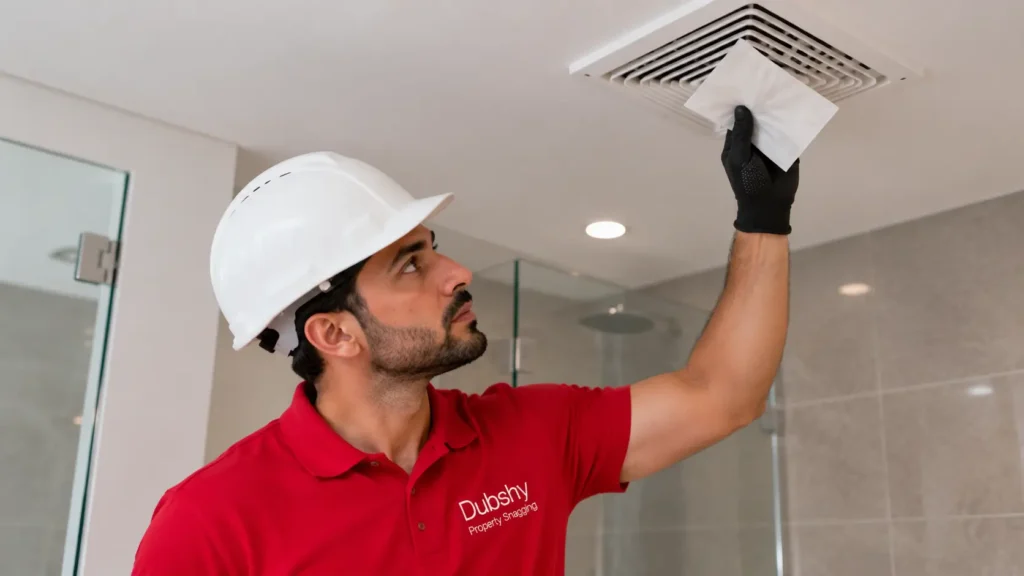
Image: FeaturedRatio: 16:9 (1200 x 675)Situation: Hand holding a tissue under a ceiling exhaust fan grille in a modern apartment bathroom; the tissue is pulled flat against the grilleTitle: Bathroom Exhaust Fan Tissue TestAlt text: Tissue test at a bathroom exhaust fan grille in a new apartment Bathroom Exhaust Fan Not Working in a New Apartment? Updated 13 October 2026How-to guide5 min read If your bathroom exhaust fan is not working in a new apartment, run three safe checks: the switch, a tissue test at the grille, and a listen for the motor. If the fan is silent, only hums, or barely moves air, do not open it. Record what you found and report it as a snag. In this guide What “not working” looks like Quick tests you can do safely Possible causes Fix it yourself or report it? Check the kitchen hood too Why it matters FAQs A new apartment should hand over with every fan working. This guide from Dubshy Property Snagging helps you tell a setting problem from a real defect, without picking up a screwdriver. What Does “Not Working” Look Like? A fan can fail in several ways, and each points to a different check. What you notice What it can mean Silent, nothing happens No power reaching the fan, or a switch problem Hums but no airflow Power is there, but the motor or the air path is stuck Runs but pulls weakly Something is restricting the air path Loud rattle or grinding Something loose or rubbing inside Mirror stays fogged long after a shower The fan is not clearing steam Image: Internal 1 (after the symptoms table)Ratio: 16:9 (1200 x 675)Situation: Bathroom mirror still fogged with steam a few minutes after a hot shower, fan grille visible in the ceilingTitle: Steamed Bathroom Mirror Poor VentilationAlt text: Steamed-up bathroom mirror showing poor ventilation A mirror that stays fogged is often the first sign the fan is not doing its job. Bathroom Exhaust Fan Not Working in a New Apartment: Quick Tests These checks need no tools, no ladder and no opening of covers. Find the right switchCheck whether the fan runs with the bathroom light or has its own switch, and try both. Do the tissue testHold a single tissue just below the grille with the fan on. A working fan pulls it flat against the grille. ListenNote whether you hear nothing, a hum, normal running or a rattle. Test after a showerRun the fan after a hot shower and see whether the mirror clears. Check the breaker onceIf the bathroom circuit has tripped, reset it once. If it trips again, stop and report it. What Are the Possible Causes? Only an engineer or electrician can confirm the cause, but these are the usual possibilities: Power or switch fault. The fan is not getting power, or the switch is wired or working incorrectly. Motor not spinning freely. Dirt or debris in the air passage can stop or slow it. Duct problem. The duct behind the fan can be blocked, crushed or not connected at all. Should You Fix It Yourself or Report It? In a new apartment, report it. A fault in a new fitting is something for the developer to fix, and opening the fan means working near live wiring. You can do Leave for the developer or an electrician Try both switches Removing the cover or grille Tissue test and listening Checking wiring or the switch Reset a tripped breaker once A breaker that trips again Record a short video and photo Checking or reconnecting the duct Report it in writing with the video, the room and the date. If you are still before handover, add it to your snag list; our guide to apartment snagging shows how the full inspection runs. Fans are tested alongside taps, drains and sealant in our bathroom and kitchen checks. Check the Kitchen Hood at the Same Time A kitchen hood extraction check at handover uses the same tissue test. Switch the hood on at each speed and hold a tissue under the filter; it should lift towards the hood. Testing every fan in one visit is part of a fans and ventilation check. Image: Internal 2 (in the kitchen hood section)Ratio: 16:9 (1200 x 675)Situation: Tissue held under a kitchen cooker hood with the hood switched on, tissue lifting towards the filterTitle: Kitchen Hood Extraction CheckAlt text: Tissue test under a kitchen cooker hood at handover The same tissue test works on a kitchen hood: the tissue should lift towards the filter. Why Does a Working Fan Matter? The fan is there to clear steam. If it does not, the bathroom stays damp for longer after every shower. Keep an eye on ceiling corners, grout and sealant, and if dark spots appear, read our guide to mould and mildew inspection. For official building rules, see Dubai Municipality. FAQs Why does my bathroom fan hum but not pull air? A hum usually means the fan is getting power but air is not moving. The motor may not be spinning freely, or the duct behind it may be blocked, crushed or not connected. In a new apartment, do not open it yourself. Record the hum, do the tissue test and report it. Is a weak bathroom fan a snag the developer should fix? Report it as one. A fan that runs but barely holds a tissue may not be clearing steam, and that is worth recording before handover or as soon as you notice it. Whether the developer repairs it depends on your sale agreement and timing, so put it in writing with a video. Can I replace the fan myself in a new apartment? It is better not to. Opening the fan means working near electrical wiring, which should only be done by a qualified electrician with the power off. In a new apartment, a fault is something to report to the developer first, and a self-repair could make it harder to get it fixed.
Villa Private Lift Inspection in Dubai: Rules and Checks

Villa Private Lift Inspection in Dubai: What to Check Updated 12 October 2026Checklist5 min read A villa private lift inspection in Dubai checks that your home lift rides smoothly, stops level at each floor, and that its doors, alarm, lighting and power supply work as they should. At handover you can run a simple ride test yourself. Testing the lift’s machinery is a job for a licensed lift company. Quick answer: ride to every floor, check the cabin stops level, test the doors and alarm, ask for the lift’s papers, and report anything unusual before you accept the villa. In this guide What the inspection checks Handover test for a home lift Who checks what Papers to ask for Warning signs after you move in FAQs A private lift is one of the few parts of a villa that moves people between floors, so it deserves its own check at handover, alongside the rest of our villa snagging checklist. This guide from Dubshy’s engineering team shows what to look at and who should test what. What Does a Villa Private Lift Inspection in Dubai Check? It looks at the parts of the lift you use and the building work around it. These are the areas to cover: Home lift check6 areas Cabin Finishes, handrail, floor, lighting, ventilation Doors Open and close smoothly at every floor Controls Floor buttons, door buttons, alarm button Ride Smooth start and stop, level with each floor Surroundings Landing finishes, walls and floor around each door Power Supply to the lift and its labelling on the board Test every button on the panel, including the alarm, during the handover visit. How Do You Test a Home Lift at Handover? Run this short test without opening any panel or entering the shaft. Report anything that feels wrong. Ride to every floorGo up and down at least once between all levels. The start and stop should be smooth, without jerks or knocks. Check each stopWhen the doors open, the cabin floor should sit level with the landing. A step up or down is a trip hazard. Test the doorsWatch them open and close at each floor. Note any scraping, sticking or doors that do not close fully. Press the alarm buttonAsk the developer’s team what should happen and who receives the call, then check that it works. Look at the cabinLights work, the fan runs, finishes are undamaged and the handrail is firm. Check the landingsWalls, floors and frames around each lift door are complete and undamaged. Who Checks What: Snagging Engineer or Lift Company? A snagging engineer and a lift company look at different things. Knowing the split helps you book the right person. Item Snagging engineer Licensed lift company Ride and level stops Records what is felt and seen Adjusts and tests the machinery Doors Records faults and finish damage Tests and adjusts door safety Cabin and landings Finishes, lighting, building work Not usually covered Power supply Supply and board labelling Lift controller and wiring inside the lift Machinery, brakes, ropes Not covered Tests and services The lift’s power supply connects to the villa’s wiring, so it fits naturally into an electrical systems inspection. Ask us to confirm what is included for your lift when you book. Landing doors and the finishes around them are part of the building work to check at handover. What Papers Should You Ask For? Ask the developer or lift installer for these before you accept the villa. Which ones apply depends on your lift and your agreement, so treat this as a list of questions. Ask for Why it helps Installer’s handover or test record Shows the lift was checked before it was handed to you Warranty details Tells you what is covered and for how long Maintenance contact Who to call for servicing and breakdowns User guide and emergency steps What everyone at home should do if the lift stops What Are the Warning Signs After You Move In? Stop using the lift and call the lift company if you notice any of these: New noises. Grinding, knocking or squealing during the ride. Uneven stops. The cabin stops above or below the floor level. Door problems. Doors that will not close, reopen on their own or move unevenly. Burning smell or flicker. Treat this as a safety issue and switch off the lift supply if it is safe to do so. For the wider picture of keeping your home safe, see our fire safety checks at home. For official building rules, see Dubai Municipality. FAQs Does a snagging inspection test the lift itself? Not the machinery. A snagging inspection records how the lift rides, stops and opens, checks the cabin, landings and power supply, and notes visible faults. Testing brakes, ropes, controllers and door safety needs a licensed lift company. Ask both to share their findings so the developer gets one clear list. What should I do if the lift stops between floors? Stay calm and press the alarm button or call the number shown in the cabin. Do not try to force the doors open or climb out. Wait for the lift company or emergency help. After any incident, keep the lift out of use until a technician has checked it. Who should service a private lift after handover? A lift company that services your lift’s make, usually under a maintenance contract. Ask the developer or installer who maintained it before handover and whether that arrangement continues. Keep a record of every service visit, as it helps with warranty claims and if you sell the villa later. Handing Over a Villa With a Private Lift? Tell us your handover date and how many floors your lift serves, and we will plan the inspection. Fees are quoted after a short scope call, with all costs listed upfront. ask for a quote
Villa Snagging in Dubai: Inside-Out Inspection Checklist

Villa Snagging in Dubai: Inside-Out Inspection Checklist Updated 10 October 2026Checklist6 min read Villa snagging in Dubai means checking a new villa from the roof down to the garden, then every room and system, before you accept it from the developer. A villa has far more to inspect than an apartment, so the order you work in matters. Start outside, move inside floor by floor, and test the systems last. In this guide Why a villa is different The inside-out checklist What you can check vs the inspector When to book FAQs This checklist is the order Dubshy’s inspectors suggest owners follow. Use it on your own walk-through, or as a way to see what a professional inspection should cover. Why Is Villa Snagging in Dubai Different From an Apartment? A villa is a whole building, not one unit inside a tower. That changes what you are responsible for checking. You own the outside. The roof, facade, garden and boundary walls are part of your property, not a shared area. More floors, more stairs. Each level has its own rooms, wet areas and finishes to check. More systems. Several AC units, a water heater, outdoor lighting and sometimes a pool all need testing. Water comes from more directions. Rain on the roof, irrigation in the garden and wet areas on upper floors can all find their way inside. For a side-by-side view, see our guide to villa vs apartment snagging. The Inside-Out Villa Checklist Work outside first while the light is good, then go inside from the top floor down, and test the systems once they have been running for a while. Photograph every problem and note exactly where it is. 1. Roof and terraces Drains. Outlets are clear, not blocked by debris or construction waste. Surface. No cracks, lifted joints or patches where water could sit. Parapets and edges. Coping and sealant are complete, with no gaps along the walls. Staining below. Check the ceilings under terraces for marks or damp patches. Our guide to roof and wet-area waterproofing covers this in more detail. 2. Facade, windows and external doors Walls. Look for cracks, uneven render and paint defects, especially around openings. Windows. Each one opens, closes and locks, with sealant complete around the frame. Main and garden doors. They close fully, lock, and keep out dust and light at the edges. 3. Garden, driveway and boundary Levels. Ground and paving should fall away from the villa, not towards it. Paving. No loose, cracked or sunken slabs on the driveway and paths; see our driveway and paving checks. Boundary walls and gates. No cracks or leaning sections; gates open and lock. Outdoor taps and lights. Each one works. 4. Pool and pump room (if you have one) Visible finish. Tiles and copings are complete, with no cracks or loose pieces. Pump room. No leaks or standing water around the equipment. Running test. Ask for the pool to be filled and running on the day, so the equipment can be seen working. More in our guide to pool checks. 5. Inside, floor by floor Stairs and rails. Handrails and balustrades are firm, with no movement when pushed. Floors, walls and ceilings. Look for dips, hollow-sounding tiles, cracks and paint defects. Joinery. Doors, wardrobes and kitchen units open, close and line up. See common villa joinery defects. Wet areas. Run every shower, basin and bath; water should drain fully and sealant should be complete. 6. Systems AC. Every unit starts, and every room cools. Water. Pressure and hot water work at every outlet, on every floor. Electrical. Sockets and switches work, and the distribution board is labelled. Rather hand the whole list to an engineer? book a villa inspection What Can You Check Yourself, and What Needs an Inspector? You can spot most visible problems on your own. What you cannot do safely or reliably is reach high areas, test hidden moisture or check electrical safety. Area You can check Leave to the inspector Roof Ceiling stains below terraces Roof surface, drains and parapets where access is unsafe Facade Cracks and paint at ground level Upper-level walls and window seals Garden Loose paving, gates, outdoor taps Falls and levels across the plot Wet areas Drainage, sealant, visible leaks Hidden moisture behind finishes Electrical Lights and sockets switch on Socket wiring and board safety tests AC Each room feels cool Airflow and supply readings A full snagging report records every item with a photo and its exact location, so the developer’s team can find and fix it. Where an inspection stops An inspection does not open walls, slabs or buried pipes. Roofs are checked only where access is safe. If cracks look structural, ask a structural engineer before you accept the villa. When Should You Book a Villa Inspection? Book as soon as the developer sends your handover notice, so the inspection happens before you sign. Then: Confirm services are onPower, water and AC must be running, and the pool filled if you have one. Arrange accessAgree a date with the developer’s handover team for the inspector to enter the villa. Send the reportSubmit the findings in writing and keep the acknowledgement. Re-check before signingAccept the villa only when the listed items are fixed. For official information on buying property in Dubai, see the Dubai Land Department. FAQs How long does a villa snagging inspection take? It depends on the villa’s size, the number of floors and whether it has a pool, roof terrace or large garden. A villa takes longer than an apartment because there are more rooms, outdoor areas and systems to test. Ask for a time estimate when you book, and keep the day free if you plan to attend. Can I get a second opinion on the developer’s snag list? Yes. The developer’s list is their own record. An independent inspection checks the same villa again and records anything missing, with photos and exact locations. Send the extra items to the developer in writing, so both lists
Cosmetic vs Functional Defects: How Dubai Snags Are Rated
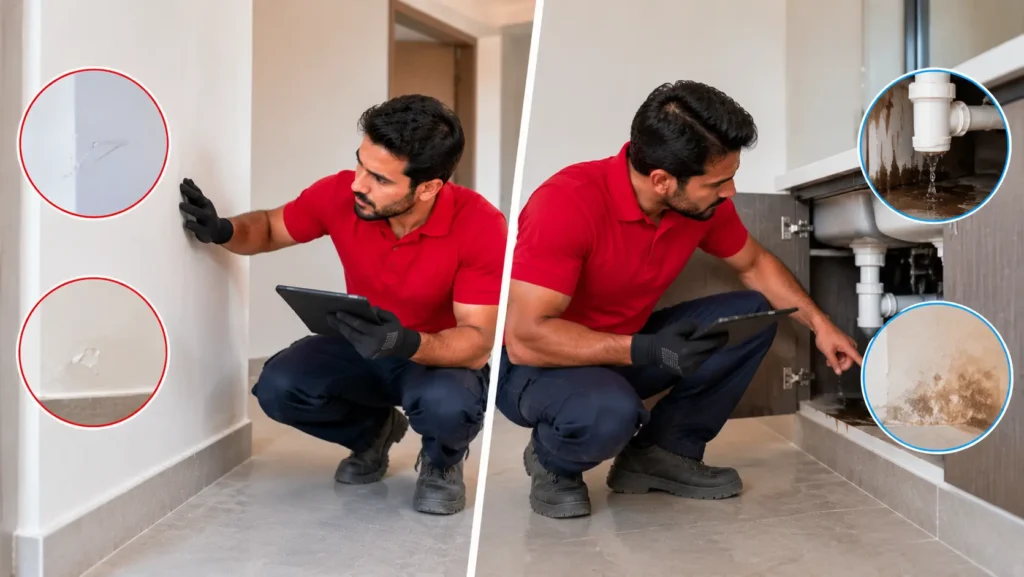
Cosmetic vs Functional Defects: How Dubai Snags Are Rated Updated 9 October 2026Comparison5 min read The difference between cosmetic vs functional defects is simple: a cosmetic defect spoils how something looks, while a functional defect stops it working as it should. A third group, safety defects, can put people at risk. Knowing which is which helps you decide what to push the developer on first, without dropping the smaller items from your list. In this guide The three types of defect Examples from Dubai apartments When cosmetic is not just cosmetic What to push for first Why every defect still goes on the list FAQs Cosmetic vs Functional Defects: What Is the Difference? The test is what the defect affects: appearance, use or safety. Ask whether the item still does its job and whether anyone could be hurt by it. Safety Could cause injury, fire, flooding or electric shock. Fix before anyone lives in the home. Functional Something does not work as it should: a drain, a door, a socket, the AC. Cosmetic Works fine but looks wrong: marks, scratches, uneven paint, poor finishing. What Do These Defects Look Like in a Dubai Apartment? The same room can hold all three types. These are typical items an engineer looks for, not results from a specific property. Defect Type Why Exposed wiring in a socket box Safety Risk of electric shock Loose balcony railing Safety Risk of a fall Shower drain that does not clear Functional Water sits on the floor and can spread Bedroom that does not cool Functional The AC is not doing its job Door that will not lock Functional The door cannot secure the room Paint drips on a wall Cosmetic Looks poor; the wall is unaffected Scratch on a kitchen cabinet Cosmetic Finish damage only When Is a Cosmetic Defect Not Just Cosmetic? Some defects look cosmetic but can turn into functional problems. These are the ones owners most often wave through, so check them twice. Gaps in silicone sealant. A small gap around a shower tray or basin looks untidy, but it can let water get behind finishes. A cracked tile. One crack may be surface damage, or a sign the tile is not fully bedded and will move. Hairline cracks in walls. Most are in the surface finish, but a crack that widens or returns after painting needs an engineer’s opinion. Scratched window glass. A scratch is cosmetic; a chip at the edge of a pane is worth checking more closely. A door that rubs the frame. It may only mark the paint now, but it can stop the door closing properly later. What Should You Push the Developer on First? Push safety items first, then functional ones, and keep cosmetic items on the same list. This order protects the people living in the home and the things you use every day. SafetyAsk for these to be fixed before you move in, and confirm each repair yourself. FunctionalAgree repair dates in writing and test each item again once it is fixed. CosmeticKeep them on the list. After you move in, it can be harder to show a scratch or chip was there at handover. Not sure which type a defect is? ask an engineer Why Does Every Defect Still Go on the List? Because the list is your record. A developer can only be asked to fix what was reported, so small items left off at handover are easy to dispute later. Our snagging reports record every item with a photo, its location and its severity, so you can see at a glance which ones matter most. Our guide on reading the ratings in a report explains each level. If you are unsure which document you need, read our comparison of a snag list vs snagging report. Where a label is not enough A severity label is a guide, not a legal judgement. Whether the developer must repair an item depends on your sale agreement and when it was reported. For disputes, take legal advice; for cracks that grow or a structure that seems to move, ask a structural engineer. For official information on buying property in Dubai, see the Dubai Land Department. FAQs Will the developer fix cosmetic defects? Report them anyway, with a photo and exact location, before you accept the unit. Whether each one is repaired depends on your sale agreement and when you report it. Cosmetic items left off the handover list are harder to raise later, because it becomes difficult to show they were there before you moved in. Is a hairline crack a cosmetic or functional defect? Usually cosmetic, if it sits only in the paint or plaster surface and does not grow. Mark both ends of the crack with a pencil and date it. If it widens, returns after repainting or appears with doors that start sticking, ask an engineer to assess it before you treat it as cosmetic. Who decides whether a defect is cosmetic or functional? The inspector rates each item in the report based on what it affects: appearance, use or safety. The developer’s team may see some items differently. A clear photo, an exact location and a short reason for the rating make it easier to agree what needs fixing and in what order. Want Every Defect Rated Before Handover? Dubshy’s specialists inspect your home and rate each item so you know what to push for first. Fees are quoted after a short scope call, with all costs listed upfront. reach our engineers
Post Renovation Inspection Dubai: Final Payment Checklist
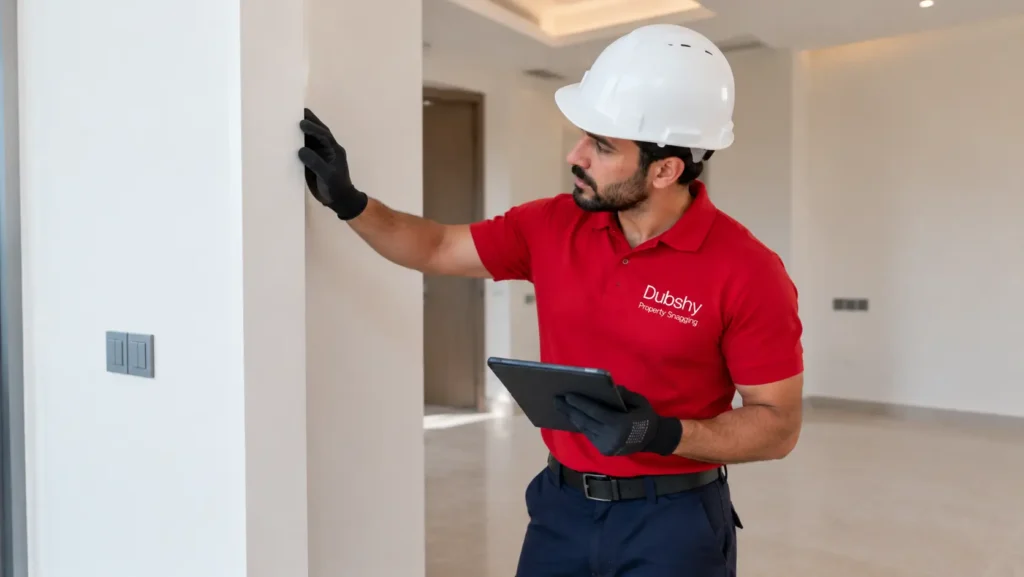
Post Renovation Inspection Dubai: Final Payment Checklist Updated 8 October 2026Checklist6 min read A post renovation inspection in Dubai checks your contractor’s finished work room by room before you release the final payment. It finds unfinished, faulty or unsafe items while you still have leverage to get them fixed. Use the checklist below, collect the right documents, and pay only when the agreed fixes are done. In this guide What the inspection checks Room-by-room checklist Documents to get before you pay Pay, hold or re-inspect? What an inspection cannot see FAQs A renovation is different from a new build. New work meets old work, services are cut and reconnected, and finishes are fitted around an existing layout. That is where problems tend to hide, and it is what Dubshy Property Snagging focuses on when it inspects a refitted home. What Does a Post Renovation Inspection in Dubai Check? It checks every trade the contractor touched, not only what looks finished. A civil inspection after works covers the build quality, and the engineer then tests the systems that were changed. Inspection scopeBy trade Civil and finishes Walls, ceilings, floors, tiling, paint, plaster Joinery Kitchen units, wardrobes, doors, worktops Wet areas Drainage, sealant, leaks, ventilation Electrical Sockets, switches, lighting, distribution board Plumbing Water pressure, hot water, drains, fittings AC Airflow and cooling in rooms where ducts or units were moved Room-by-Room Checklist Before the Final Payment Walk the home with this list before you check contractor work against the final invoice. Note each problem with a photo and its exact location. Kitchen Cabinets and drawers. Every door and drawer opens, closes and lines up with its neighbours. Worktops. Joints are tight, edges are sealed, and there are no chips or scratches. Sink and taps. Run the water, then look underneath for drips at every connection. Extractor and appliances. Each appliance switches on, and the extractor actually moves air. Bathrooms Drainage. Run the shower and basin and watch whether water clears or sits on the floor. Sealant and grout. Lines are continuous around the tray, bath, basin and toilet, with no gaps. Leaks. Check walls next to and below wet areas for damp patches or staining. Ventilation. The exhaust fan runs and pulls air when switched on. Floors, walls and ceilings Floors. Look for dips, raised tile edges and tiles that sound hollow. Our guide to floor level checks shows a simple method. Walls. Check paint for patches, drips and uneven colour; see painting and finishing checks. Where old meets new. Look closely at joins between new and existing plaster, tiles and ceilings for cracks or steps. Electrical, plumbing and AC Sockets and switches. Test each one, including any that were moved or added. Distribution board. Circuits are labelled to match the new layout. Water. Pressure and hot water work at every outlet. AC. Every room cools, especially where ducts, grilles or ceilings were changed. Want an engineer to run this list for you? book an inspection What Documents Should You Get Before You Pay? Ask for paperwork while the contractor still wants the final payment. Which documents apply depends on your contract and the work done, so treat this as a list of questions, not legal requirements. Ask for Why it helps Warranties Shows who to call if fittings, appliances or workmanship fail later Drawings of what was built Records where new pipes and cables run behind finished walls Any approvals the works needed Avoids problems with building management or a future sale Product and finish details Lets you match tiles, paint and fittings for future repairs Pay, Hold or Re-Inspect? Match each finding to an action before you pay. This keeps the decision about the work, not about opinions. Type of finding Example Action Safety Exposed wiring, a socket that fails a test, a leak Do not pay until fixed and re-checked Functional Slow drain, door that will not close, room that does not cool Agree a fix date in writing; re-inspect before paying Cosmetic Paint drips, scratched worktop, gaps in sealant Add to the fix list; agree with the contractor how it affects payment Record agreed fixes on a simple snag list template so both sides work from the same list. Then follow this order: InspectGet a full report with photos and locations once the contractor says the work is finished. Share the listSend it to the contractor in writing and agree what will be fixed and by when. Re-checkConfirm each item is fixed properly, not just covered up. PayRelease the final payment once the agreed items are closed, as your contract allows. What Can an Inspection Not See? Where the inspection stops An inspection does not open walls, floors or ceilings. Pipes and cables already covered are checked through what can be tested, such as water flow, drainage, moisture signs and electrical tests. Contract and payment disputes need a lawyer, not an inspector, and a cracked or moving structure needs a structural engineer. For official building rules, see Dubai Municipality. FAQs When should I book a post renovation inspection? Book it once the contractor says all work is finished and before you sign off or release the final payment. Power, water and AC should be running so the systems can be tested. If you plan to move in soon, leave time for the contractor to fix items and for a re-check before you pay. Can I hold back part of the final payment until snags are fixed? That depends on your contract. Read what it says about the final payment, any retention and the defects period, and agree any hold-back in writing with the contractor. For a dispute about money owed, speak to a lawyer. An inspection report gives both sides the same list of items to work from. Do I need to be there during the inspection? No, but it helps to attend the end of the visit. The engineer can show you the main findings in person and answer questions. If you cannot be there, you
Uneven Floor in a New Dubai Apartment? How to Check 2026

Uneven Floor in a New Dubai Apartment? How to Check Updated 7 October 2026How-to guide7 min read An uneven floor in a new apartment in Dubai is something you can check yourself in about an hour with a marble, a long straight edge and a spirit level. These checks show where a floor dips or slopes. They do not prove the floor is outside tolerance, so mark what you find, report it in writing and book a measured check if the problem is clear. Quick answer: roll a marble, lay a straight edge, read a spirit level, and mark every spot where the floor dips, slopes or rocks. Photograph each one, list it by room, and send it to the developer before you sign the handover. In this guide Signs your floor is not level How to check the floor yourself Check the walls on the same walk Uneven floor or uneven tiles? How to record and report it When a DIY check is not enough FAQs Owners usually notice the problem by feel before they see it. Some buyers have described the same thing in public reviews of new Dubai homes, saying the floor and ceiling felt uneven and the balcony did not drain properly. This guide from Dubshy turns that feeling into a short, room-by-room check you can do before handover. What Are the Signs Your Floor Is Not Level? The signs show up in how things sit and move on the floor. Use this table to match what you notice with the check that confirms it. What you notice Where to look Check to use A dip you can feel underfoot Middle of rooms, corridors, doorways Straight edge laid across the spot Furniture or a table that wobbles Living and dining areas Spirit level in two directions A door that scrapes or leaves a gap at the bottom Under internal doors Spirit level across the threshold, then on the door frame Gaps under skirting boards Along walls, often in corners Straight edge along the wall line A tile edge you can catch with your foot Between neighbouring tiles Straight edge across the joint Water that runs or pools in one place Balcony, near doors Pour a little water and watch where it goes How to Check an Uneven Floor in a New Apartment in Dubai Start with the quickest test and use the slower ones only where something looks wrong. Do one room at a time and keep a pencil or masking tape ready to mark spots. Clear the floorRemove boxes and rugs so you can see the whole surface and lay tools flat. Roll a marblePlace it in the middle of the room and in each corner. If it always rolls the same way or settles in one spot, mark that area. Lay a straight edgeUse the longest straight piece you have, such as an aluminium rule or a level. Lay it across each marked spot and look for daylight underneath. Read a spirit levelPlace it in two directions at each marked spot. Note which way the bubble moves and how far. Mark and photographTape the outline of each problem area and take a photo with the tool in place, so the gap is visible. The marble test The marble test is fast and shows direction, but it is sensitive to tiny slopes and to grout lines. Treat it as a way to find where to look, not as proof. Straight edge and spirit level A straight edge shows a dip as a gap under the middle of the tool. A spirit level shows a slope across a wider area. Used together, they tell you whether you have a local dip or a whole floor that falls one way. A phone level app works for a rough reading, but its accuracy depends on the phone and its case. How to Check If Walls Are Straight in a New Apartment Do the walls on the same walk, because a floor problem and a wall problem often show up at the same door or corner. Hold the spirit level upright against each wall and each door frame and check whether the bubble sits in the centre. Door frames. A frame that leans can make a door swing open or closed on its own. Long walls. Lay the straight edge flat on the wall and look for bows or hollows. Corners. Check where floor and wall meet; a gap that grows along the wall points to a floor that falls. Is It an Uneven Floor or Just Uneven Tiles? It matters which one you have, because the fix is different. If the straight edge rocks on a single raised tile edge but sits flat across the rest, the problem is likely in the tiling. If the gap runs across several tiles or the spirit level shows a fall across the room, the layer below the tiles may be out of level. Keep the two apart in your list Write tile edge problems and floor level problems as separate items. It helps the developer send the right trade. For cracked tiles, grout and other finish issues, see our guide to common flooring defects. How Should You Record and Report It? Report every marked spot in writing, with enough detail that someone who has never seen the unit can find it. Room and location. For example, “bedroom 2, 1 m from the window wall, centre of room”. What you saw. Marble roll direction, gap under the straight edge, spirit level reading. Photo. One wide shot of the room and one close-up with the tool in place. Date sent. Submit through the developer’s handover team or portal and keep the acknowledgement. If you have already moved in, report new problems in writing as soon as you notice them. Our snagging tips for the first year explain what to keep an eye on after handover. For official information on property buying in Dubai, see the Dubai Land Department. When Is a DIY
