
Third Party Inspector Dubai: Why Independence Matters
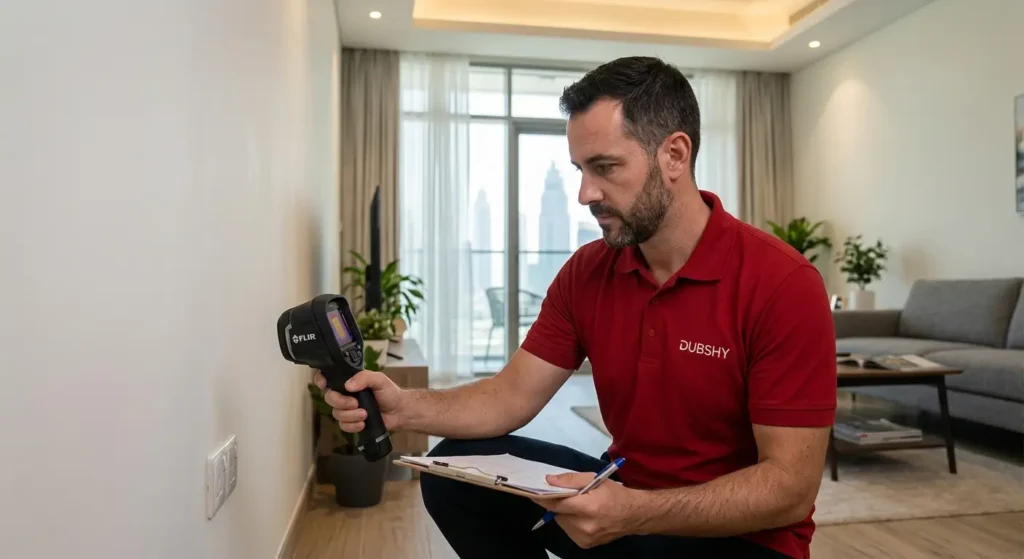
Third Party Inspector Dubai: Why Independence Matters 17 September 2026Guide4 min read A developer’s own snagging team isn’t dishonest, they’re just not neutral, and neutral is what actually protects you at handover. The core difference comes down to who’s paying whom and what that does to judgment calls on borderline defects. The table below lays out exactly where the two diverge. In this guide Developer’s team vs independent inspector It’s about incentives Where this shows up in practice What happened to one buyer The documentation difference Is the developer’s snagging worthless? FAQs Developer’s Team vs Independent Inspector Factor Developer’s own team Independent inspector Paid by The developer You, the buyer Incentive on borderline calls Leans toward “acceptable” to keep handover moving No pull either way, calls it as found Documentation weight Internal paperwork about their own work Dated, third-party record you can rely on later What it’s good for A genuine first pass on obvious issues A neutral check plus real leverage if disputes arise It’s Not About Bad Faith, It’s About Incentives Nobody’s suggesting developer snagging teams are lying on purpose. Most aren’t. But they work for the company that pays to fix whatever they find, and every item added to a snag list costs that company time and money before handover can close. That pressure doesn’t need to be spoken aloud to shape what gets written down as “minor” versus what gets flagged properly. Where Does This Show Up in Practice? It shows up most clearly around judgment calls, the genuinely borderline stuff. A hairline crack that could be cosmetic settling or could be worth watching. A socket that tests as working but wasn’t quite earthed to spec. Developer teams tend to resolve that ambiguity in favour of “acceptable”. With civil inspection services in Dubai, an independent inspector resolves it based on what’s actually there. What Happened to One Buyer Who Skipped It? Signed on a clean reportHe trusted the developer’s clean handover report and signed without an independent check. A problem appearedFour months in, a flickering light circuit turned into a real problem. The cause was foundInvestigation found a shared neutral wire connection between two circuits that tested fine under a quick load but failed under regular use. A slow resolutionThe developer did eventually cover it, but it took weeks of back-and-forth to establish it was an installation fault rather than something that happened after handover. A dated inspection report from day one would have skipped that entire back-and-forth. Want a neutral, dated report before you sign? book an independent inspection Why Does the Documentation Difference Matter More Than People Realise? A professional snagging report from an independent company creates a dated, third-party record of the property’s condition at handover. If anything’s disputed later, during the DLP or beyond, that document is what actually protects you. This is where the difference stops being theoretical. If a developer’s slow to act on something, having an independent report changes the conversation. Our guide to negotiating developer defects goes through how that process typically plays out. So Is the Developer’s Own Snagging Worthless? Not worthless, just incomplete. It’s a genuine first pass, and reputable developers do act on what their own teams flag. The point isn’t to skip their process. It’s to not rely on it as the only check your property gets before you sign off on the biggest purchase most people ever make. FAQs About Third Party Inspectors in Dubai Will the developer push back on an independent report? Reputable developers generally don’t, and most are used to receiving independent reports as a normal part of the handover process. Pushback tends to be more common with smaller or less established developers. How soon after the developer’s own inspection should I book mine? You don’t need to wait for the developer’s inspection. Book as soon as you receive your handover notice, so the independent report is ready before you sign off. Is this worth it for a small apartment or just larger units? The incentive problem applies to any unit, whatever its size. A smaller apartment may have fewer items to check, but a neutral, dated record is just as useful if a defect is disputed later. Professional inspections start from around AED 499. Does Dubshy operate independently from developers? Yes. Dubshy is paid by you, the buyer, not by the developer, so there’s no pull either way on borderline calls. Findings are recorded as found in a dated report. Ready to Book an Independent Inspection? A developer’s own snagging team isn’t trying to mislead you, but the incentive to move fast is baked into how they work. If handover’s coming up, it’s worth arranging to book your snagging report independently, rather than relying entirely on the developer’s own walkthrough. book an independent inspection
Building Condition Report Dubai: What’s Included
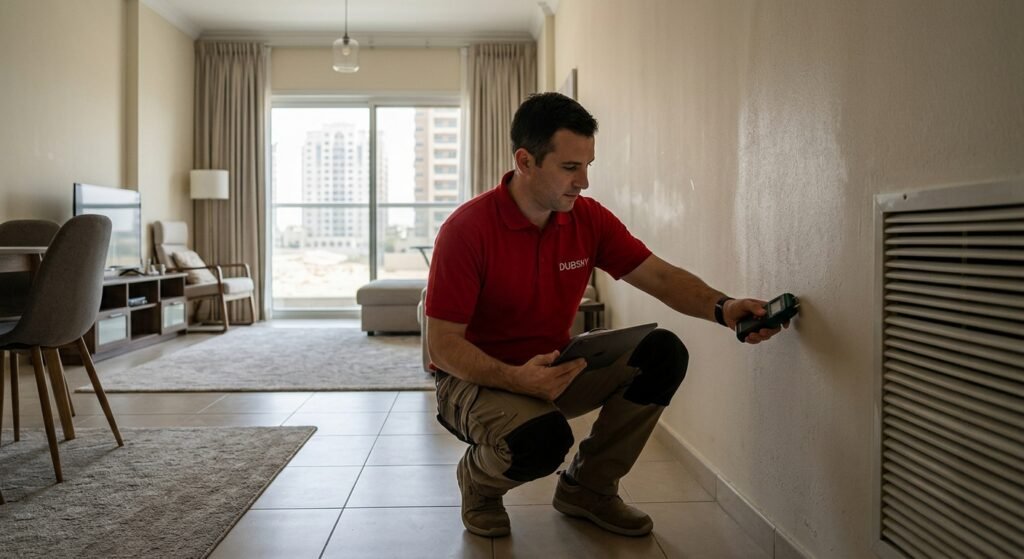
Building Condition Report Dubai: What’s Included 15 September 2026Guide4 min read A building condition report assesses the structure and shared systems of an entire building (façade, roof, common areas, mechanical rooms) rather than a single unit’s finishes. It answers a different question than a snagging report does, and most individual buyers never need one. The table below shows exactly how the two differ. In this guide Snagging report vs building condition report What this covers Who needs one How it differs from your unit inspection What gets documented When timing matters FAQs Snagging Report vs Building Condition Report Factor Snagging report Building condition report Scope One specific unit The whole building’s shared and structural elements Typical buyer Anyone buying a single apartment or villa Investors, bulk buyers, older-building purchasers What it checks Finishes, fixtures, defects inside your walls Façade, roof, common areas, shared mechanical systems When you need it Every purchase, before handover Bulk purchases, older buildings, periodic reviews What Does a Building Condition Report Actually Cover? A building condition report looks at shared and structural elements rather than individual units: the building’s façade, common area finishes, roof condition, shared mechanical and electrical systems, and structural elements like load-bearing walls and foundations where accessible for inspection. Think of it as answering “is the building itself sound” rather than “is this unit finished properly.” Who Actually Needs One? Investors buying multiple units in the same building, since building-wide issues affect the whole investment. Buyers considering an older building for resale, where shared-system ageing isn’t visible from inside one unit. Owners associations planning maintenance budgets, who commission these regularly. Why it changes the maths If the building’s façade needs major work in five years, that’s a cost eventually passed to owners through service charges. Knowing that ahead of time changes the maths on whether a purchase still makes sense. How Does This Differ From Your Own Unit Inspection? A unit check from civil inspection services in Dubai and a building condition report on the property as a whole are complementary rather than substitutes for each other. One tells you whether your apartment is in good shape. The other tells you whether the structure it sits inside is ageing well. Most individual buyers only ever need a professional snagging report on their own unit. A full building condition report tends to matter more for larger investments or older buildings where shared system deterioration is a real concern. What Actually Gets Documented? Structure. Elements accessible for visual and instrument-based inspection. Façade. Condition, including sealant and cladding where applicable. Common areas. Finishes and any visible deterioration. Mechanical rooms. Shared equipment condition. Overall assessment. Remaining useful life for major systems, ending in a prioritised action list. Not sure which level of inspection fits? book a civil inspection When Does Timing Actually Matter? Before committing to a bulk purchase or an older building acquisition is the obvious moment, but it’s also worth commissioning one periodically for buildings you already own into. Our building condition assessment guide covers what a full assessment typically involves. FAQs About Building Condition Reports in Dubai Is this the same as a snagging report? No, though people sometimes use the terms loosely. A snagging report covers one specific unit’s defects. A building condition report covers the structure and shared systems of the entire building. How often should a building get one of these? There’s no single schedule that fits every building. Owners associations commission them regularly to plan maintenance budgets, and it’s worth commissioning one periodically for a building you already own into, as well as before a bulk purchase or an older building acquisition. Can I request an existing report instead of commissioning a new one? It’s worth asking, since owners associations commission these regularly and one may already exist for your building. Check the date and what it covered, because an older report may not reflect the building’s current condition. Does Dubshy carry out full building condition assessments? Dubshy offers civil inspection services. Get in touch to discuss your situation, and the team can tell you which level of assessment actually fits it. Not Sure Which Inspection You Need? Most individual buyers won’t need a building condition report for a single apartment purchase. Where it becomes relevant is bulk purchases, older buildings, and anyone with a stake beyond just their own unit. You can book a civil inspection to discuss which level of assessment actually fits your situation. book a civil inspection
Kitchen Defects Dubai Apartment: What Inspectors Find
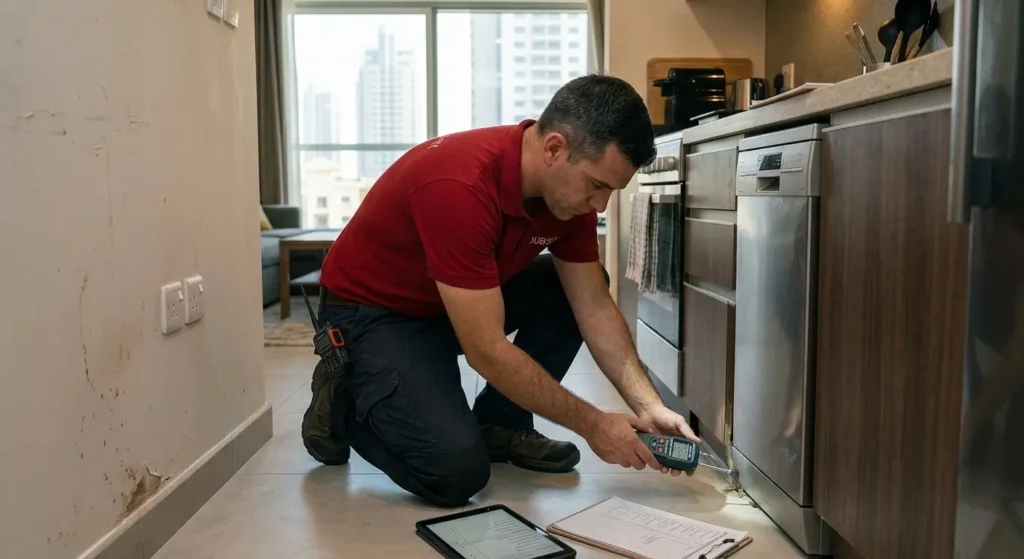
Kitchen Defects Dubai Apartment: What Inspectors Find 15 September 2026Guide4 min read Kitchens pack more trades into a smaller space than almost any other room: plumbing, electrical, cabinetry, worktops, and appliances, all needing to line up correctly within a tight footprint. That’s exactly why they show more defects per square metre than the rest of a new-build apartment. The table below covers the five areas worth checking most closely. In this guide Where kitchen defects show up Cabinet alignment Under-sink plumbing Worktop, electrical and appliances Why kitchens need their own check FAQs Where Do Kitchen Defects Actually Show Up? Kitchen area Common defect Why it happens Cabinets Doors don’t sit flush, drawers stick, hinges already loose Cabinets levelled against a floor that wasn’t perfectly flat Under-sink plumbing Loose connections, sagging pipes, kinked supply lines Rushed final-stage plumbing in a tight, crowded space Worktop & splashback Hairline cracks near sink cutout, unsealed gaps at the wall Stone stressed during cutout; sealant applied inconsistently Electrical Sockets too close to the sink, flickering under-cabinet lighting Kitchens draw more power than most rooms, exposing wiring shortcuts faster Appliances Ovens not level, extractor hoods with no working ventilation Installed for appearance rather than function under time pressure Cabinet Alignment Is the One Everyone Notices First Doors that don’t sit flush, drawers that stick or don’t close all the way, hinges already loose within weeks of handover. Some of this comes down to cheap hardware, but a lot of it traces back to cabinets that weren’t levelled properly against a floor that wasn’t perfectly flat to begin with. Once you notice one misaligned door, it’s worth checking every single cabinet, because if one’s off, others usually are too. Why Is Under-Sink Plumbing Where Real Problems Hide? This is the spot where we find the most actual defects, not just cosmetic ones. Loose connections that aren’t leaking yet but will eventually. Pipes that weren’t properly secured and are already sagging under their own weight. A professional plumbing inspection checks this properly, running water and actually watching for drips or pressure drops rather than just glancing under the sink. Worktop, Electrical, and Appliance Fit Worktop. Check for hairline cracks near the sink cutout and gaps at the splashback wall. Electrical. Test sockets near the sink, and check under-cabinet lighting on its actual circuit. Appliances. Confirm ovens and dishwashers are installed level, with no gaps around the housing. Extractor hood. Check it’s genuinely ducted through, not just running and sounding like it works. A real example We caught exactly that last one in an apartment near Business Bay a few months ago. The hood switched on fine, with decent airflow felt right at the front grille. Following the ducting back through the cabinet above it, though, it just stopped, capped off inside the unit rather than connected through to the building’s exhaust system. Want the kitchen tested, not just looked at? book a kitchen inspection Why Do Kitchens Deserve Their Own Focused Check? A general walkthrough tends to miss most of this, since a lot of it isn’t visible without actually testing things: running water, opening every cabinet, checking behind appliances. A proper bathroom and kitchen inspection service goes through the kitchen systematically rather than glancing around and assuming it’s fine because it looks clean. If you want to see how kitchen issues compare against defects found elsewhere in a typical new build, our common defects guide covers the full range across every room. FAQs About Kitchen Defects in a Dubai Apartment Are kitchen defects usually cosmetic or something more serious? A mix, but the plumbing-related ones tend to matter more long term, since a slow leak under a cabinet can cause damage for months before anyone notices. Should I check appliances myself before handover? Yes, it’s worth doing. Check that the oven and dishwasher sit level with no gaps around the housing, and switch on the extractor hood. Airflow at the front grille doesn’t prove it’s ducted through, so if you can, follow the ducting back through the cabinet above it. Does Dubshy check kitchens as part of a standard inspection? Yes. Kitchens are checked as part of the full apartment walkthrough, including cabinets, under-sink plumbing, worktops, electrical points, and appliances, with water actually run to look for drips or pressure drops. Confirm the scope when you book. Ready to Start Your Kitchen Inspection? Kitchens pack a lot into a small footprint, and that’s exactly why problems slip through unnoticed. If handover’s coming up, it’s worth arranging a bathroom and kitchen inspection so anything wrong gets caught while your developer’s still responsible for fixing it. book a kitchen inspection
Dubai Marina Snagging Checklist: A Room-by-Room Guide

Dubai Marina Snagging Checklist: A Room-by-Room Guide September 12, 2026 Tom Alex Dubai Marina Snagging Checklist Dubai MarinaChecklist5 min read Dubai Marina inspections split into two very different conversations depending on the building’s age. A tower from the early 2000s brings wear-related issues from years of salt air exposure. A newer development along the extension brings construction-shortcut risk instead. The table below shows how the checklist priorities differ between the two. In this guide Older towers vs newer towers Older Marina towers Newer towers What to walk through Booking the right inspection Off-plan versus ready FAQs Older Towers vs Newer Towers Issue type Older towers (15+ years) Newer towers (recent handover) Window and balcony seals Cracked or pulled-away silicone from salt air and wind exposure over time Seals not yet tested by weather; installation quality is the risk AC performance Inconsistent servicing history from previous owners and tenants Untested performance; may show installation shortcuts under real load Plumbing Fittings from an earlier era, not necessarily to today’s standard New fittings, but installation errors possible Finishes General wear from years of use Rushed shortcuts to hit a handover date; inconsistency between units Older Marina Towers Come With Their Own Wear Pattern Buildings that have been standing fifteen or twenty years show it in specific places. Window seals around balconies facing the water take a beating from salt air and constant wind, and it’s common to find silicone that’s cracked or pulled away entirely, letting water in during heavy rain. AC systems in these older units have often been serviced inconsistently by whoever owned or rented before, so checking actual performance rather than assuming a working system matters more here than in a brand new build. Newer Towers Bring Different Risks Fresh construction means finishes that haven’t been tested by years of actual living, which is its own kind of risk. Flooring transitions, cabinet alignment, and paint finish tend to be where new builds show shortcuts taken to hit a handover date. We also see more inconsistency between units in the same new tower than people expect, one apartment finished properly, the one next door with the same layout showing three or four issues the first didn’t have. What to Actually Walk Through Windows and balcony doors. Check every seal by running a hand along the join. AC. Check every vent for airflow and temperature. Electrical. Test every socket and switch, not just visually inspect them. Plumbing. Check bathroom and kitchen plumbing under actual use. Flooring. Check for level and hollow spots, especially near balcony thresholds. Balcony drainage. Test it by running water directly onto the surface. The balcony that looked fine We inspected a unit last year on a mid floor facing the water where everything looked fine at a glance, balcony door sealed properly, no visible staining. It was only checking the drainage channel itself, running water directly into it, that we found it backing up almost immediately instead of flowing toward the outlet. A blockage from construction debris that had never been cleared. Not sure which category your building falls into? book a marina inspection Booking the Right Kind of Inspection A proper property snagging inspection in Dubai Marina accounts for which category your building falls into, older tower with wear-related issues or newer development with construction shortcuts, and adjusts what gets prioritised accordingly. The output is a professional snagging report organised by location and severity, which matters whether you’re negotiating with a developer on a new unit or a seller on a resale one. Off-Plan Versus Ready: It Changes the Approach If you’re buying off-plan in one of the newer Marina extension developments, the inspection timing and what you can actually push a developer to fix looks quite different from buying a ready resale unit in an older tower. Our off-plan vs ready snagging guide goes into that difference in more detail. FAQs About the Dubai Marina Snagging Checklist Are older Marina towers worth buying given the wear issues? Plenty of them are, the wear just needs to be accounted for in the price and caught before you commit rather than discovered afterward. How much does location within the building matter? It matters for a few things. Units facing the water take more salt air and wind, which wears window and balcony seals faster. Floor level affects wind exposure, and the position relative to risers and shared systems can affect noise and ventilation. Ask your inspector to record these along with the defects. Should I inspect before or after negotiating price on a resale unit? Ideally before you commit. A snagging report gives you documented, located findings you can use in the price conversation, rather than discovering the problems after you have agreed. In an older tower this matters even more, because wear and servicing history are harder to judge by eye. Does Dubshy inspect both old and new Marina buildings? Yes. The inspection is adjusted to the building’s category: wear-related issues such as seals, AC servicing history and older fittings in an older tower, and installation quality and finishing shortcuts in a newer one. Share your building and whether the unit is new or resale when you book. Does Dubshy check every tile in the apartment? A proper flooring check goes tile by tile rather than sampling a handful and assuming the rest match. Chips, cracks and hollow-sounding tiles are marked by exact location in the report, so the developer’s contractor can find and fix each one. Ready to Start? Dubai Marina isn’t one uniform market when it comes to what to check, an older tower and a brand new development need different attention entirely. Whichever category your unit falls into, it’s worth arranging to book a Marina snagging inspection before you commit. Every Fault We Miss, You Pay for Later Book now: certified inspection, DEWA-ready report in 24 hours. WhatsApp us now book inspection now +971 5889 90456 hello@dubshy.com
AC Inspection at Handover in Dubai: Why It Really Matters

AC Inspection at Handover in Dubai: Why It Really Matters September 12, 2026 Tom Alex AC Inspection at Handover ACHandover5 min read An AC inspection at handover checks five things a quick hand-under-the-vent test never catches: temperature differential, airflow at every vent, condensate drainage, noise and vibration, and the electrical load feeding the unit. Cold air coming out tells you almost nothing about whether any of these are actually right. The table below shows what gets measured and why. In this guide What gets measured, and with what Cold air isn’t the test Why airflow is checked at every vent Noise deserves more attention Electrical load Why handover timing matters FAQs What Gets Measured, and With What What’s checked Tool used What it reveals Temperature differential Thermometer at supply and return air Whether the system is actually cooling efficiently, not just running Airflow at every vent Anemometer Ducting problems, balancing issues, disconnected sections Condensate drainage Visual and water test Whether the line is draining or backing up, a common hidden leak source Noise and vibration Direct observation while running Loose panels, misaligned fan blades, compressor mount issues Electrical load Circuit and load testing Whether wiring is rated correctly for the unit’s actual power draw Cold Air Coming Out Isn’t the Test An AC unit can produce cold air while still having real problems underneath: low refrigerant charge that’s still enough to cool a small room but not enough to keep up once summer temperatures climb, a compressor working harder than it should, ducting that’s leaking cold air into a ceiling void instead of the room it’s meant to be cooling. None of that shows up if the only thing you’re checking is whether air feels cold at the vent. Why Airflow Gets Checked at Every Single Vent Weak or uneven airflow across rooms points to ducting problems, a balancing issue, or in some cases a duct that’s partially disconnected somewhere behind a ceiling. Beyond the AC itself, a proper handover check also covers the fans and ventilation side of things, extraction fans in bathrooms and kitchens, since AC and ventilation systems in a new build are often linked more closely than people realise. Want every vent measured, not guessed? book an ac inspection Noise Is Worth More Attention Than People Give It A unit that’s rattling, clicking on startup, or unusually loud compared to a normal split system is telling you something, even if it’s still cooling fine on the surface. Loose panels, a fan blade slightly out of alignment, or a compressor mount that wasn’t installed correctly can all sound roughly similar to an untrained ear but mean very different repairs. The humming outdoor unit We checked a villa where the owner mentioned, almost as an afterthought, that the outdoor unit made a faint humming noise at night he’d gotten used to. Turned out one of the compressor’s mounting bolts had backed out slightly during installation, letting the whole unit vibrate against its frame. Cheap fix once it’s found, and it was still well within his DLP. Electrical Load Matters Too AC units draw significant power, and the wiring feeding them needs to be rated correctly for that load. An electrical systems inspection alongside the AC check confirms the circuit isn’t undersized, since an undersized circuit might work fine on day one and start tripping breakers once you’re actually running the system continuously through peak summer. Why Handover Timing Matters Specifically Checking the AC at handover, rather than waiting a few months, means any installation issue is still fully covered under your Defects Liability Period. A refrigerant charge that’s slightly off, or ducting that wasn’t sealed properly, are both things a developer is responsible for fixing if caught early. Wait too long and the same issue becomes something you’re paying for yourself. AC is one part of a full handover check, not the whole thing. If you want to see how it fits alongside everything else worth checking on handover day, our pre-handover inspection guide covers the full scope beyond just the AC system. FAQs About AC Inspection at Handover How long does an AC inspection take at handover? For a standard apartment, usually under an hour as part of a broader inspection. Villas with central systems and more ducting can take longer, depending on how many zones and vents there are to check. What if my AC seems fine but I still want it checked? That is exactly when a check is most useful. A unit can cool the room while hiding a low refrigerant charge, leaking ducting, a blocked condensate line or an undersized circuit. These only cost you money later, once the DLP has closed. Measuring airflow, temperatures, drainage and electrical load at handover shows whether the system is actually right. Is a weak vent in one room normal? Not usually. Weak airflow in one room while others feel fine often points to a ducting problem, a balancing issue, or a duct that is partly disconnected behind the ceiling. It will not fix itself, so note which vent it is and raise it with the developer in writing while the DLP is running. Does Dubshy include AC in a standard handover inspection? Dubshy offers both full handover inspections and dedicated AC inspections. When you book, confirm that AC testing, including airflow measurement at every vent, is part of your scope. If you want it covered in more detail, ask for the AC inspection to be added. Ready to Start? Feeling cold air at a vent tells you almost nothing about whether an AC system was actually installed correctly. If you’re heading into handover soon, it’s worth arranging to book an AC inspection while the developer’s still on the hook for anything that turns up. Every Fault We Miss, You Pay for Later Book now: certified inspection, DEWA-ready report in 24 hours. WhatsApp us now book inspection now +971 5889 90456 hello@dubshy.com
DDA Structural Inspection Dubai: What It Actually Covers
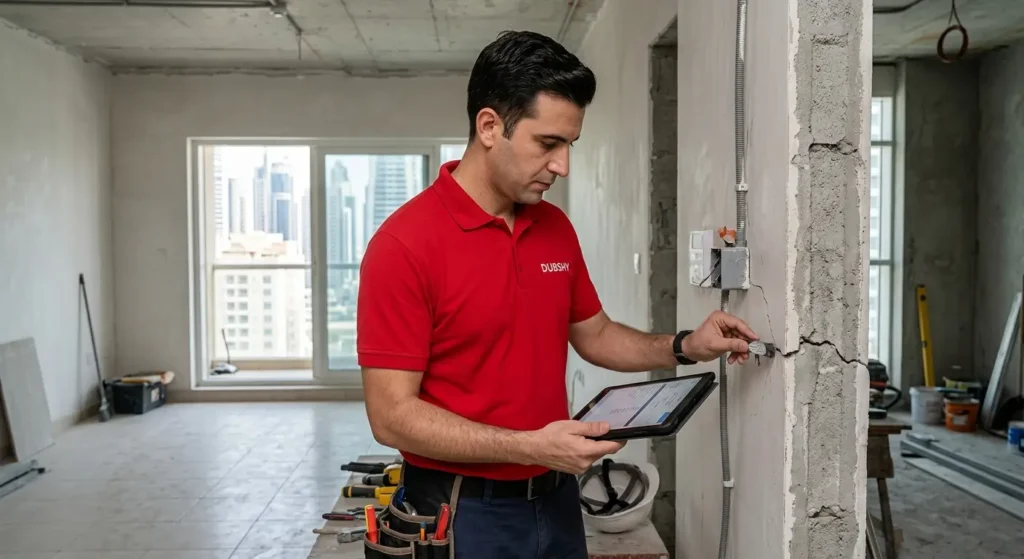
DDA Structural Inspection Dubai: What It Actually Covers September 12, 2026 Tom Alex DDA Structural Inspection Dubai StructuralInspection5 min read A snag list isn’t just a record for you, it’s a working document someone else has to act on without needing to ask follow-up questions. If a developer’s maintenance team can’t figure out exactly where an issue is from reading your list, they either guess, which sometimes means checking the wrong spot, or they come back to you for clarification, which adds days to a process that’s already slow enough. In this guide How to structure the full list Where this connects to a full report What it costs Cracking, chipping and edge damage FAQs The three-line list Someone sent us a snag list last month that was literally a numbered note on their phone: “1. Bathroom tile cracked. 2. Kitchen tap loose. 3. Bedroom door sticks.” Three lines, no photos, no location beyond the room name. The developer’s team came back asking which bathroom, since the apartment had two, and which corner of which door was sticking. That back-and-forth alone cost him a week. How to Structure the Full List Break it down by room, then by item within each room. Number every entry so it’s easy to reference in follow-up conversations. Keep a running status column so open items don’t get lost. Note roughly when each defect was first noticed, versus your handover date. That last point is easy to skip but genuinely useful. If a crack shows up eight months in rather than on day one, that timing matters for whether it’s still a construction fault or general wear, and developers will sometimes push back on defects reported without any sense of when they actually appeared. Where This Connects to a Full Snagging Report A snag list, even a well-formatted one, is really just one piece of a full professional snagging report. The report adds the systematic check across every part of the property, electrical, plumbing, structural, alongside the location-by-location list, which is why booking an inspection tends to catch far more than filling out a template yourself. If you’re doing your own walkthrough first, or want something to hand your inspector to cross-check against, a structured template is a solid starting point. Cover the areas that civil inspection services in Dubai would also look at: walls, ceilings, floors and structural joints. The tiles that looked perfect A buyer once walked us through his living room, proudly pointing out how the tiles “all matched perfectly.” They did, visually. Tapping across the floor told a different story: three tiles near the balcony door sounding distinctly hollow underneath. Once mapped and marked on the report, the developer’s contractor lifted and relaid all three inside a morning. Had that gone unnoticed, those same tiles would likely have cracked within a year or two of normal foot traffic. Want it documented properly from the start? book an inspection What It Costs to Get This Done Properly If you’d rather skip building your own template and have someone document everything to this standard from the start, our snagging report cost breakdown covers what that actually costs depending on unit size and property type. Cracking, Chipping, and Edge Damage Hairline cracks and chipped corners are among the easier defects to spot, but they’re also easy to write off individually rather than tracked across the full floor. A single chipped tile near a doorway might look like normal wear-and-tear from moving furniture in, but the same pattern repeated across several tiles in the same room usually points to a batch quality issue or a subfloor problem rather than one-off damage. This is why a proper check goes tile by tile rather than sampling a handful and assuming the rest match. Frequently Asked Questions Do developers actually require a specific format for snag lists? Most don’t mandate one formally, but the clearer and more structured yours is, the faster it tends to get actioned. A messy list often just gets deprioritised behind clearer ones from other buyers. How many photos should each entry have? At least two: a close-up of the defect and a wider shot that shows where it is in the room. If the defect is hard to see, add a third photo with something for scale, such as a coin or a tape measure. Name or number each photo to match its entry so nothing gets mixed up. Can I use a spreadsheet instead of a formal report? Yes, a spreadsheet works well for your own list. Use one row per defect with columns for number, room, exact location, description, photo, severity, status and date noticed. What a spreadsheet cannot do is check the parts you cannot see or measure, such as hidden moisture, airflow or electrical safety, which is where a professional report adds the most. Does Dubshy provide the report in a format I can send straight to my developer? Yes. Dubshy’s snagging report lists every finding by exact location, with photos and a severity rating, so the developer’s team can act on it directly. Reports are delivered within 24 hours of the inspection, and you can forward them to the developer as they are. Ready to Start? A snag list that actually gets acted on quickly is one that leaves nothing for the developer to guess at: exact location, clear description, a photo, a severity level, and a status. If you’d rather have that done properly from the start, you can request your snagging report and skip the back-and-forth entirely. Every Fault We Miss, You Pay for Later Book now: certified inspection, DEWA-ready report in 24 hours. WhatsApp us now book inspection now +971 5889 90456 hello@dubshy.com
Sewage Smell Apartment Dubai: Causes and Expert Fixes
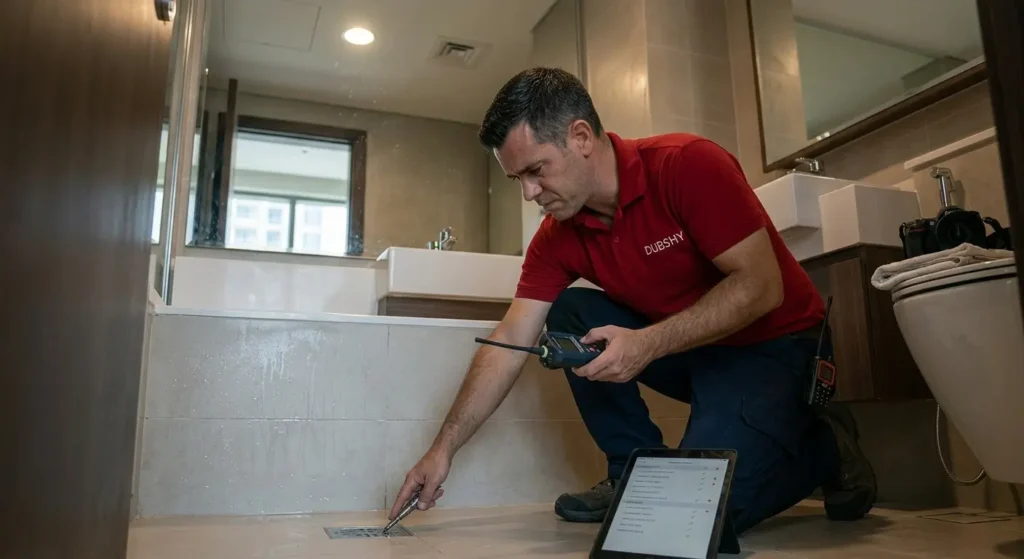
Sewage Smell Apartment Dubai: Causes and Expert Fixes September 12, 2026 Tom Alex Sewage Smell in a Dubai Apartment PlumbingTroubleshooting4 min read A sewage smell in a new Dubai apartment almost always traces back to one of four things: a dry P-trap, a disconnected ventilation duct, a failed toilet seal, or a shared riser venting issue. The first is by far the most common and the easiest to test yourself in under five minutes. The table below breaks down each cause and how to spot it. In this guide The four most common causes Why a dry trap is the usual culprit What to try before calling anyone When to get someone to look Ventilation gets overlooked FAQs The Four Most Common Causes Cause Where it usually shows up Quick test Dry P-trap Guest bathrooms, floor drains, rarely-used sinks Run water in every drain for 30 seconds Disconnected vent duct Bathroom or kitchen extraction fan Fan spins but you feel no draw at the grille Failed toilet seal Base of the toilet, especially if it rocks slightly Check for movement when you sit down Shared riser venting issue Anywhere in the unit, harder to isolate Needs a proper plumbing inspection to trace Why a Dry Trap Is the Usual Culprit Every drain in your apartment, sinks, floor drains, the one behind your washing machine, has a P-trap underneath it. That U-shaped bend holds a small amount of water permanently, and that water is what blocks sewer gas from travelling back up into your apartment. If a drain isn’t used often, a guest bathroom, a floor drain in the laundry area, that water can evaporate over a few weeks, and once it’s gone, there’s nothing stopping the smell from coming straight through. This explains why the smell often shows up in a specific spot rather than the whole apartment, and why it can seem to come and go depending on how recently that drain was used. What to Try Before Calling Anyone Run every drainRun water in every sink, shower, and floor drain for about thirty seconds each, including ones you never use. Wait 24 hoursCheck whether the smell has actually gone. If it’s goneThat confirms a dry trap was the cause. Refill unused drains monthly to prevent it recurring. If it returnsIf the smell comes back within a week or two, the cause is something that needs a proper inspection rather than a DIY fix. Smell came back after refilling the drains? book a plumbing inspection When It’s Worth Getting Someone to Look Properly A professional plumbing inspection checks every trap, seal, and vent connection systematically rather than guessing room by room. It’s the difference between refilling traps and hoping versus actually finding the disconnected vent duct or failed toilet seal causing the problem in the first place. If the smell’s been going on for a while, it’s also worth having someone check for moisture buildup behind walls, since a persistent leak feeding that smell can also lead to mould. Our mould and mildew inspection guide covers what that looks like if the sewage smell turns out to be tied to a bigger moisture issue than expected. Ventilation Gets Overlooked More Than It Should People fixate on plumbing and forget the ventilation side entirely, but a fans and ventilation inspection on a new build sometimes turns up ducting that was never properly connected during construction, run behind a wall and just left disconnected at one end. Nobody notices during the initial walkthrough because the fan still spins and sounds normal, it’s just not venting anywhere useful. A real case from a building we checked That’s exactly what turned out to be happening once it went past a simple dry trap. The extraction duct behind the ceiling had been left unconnected during the final fit-out stage, capped with nothing but a loose flap of ducting sitting inside the void. The fan worked fine on its own, it just wasn’t going anywhere. FAQs About Sewage Smell in a Dubai Apartment Is a sewage smell dangerous to live with? Sewer gas contains methane and other compounds that aren’t great to breathe in consistently over time, so it’s worth addressing rather than just living with it, even if it’s not an emergency on day one. Why does the smell only show up sometimes? Most often because of a dry trap. The water seal in a rarely-used drain evaporates over a few weeks, so the smell appears around that one spot and fades after the drain has been used and the trap has refilled. If it keeps coming and going even after you refill every drain, something else is involved, such as a vent connection or a toilet seal. Could this be a sign of a bigger building issue? Usually not. A dry trap or a ventilation fault is behind most cases in new apartments. But if the smell returns after refilling the drains, it can point to a failed toilet seal, a disconnected vent duct, a shared riser venting issue, or a hidden leak that also risks moisture and mould. Report it to the developer in writing with the date you first noticed it, especially if you are still within the DLP. Can Dubshy trace exactly where a smell like this is coming from? Dubshy’s plumbing and ventilation inspections check traps, toilet seals, vent connections and extraction ducting one by one, rather than guessing room by room. Findings are recorded by exact location with photos, so the developer’s team knows where to look. A shared riser issue is harder to isolate, and may need the building’s maintenance team involved too. Ready to Start? A dry trap or a ventilation issue, rather than anything structurally serious, is behind most sewage smells in new Dubai apartments. Try refilling every drain first. If that doesn’t do it, it’s worth arranging to book a plumbing inspection rather than living with it and hoping it resolves on its own. Every Fault We Miss, You Pay for Later Book
Snag List Template: What a Professional One Actually Includes
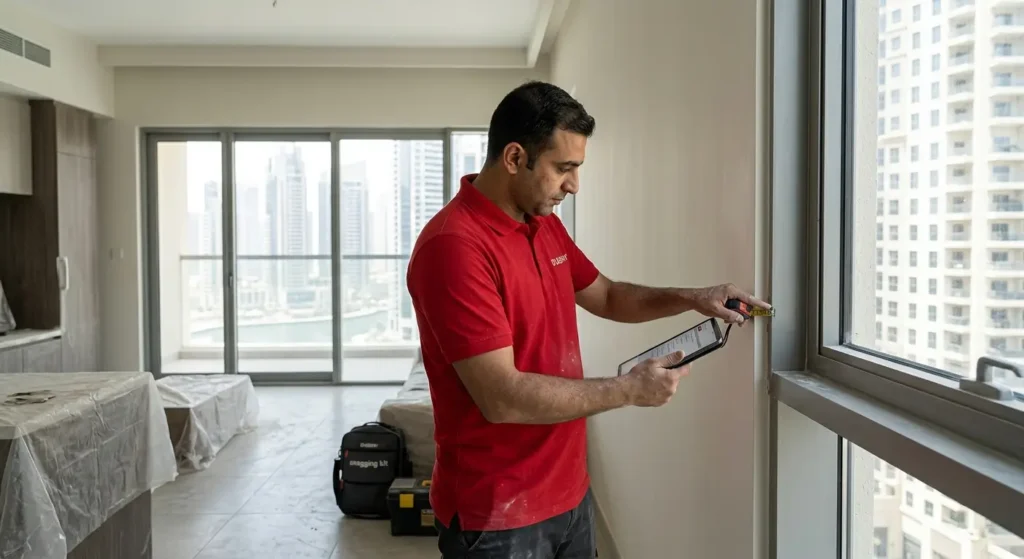
Snag List Template: What a Professional One Actually Includes September 8, 2026 Tom Alex Snag List Template TemplateSnagging5 min read A proper snag list template needs five things for every single entry: exact location, a clear description, a photo, a severity rating, and a status. Skip any of these and you end up with exactly what most buyers hand developers, a vague note that generates follow-up questions instead of a fix. The table below breaks down what each field should actually contain. In this guide The five fields every entry needs Why the format matters How to structure the full list Where this connects to a full report What it costs to do properly FAQs The Five Fields Every Entry Needs Field What to include Why it matters Location Room, wall, fixture, exact corner (not just “bathroom”) Removes any guesswork for whoever has to fix it Description Plain-language, specific detail (e.g. size and direction of a crack) Tells the maintenance team exactly what they’re looking for Photo Close-up plus a wider shot showing context in the room A photo of just the defect with nothing else in frame is nearly useless Severity Cosmetic, functional, or urgent/safety Not every item deserves the same priority or response time Status Open, in progress, resolved Creates a paper trail if anything drags on or needs escalating Why the Format Actually Matters A snag list isn’t just a record for you, it’s a working document someone else has to act on without needing to ask follow-up questions. If a developer’s maintenance team can’t figure out exactly where an issue is from reading your list, they either guess, which sometimes means checking the wrong spot, or they come back to you for clarification, which adds days to a process that’s already slow enough. The three-line list Someone sent us a snag list last month that was literally a numbered note on their phone: “1. Bathroom tile cracked. 2. Kitchen tap loose. 3. Bedroom door sticks.” Three lines, no photos, no location beyond the room name. The developer’s team came back asking which bathroom, since the apartment had two, and which corner of which door was sticking. That back-and-forth alone cost him a week. The tiles that looked perfect A buyer once walked us through his living room, proudly pointing out how the tiles “all matched perfectly.” They did, visually. Tapping across the floor told a different story: three tiles near the balcony door sounding distinctly hollow underneath. Once mapped and marked on the report, the developer’s contractor lifted and relaid all three inside a morning. Had that gone unnoticed, those same tiles would likely have cracked within a year or two of normal foot traffic. How to Structure the Full List Break it down by room, then by item within each room. Number every entry so it’s easy to reference in follow-up conversations. Keep a running status column so open items don’t get lost. Note roughly when each defect was first noticed, versus your handover date. That last point is easy to skip but genuinely useful. If a crack shows up eight months in rather than on day one, that timing matters for whether it’s still a construction fault or general wear, and developers will sometimes push back on defects reported without any sense of when they actually appeared. Prefer to have it documented for you? book an inspection Where This Connects to a Full Snagging Report A snag list, even a well-formatted one, is really just one piece of a full professional snagging report. The report adds the systematic check across every part of the property, electrical, plumbing, structural, alongside the location-by-location list, which is why booking an inspection tends to catch far more than filling out a template yourself. If you’re doing your own walkthrough first, or want something to hand your inspector to cross-check against, a structured template is a solid starting point. Cover the areas that civil inspection services in Dubai would also look at: walls, ceilings, floors and structural joints. What It Costs to Get This Done Properly If you’d rather skip building your own template and have someone document everything to this standard from the start, our snagging report cost breakdown covers what that actually costs depending on unit size and property type. FAQs About the Snag List Template Do developers actually require a specific format for snag lists? Most don’t mandate one formally, but the clearer and more structured yours is, the faster it tends to get actioned. A messy list often just gets deprioritised behind clearer ones from other buyers. How many photos should each entry have? At least two: a close-up of the defect and a wider shot that shows where it is in the room. If the defect is hard to see, add a third photo with something for scale, such as a coin or a tape measure. Name or number each photo to match its entry so nothing gets mixed up. Can I use a spreadsheet instead of a formal report? Yes, a spreadsheet works well for your own list. Use one row per defect with columns for number, room, exact location, description, photo, severity, status and date noticed. What a spreadsheet cannot do is check the parts you cannot see or measure, such as hidden moisture, airflow or electrical safety, which is where a professional report adds the most. How long does a full flooring check take in an average apartment? It depends on the size of the apartment and the type of flooring. The check involves walking and tapping across every room to listen for hollow spots, and using a level tool at transitions, so it takes longer than a visual look. Ask for a time estimate when you book. Ready to Start? What you can’t hear from standing still can still cost you later. A floor that looks perfect can have real problems hiding underneath the surface, hollow spots, moisture, or level dips that only show up under proper testing. If
Downtown Dubai Snagging Checklist: What to Inspect
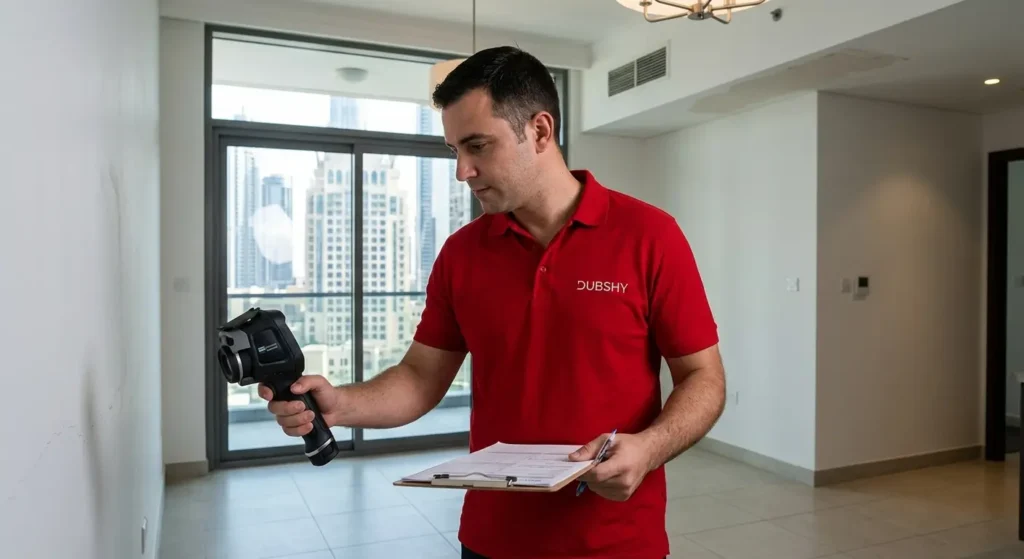
Downtown Dubai Snagging Checklist: What to Inspect September 8, 2026 Tom Alex Downtown Dubai Snagging Checklist Downtown DubaiChecklist6 min read A Downtown Dubai snagging checklist needs to cover more than a standard apartment checklist, because a high-rise unit comes with issues a low-rise or villa property simply doesn’t face: wind pressure on window seals at height, shared risers connecting your AC and plumbing to dozens of other units, and finishes that take a beating from constant elevator and contractor traffic during the building’s final fit-out. This guide walks through what to check, room by room, before you sign off on handover. In this guide Why high-rise snagging is different Room-by-room checklist What happens during an inspection Buying with Emaar FAQs Why High-Rise Snagging Isn’t the Same Checklist as a Villa Height changes what actually goes wrong. Wind pressure on upper floors stresses window seals differently than it would lower down. Elevators and shared building services introduce noise and vibration issues a standalone home never deals with. And a leak on floor 30 can show up as a stain on someone else’s ceiling on floor 29 with zero warning to you. The table below sums up where a Downtown high-rise checklist actually diverges from a villa one. Check area High-rise / Downtown focus Villa focus (for comparison) Windows and doors Seal integrity under wind pressure at height; water ingress during driven rain Ground-level exposure; less wind stress, more direct weather exposure AC and ventilation Central system routed through shared risers; bathroom and kitchen exhaust often shared across floors Standalone system per unit; no shared riser dependency Water and drainage Balcony slope; leaks can travel between floors via shared plumbing Driveway, garden and roof drainage instead of balcony Noise and vibration Elevator shafts, shared risers, neighbouring units above and below Largely isolated from other units Finishes Handling damage from service elevators and constant contractor traffic during fit-out Handling damage more limited to direct construction phase Room-by-Room Checklist Windows and balcony doors Run a hand along every window and sliding door seal, feeling for gaps or bubbling silicone. Slide balcony doors through their full range of motion, more than once. Check balcony drainage slope by running water directly onto the surface and watching where it goes. On a high floor, a poorly sealed window isn’t just a draft, it can mean genuine wind noise during storms and water ingress when rain is driven sideways against the glass. AC and ventilation Check airflow at every vent, not just one room. Listen for rattling or unusual noise in the ductwork. Confirm the unit actually reaches its set temperature rather than just running constantly. Test bathroom and kitchen extraction fans, since these often tie into a shared exhaust system in towers. Central AC systems in towers route through shared risers, so a problem isn’t always isolated to your unit even if it started there. A weak bathroom fan in your apartment sometimes points to a blockage that has nothing to do with your own floor. Finishes and fit-out Check every wall corner for chips and dents. Run a hand along skirting boards for gaps. Look at flooring transitions between rooms for uneven levels. High-rise units get handled roughly during fit-out and move-in, materials and furniture going up in service elevators, contractors moving through shared corridors constantly. A real case near Old Town We inspected a tower near Old Town where a section of living room floor near the balcony door sat almost a centimetre out of level, invisible to the eye but enough to eventually cause a trip hazard. Running a level tool across it caught what a walkthrough never would have. Noise, vibration and shared systems Note the unit’s position relative to elevator shafts and main risers. Listen for plumbing noise from units above during different times of day. Neither of these shows up on a quiet daytime walkthrough. Worth specifically asking your inspector to check and document proximity to elevator shafts and risers, since that placement affects daily noise levels in a way finishes never will. Want a tower-specific inspection? book a downtown inspection What Happens During a Professional Inspection Windows, balcony doors and drainageTested first, including a live water test on balcony slope. AC and ventilationChecked at every vent, with airflow and temperature measured, not estimated. Electrical and plumbingTested throughout, alongside the structural checks that apply to any unit. FinishesInspected room by room, with a level tool used on flooring transitions. ReportFindings are documented by exact location, photographed, and rated by severity. A proper property snagging inspection in Downtown Dubai covers all of this, with extra attention on the tower-specific items in the table above. The output is a professional snagging report organised by location and severity, something your developer’s team can act on directly rather than a rough list of things that felt off during a walkthrough. If You’re Buying With Emaar Specifically A large share of Downtown stock is Emaar-developed, and their handover process has its own quirks worth knowing ahead of time. Our Emaar handover checklist goes through what to expect specifically from their process, separate from the general checklist above. FAQs About the Downtown Dubai Snagging Checklist Are Downtown apartments more prone to defects than other areas? Not inherently, but the density and construction pace of the area means certain issues, window seals, shared riser problems, come up more often simply because there are more units and more shared systems involved. How long does a high-rise apartment inspection take? It depends on the size of the apartment and how many balconies, bathrooms and AC zones it has. A larger unit takes longer because every vent, window and wet area is tested and documented, not just looked at. Ask for a time estimate when you book, and keep the day free if you plan to attend. Should I inspect before or after the developer’s own snagging team has been through? Ideally before you sign off on handover, and it is fine if the developer’s team has already done their
AC Checkup Before DLP Expires in Dubai | Dubshy
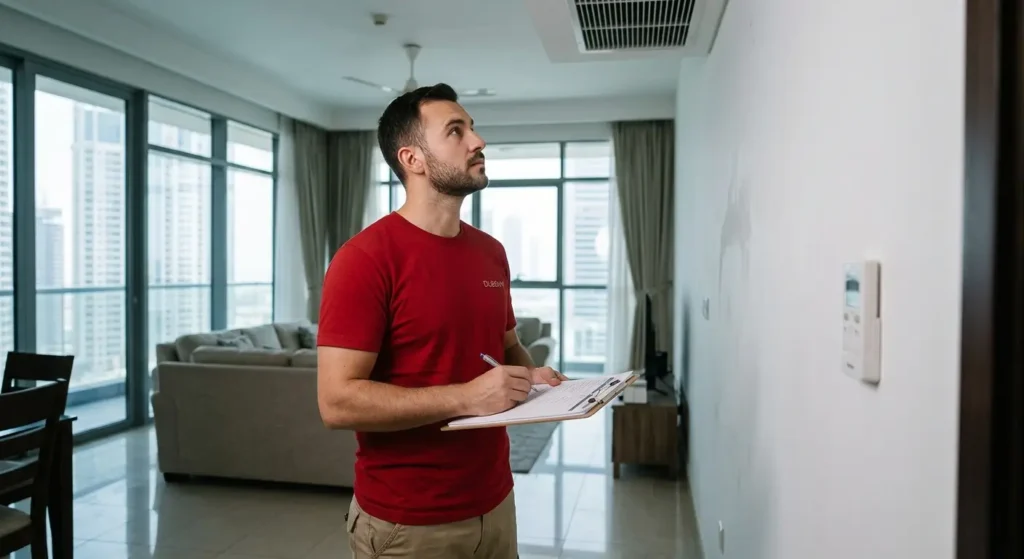
AC Checkup Before DLP Expires in Dubai | Dubshy September 3, 2026 Tom Alex AC Checkup Before DLP Expires AC and DLPChecklist4 min read A guy called us with about a week left on his DLP, panicking because his AC had started making a noise he’d been ignoring for months. “It still cools the room, so I figured it was fine.” That’s usually the trap. An AC unit can technically work while quietly developing problems that only show up properly once the warranty’s gone and the bill lands on you instead of the developer. In this guide Why the DLP deadline matters What to check before time runs out Where the electrical side comes in What a DLP-timed inspection covers What happens if you miss the window FAQs Why the DLP Deadline Actually Matters for AC Dubai’s summers put AC systems through more strain than almost anything else in a property, and a lot of installation shortcuts don’t show themselves until a unit’s been running hard for a full year. Refrigerant levels that were slightly off from day one. Ducting that wasn’t sealed properly and is losing efficiency nobody’s noticed because the room still gets cold eventually, just slower and at higher cost. Once the Defects Liability Period closes, all of that becomes your problem. Not the developer’s. Which is exactly why the week or two before it ends is worth actually using instead of assuming everything’s fine because nothing’s obviously broken. What to Actually Check Before You Run Out of Time Airflow at every vent. Check the whole unit, not just the room you happen to be sitting in. Weak airflow in one room while others feel fine usually points to a ducting issue or a balancing problem that won’t fix itself. The sound of the unit. Listen properly, not just a passive “does it sound normal.” Grinding, rattling, or a clicking noise on startup are all signs something mechanical isn’t right, and none of those show up if you’re just checking whether cold air comes out. Water around the indoor unit. Look at the unit and at the ceiling near it. Condensate lines block more often than people expect, and a slow drip behind a ceiling panel can sit there for a while before it becomes visible. That is why a proper AC inspection in Dubai covers the whole system rather than just the parts you can see. Thermostat accuracy. Set it to 22 and measure the room temperature with something separate. A thermostat reading wrong by a couple of degrees either wastes electricity or means the unit’s working harder than it should to hit a temperature it’s telling you it’s already reached. Where the Electrical Side Comes In AC units pull a fair amount of power, and if the circuit feeding it wasn’t sized or wired correctly, you’ll sometimes see breakers tripping under load, especially during peak summer when several units in a building are running at once. An electrical systems inspection covers this side of things, checking whether the wiring feeding your AC units is actually rated for what they draw, not just whether the socket has power. Want an engineer to measure it all properly? book an ac inspection What a DLP-Timed Inspection Actually Covers It’s not the same as a routine service. A DLP inspection is specifically about catching things that trace back to the original installation, poor refrigerant charging, undersized ducting, incorrect drainage slope, before the window to have the developer fix them for free closes for good. If you want the fuller picture of what a DLP inspection covers beyond just AC, our DLP inspection guide walks through the rest of what typically gets checked in that final inspection window. What Happens If You Miss the Window Nothing dramatic happens on the day itself. The AC keeps running, life goes on. What changes is who’s paying if something that was actually an installation fault finally shows up six months later. A refrigerant leak that was slow enough to stay hidden during the DLP doesn’t stop being slow once the warranty ends, it just becomes an expense with your name on it instead of the developer’s. A real case from last summer A buyer’s unit passed every basic check on the surface: it cooled fine, no strange noises, nothing obviously wrong. It was only once we measured actual airflow at each vent that we found one bedroom running noticeably weaker than the rest, traced back to a section of ducting that had been crushed slightly during installation and never fixed. Twenty minutes of measuring caught something that would’ve just meant a permanently warmer bedroom and a higher electricity bill for as long as the buyer owned the place, if the DLP window had closed first. FAQs About AC Checkup Before DLP Expires How close to DLP expiry should I book an AC check? Ideally a few weeks out, not the last few days. That leaves enough time to actually get any findings raised with the developer and, hopefully, addressed before the window fully closes. Ready to Start? An AC that cools the room isn’t the same as an AC that’s actually fine, and the gap between those two only costs you money once the developer’s no longer responsible for it. If your DLP’s closing in, it’s worth getting it looked at properly rather than going on how the air feels. You can book an AC inspection while there’s still time to get anything found actually fixed under warranty. Every Fault We Miss, You Pay for Later Book now: certified inspection, DEWA-ready report in 24 hours. WhatsApp us now book inspection now +971 5889 90456 hello@dubshy.com