
Third Party Inspection Dubai | Independent Reports
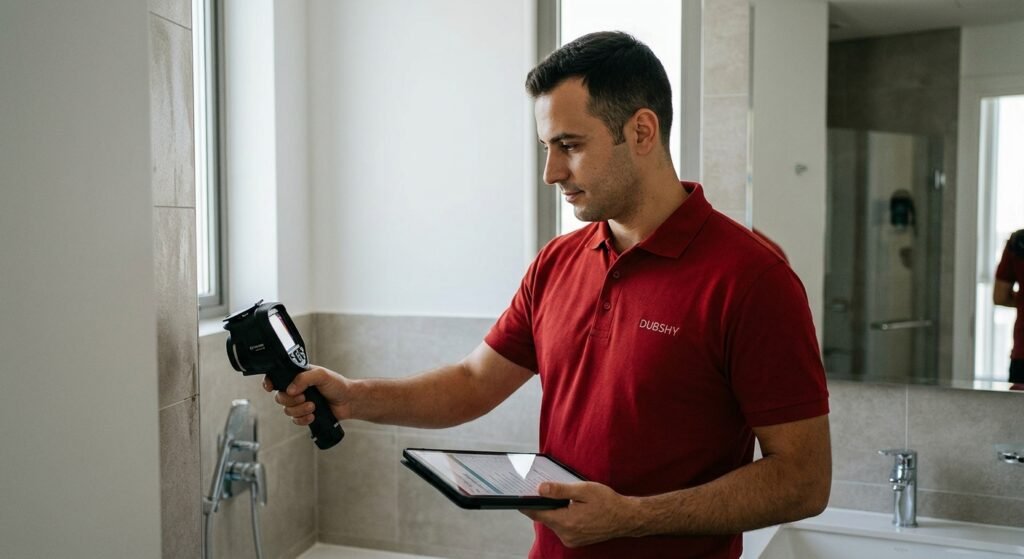
Third Party Inspection Dubai | Independent Reports September 3, 2026 Tom Alex Third Party Inspection Dubai Updated 8 October 2026Guide5 min read A client asked us something a while back that stuck with me. “Doesn’t the developer already inspect the building? Why am I paying someone else to do it again?” Fair question, honestly. The short answer is that the developer inspecting their own work is a bit like a student marking their own exam. Not necessarily dishonest, just not exactly neutral either. In this guide What third-party means Why buyers ask for one Vs a snagging report What gets checked Does it change anything A quick example FAQs Conclusion What Third-Party Actually Means Here It means the inspector has no financial or contractual relationship with the developer. Not employed by them, not paid by them, no incentive either way in what gets written in the final report. A developer’s internal snagging team is checking their own construction, and even with the best intentions in the world, that’s a conflict of interest built into the setup. A third-party inspector answers only to you, the person who booked them. That distinction matters more than it sounds like it should. Why Buyers Actually Ask For One Money’s the obvious reason. Developers have a financial interest in handovers moving fast and defect lists staying short, because every day a handover gets delayed and every item on a snag list costs them something. That doesn’t mean every developer downplays issues on purpose. It just means the incentive exists, and buyers are increasingly aware of it. There’s also just the matter of what gets caught. A civil inspection services in Dubai check by an independent team tends to flag things a developer’s own walkthrough wouldn’t necessarily prioritise, structural cracks that got written off internally as cosmetic, level tolerances that are technically within range but close enough to the edge that they’ll cause problems down the line. Trust plays into it too, plainly. Buyers who’ve heard stories, from friends, from forums, from their own agent, about defects surfacing months after handover want documentation that exists independently of the developer’s own paperwork. Something they can point to if a dispute ever comes up later. Off-plan buyers in particular tend to be the ones asking for this earliest, sometimes before construction’s even finished. Makes sense when you think about it. They’ve committed a large amount of money to a property they haven’t seen built yet, based on drawings and a show unit. An independent set of eyes at handover is the first real check they get on whether what was promised actually matches what got delivered. Want an inspector with no stake in the outcome? book an inspection How This Differs From Just Getting a Snagging Report A professional snagging report is really the output of a third-party inspection, not a separate thing entirely. The inspection is the process, the independent walkthrough with proper tools and training. The report is the document that comes out the other end. You can’t really have one without the other if you’re doing this properly. Where it gets confusing is that some developers offer their own “snagging” as part of the handover process, and buyers assume that covers the same ground. It doesn’t, not in the sense that matters. Internal snagging is still the developer checking their own work, just with a different label on it. What Actually Gets Checked Structural elements, electrical systems, plumbing, AC performance, finishes, waterproofing, the full spread. The scope isn’t really different from what a developer’s own team might look at on paper. What’s different is who’s holding the checklist and whether there’s any reason for them to look the other way on something borderline. A borderline crack is a good example of where this plays out. Internally, there’s some pressure, even if unspoken, to call it cosmetic and move on. An independent inspector has no reason to call it anything other than what it actually is, whether that’s fine or worth flagging to the developer for a proper look. Does This Actually Change Anything With the Developer? Usually, yes. Developers respond differently to a report from a recognised third-party inspection company than to a buyer’s own list of complaints, even when the underlying issues are identical. It’s not that a buyer’s observations don’t count. It’s that an independent report signals the issue’s already been verified by someone trained to catch it, which tends to move things along faster than a back-and-forth over what counts as a real defect. A Quick Example of How This Plays Out We inspected a villa in Arabian Ranches a while back where the developer’s own team had already signed off on the property as handover-ready. Nothing flagged, clean bill of health on their side. Our inspector found a hairline crack running along a load-bearing wall that had been painted over rather than investigated, plus a section of roof flashing that wasn’t sealed properly. Neither was catastrophic. Both would’ve cost the buyer money eventually if nobody had caught them before handover, and both had already been looked at, and passed, by the developer’s own people. Not a story about a bad developer It’s just what happens when the person checking the work has some reason, even a small one, to call things good enough. Frequently Asked Questions Is a third-party inspection legally required in Dubai? No, it’s not mandatory. It’s something buyers choose to book for their own protection, separate from whatever process the developer runs internally before handover. Conclusion: Neutral Is What You Want A developer inspecting their own construction isn’t inherently dishonest, it’s just not neutral, and neutral is exactly what you want when you’re about to accept handover on the biggest purchase you’ve probably made. Booking someone with no stake in the outcome tends to catch more, and it carries more weight if anything ever needs to go back to the developer. You can book a civil inspection with us whenever you’re getting close to that stage. Getting
DEWA Testing and Commissioning: What It Means for Your Handover
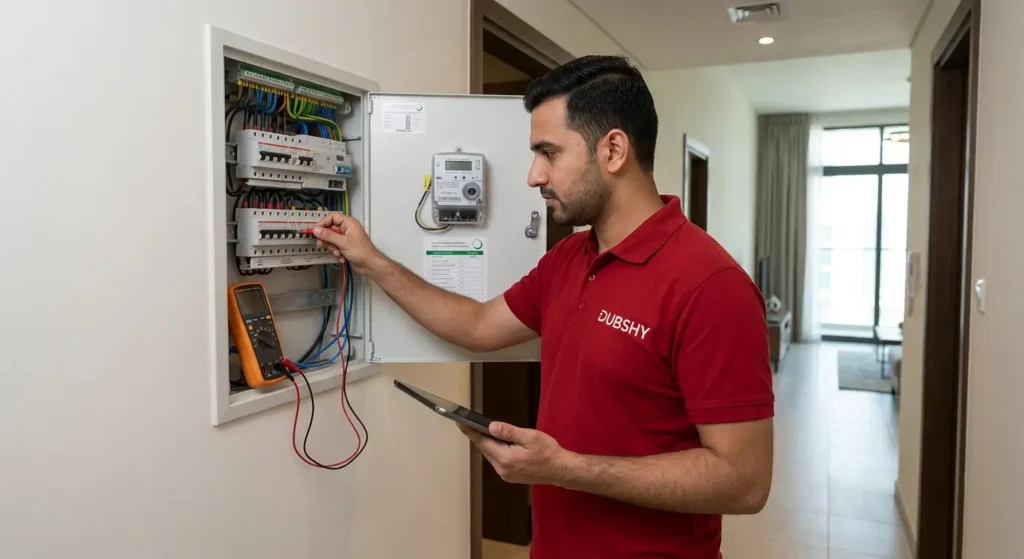
DEWA Testing and Commissioning: What It Means for Your Handover September 3, 2026 Tom Alex DEWA Testing and Commissioning Updated 8 October 2026Guide5 min read A buyer messaged us last month in a bit of a panic. His handover got pushed back two weeks and all the developer told him was “pending DEWA testing and commissioning.” No explanation, no timeline, just that phrase sitting in an email. He assumed something was badly wrong with the building. It wasn’t. He just didn’t know what the phrase actually meant, and honestly most buyers don’t. In this guide What it actually is Why it holds up your handover What it means for your own unit What buyers usually get wrong A rough timeline What DEWA’s engineers look at FAQs Conclusion What DEWA Testing and Commissioning Actually Is DEWA, Dubai Electricity and Water Authority, has to formally test and sign off on a building’s electrical and water systems before anyone’s allowed to move in and before utility accounts can even be activated. It’s not optional and it’s not a formality either. It’s DEWA’s engineers physically checking that the load calculations match what’s installed, that the meters are wired correctly, and that the whole system is safe to switch on at full capacity. Commissioning is the part right after testing where everything actually gets switched on and run under real conditions for the first time. Not just tested on paper, but powered up, checked while running, then signed off as ready. A building can pass testing and still hit snags during commissioning if something behaves differently under load than it did on the drawings. Why It Holds Up Your Handover Developers can’t legally hand over units, or get a completion certificate from Dubai Municipality, until DEWA clears the building. So if you’re waiting on handover and hear that phrase, it usually just means the building’s utilities haven’t been formally approved yet, not that your specific unit has a problem. That said, it’s also where delays pile up. A single failed load test in one part of the building can hold back handovers for every unit in the tower, even ones with nothing wrong in them individually. We’ve seen buyers wait weeks for something that had nothing to do with their own apartment. Ask which kind of delay it is The frustrating part, from a buyer’s side, is that developers rarely explain any of this clearly. You get a status update that says “pending DEWA,” and that’s it. No timeline, no explanation of whether it’s a paperwork delay or an actual technical issue. Worth asking directly which one it is, because the two mean very different things for how long you’ll actually be waiting. What This Has to Do With Your Own Unit Here’s the part that surprises people. DEWA clearing the building doesn’t mean your specific unit’s wiring is flawless. DEWA is checking the building’s overall electrical infrastructure, main distribution boards, the load the whole system can handle, not whether every socket in your apartment was wired correctly by the electrician who did that floor. An electrical systems inspection on your specific unit catches things DEWA’s building-wide sign-off was never designed to catch, loose connections, incorrect earthing on individual circuits, sockets that test fine but aren’t wired to spec. AC load is a good example. The building’s overall electrical capacity gets tested and commissioned, but whether your unit’s specific AC setup is drawing power the way it should, and whether the AC inspection services in Dubai side of things checks out, is a separate question DEWA’s sign-off doesn’t really answer. Handover date coming up? book an inspection What Buyers Usually Get Wrong Here The biggest mix-up is assuming “DEWA approved” means “my apartment is fine.” It means the building can legally have utilities connected. That’s a building-level statement, not a unit-level one. Plenty of buyers move in the same week DEWA clears the tower and never book their own inspection, because they figure it’s already been checked by someone official. It has, just not at the level that catches what actually goes wrong inside an individual unit. A Rough Timeline of How It Usually Goes Construction wraps on the building’s core systems first. DEWA testing happens next, sometimes taking a few weeks depending on the building’s size and how many issues come up during initial checks. Commissioning follows once testing passes, and only after that does the developer get clearance to start handovers. Individual units can then get their DEWA account activated, which is separate again from the developer physically handing you the keys. None of these steps happen instantly, and none of them are things you as a buyer can speed up. What you can control is what happens once your own unit is actually accessible, which is where booking your own inspection comes in. What DEWA’s Engineers Are Actually Looking At It’s more technical than most people assume. They’re checking transformer capacity against actual demand, verifying that circuit breakers trip correctly under fault conditions, confirming earthing systems meet the required standard, and making sure water pressure and supply lines handle the building’s full occupancy without dropping below acceptable levels. If any one of those fails, the whole building goes back for correction before retesting, which is usually where the biggest delays come from. It’s also worth knowing this isn’t a one-time inspection. Larger developments sometimes get tested in phases, tower by tower or floor by floor, especially in mixed-use buildings where retail and residential systems run separately. That’s part of why two people buying in the same complex can have completely different handover timelines even though they signed on the same day. Frequently Asked Questions Does DEWA testing mean my apartment has been inspected? Not really, no. It means the building’s electrical and water infrastructure has been tested and approved at a system level. Your individual unit’s wiring, sockets, and fittings are a separate matter entirely. Conclusion: Building Approval Isn’t Unit Approval “Pending DEWA testing and commissioning” sounds alarming but it’s usually
Water Leak Detection Dubai | Dubshy Inspection
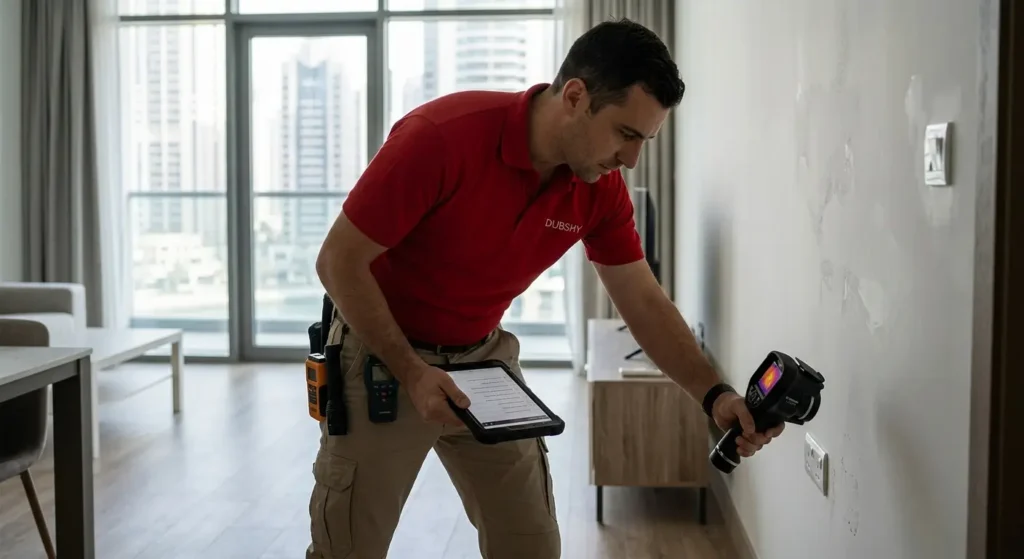
Water Leak Detection Dubai | Dubshy Inspection September 2, 2026 Tom Alex Water Leak Detection Dubai Updated 8 October 2026Guide5 min read Most people don’t catch a water leak until it’s already cost them something. Usually it’s a smell first, something musty near the kitchen cabinets that you keep telling yourself you’ll look into later, and by the time you actually do, there’s a soft patch on the bathroom floor too, or a stain on the ceiling downstairs that nobody in the building can quite explain. We hear some version of this story constantly. None of it looks urgent while it’s small. That’s kind of the problem. A leak caught early is a plumber and maybe a patch of drywall, a couple hundred dirhams and an afternoon. Caught late, and now you’re talking mould remediation, ripped-up flooring, and an argument with your developer about whose fault it actually is. Same leak, wildly different bill, and the only thing separating the two outcomes is how soon someone actually looked. In this guide Why leaks hide so well How a professional finds one Where it tends to show up Why catching it early matters What an inspection checks What the visit looks like FAQs Conclusion Why These Leaks Hide So Well in Dubai Apartments Almost none of the plumbing in a modern unit is visible. It runs behind tiled walls, under screed floors, through risers that are shared with the apartments above and below yours. So a leak doesn’t burst and announce itself the way a snapped pipe under a kitchen sink would. It seeps. Quietly, into materials that happen to be very good at soaking up water without showing anything on the surface for weeks. AC condensate lines cause more of this than people realise. Every split unit and central system produces condensate that has to drain somewhere, and when that line gets blocked or was never installed properly to begin with, the water backs up and finds whatever gap it can in a ceiling or wall cavity. Almost invisible until a stain finally shows itself, and by then it could’ve been dripping for a month or two already. Bathroom waterproofing fails quietly too. There’s supposed to be a membrane under the tiles keeping water out of the structure below, and when it goes, whether from poor installation or just age, water travels sideways instead of down and pops up somewhere that has nothing obviously to do with the bathroom. Stain shows up on a kitchen ceiling, and it doesn’t occur to anyone to check the bathroom directly above it. How a Professional Actually Finds One This is where it stops being a guessing game. A professional plumbing inspection usually opens with a thermal imaging camera. It picks up temperature differences in walls and ceilings that generally mean moisture’s present somewhere, even if the surface in front of you looks bone dry. Moisture meters back that up with an actual number instead of a hunch, so it’s not “this feels a bit damp,” it’s a reading the inspector can point to. Where the source isn’t obvious yet, acoustic leak detection comes in, listening gear sensitive enough to pick up water moving through a pipe under pressure even behind a finished wall. And if there’s a real doubt about whether a fitting’s holding pressure the way it should, they’ll pressure test the line directly rather than assume anything from outside. You don’t get any of that from a normal walkthrough. Someone glancing around a kitchen for two minutes isn’t the same as someone actually checking whether the bathroom and kitchen inspection service side of your unit is holding up behind the tiles you can see. Seeing a stain, a smell or a higher bill? book an inspection Where It Tends to Show Up Kitchens and bathrooms obviously, under-sink plumbing, shower trays, the seal around a bathtub if you’ve got one. But we find it in odder places too. Balcony drainage that wasn’t sloped correctly during construction ends up pushing water back toward the apartment instead of away from it, which nobody expects until it’s already happened a few times. Shared risers in older towers sometimes leak at a joint that technically sits on the unit above yours, and figuring that out without a proper inspection to trace and document where the water’s actually coming from is basically impossible. New builds aren’t safe from this either. Honestly, the first year or two can be worse, before things settle and any shortcuts taken during construction start making themselves known. It’s a big part of why a lot of buyers get their inspection done near the end of the Defects Liability Period, while a developer-covered fix is still on the table. Why Catching It Early Is Worth the Fuss Water sitting inside a wall cavity for a couple of months creates exactly the conditions mould needs to take hold, and once that’s happened you’re not fixing a pipe anymore, you’re dealing with air quality and probably replacing materials that can’t just be wiped clean. Structural elements weaken under prolonged moisture too, slowly, in ways that don’t undo themselves once the leak’s finally fixed. The timing issue If the leak traces back to a construction defect and it’s found while you’re still inside your DLP, the developer’s generally responsible for fixing it. Miss that window because nobody caught the leak in time, though, and the cost quietly becomes yours to carry instead. What a Real Inspection Checks That You Wouldn’t Most people checking their own place look for what’s already visible, a wet patch, a smell, a stain somewhere obvious. Fair enough, that’s what you can actually see without tools. A proper inspection checks the systems that could be leaking whether or not there’s any sign of it yet: condensate lines, waterproofing membranes, pipe joints tucked behind fixtures, drainage falls on balconies and terraces. Villas bring in a whole other layer, external plumbing runs, garden irrigation lines, roof drainage, all places water can go wrong
Snag List vs Snagging Report: What’s the Difference? | Dubshy
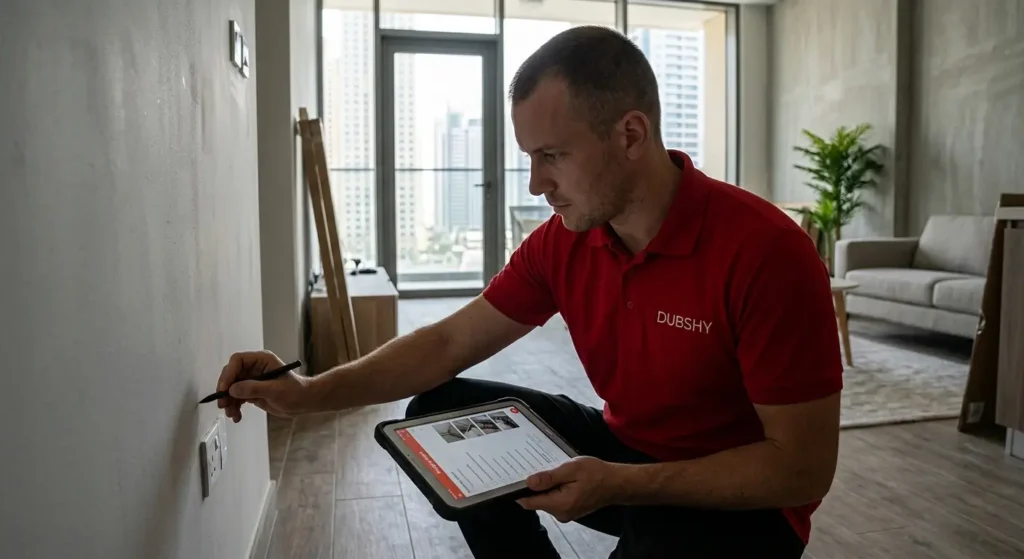
Snag List vs Snagging Report: What’s the Difference? | Dubshy September 2, 2026 Tom Alex Snag List vs Snagging Report Updated 8 October 2026Guide5 min read In this guide What a snag list is What a snagging report is The actual difference Why it matters at handover Picture it like this What you should book FAQs Conclusion What Is a Snag List? That’s really it. It’s the record of problems, the snag list found in a unit before you accept handover. A cracked tile here, a door that sticks, a paint patch someone forgot to finish, a light switch wired backwards. Whoever’s writing it jots down what they see, maybe with a photo, and that’s the list. Anyone can make one. A buyer walking around with their phone’s notes app open is making a snag list. So is a site engineer doing a five-minute pass before handing over the keys. There’s no set format, no required depth, nothing stopping someone from missing half the problems simply because they didn’t know to look for them. Which is the catch, honestly. A long snag list looks thorough. It might not be. We’ve seen buyers hand over ten-item lists after a walkthrough that a proper inspection would’ve turned into forty. A Snagging Report Is a Different Thing Entirely This is where a trained inspector actually goes through the property system by system: electrical, plumbing, AC, structural work, finishes, all of it. A snag list might say “bathroom tile cracked.” A professional snagging report tells you where exactly, how bad it is, what probably caused it, and sometimes which building standard it falls short of. That level of detail is the whole point. The document itself usually runs twenty to sixty-plus pages for a normal residential unit, organized, photographed, and written so a developer’s snagging team can act on it without asking a single follow-up question. It reads like evidence. A handwritten list reads like a complaint. And inspectors catch things buyers just wouldn’t think to check. Floor level tolerances, for one. Whether civil inspection services in Dubai would flag a hairline wall crack as normal settling or something the developer needs to look at properly before it gets worse. You’re paying for that judgment call as much as the inspection itself. So What’s the Actual Difference? The short version A snag list is what comes out. A snagging report is the process, plus a much better version of that output. Every proper snagging report contains a snag list somewhere inside it. Not every snag list comes from a proper report though, and that gap matters more than people expect. Developers in Dubai see dozens of DIY lists a month. They don’t weigh them the same as a report from an independent inspector, and honestly, why would they? One’s been verified by someone trained to catch this stuff. The other is a buyer’s best guess. The gap shows up in a few places. Depth, first, because a walkthrough catches what’s visible and a proper inspection catches what isn’t, damp starting behind a wall, an AC unit running but barely doing its job, a socket that’s live but not earthed correctly. None of that shows up on a casual look around. Then there’s how it’s documented. A structured report removes ambiguity, location, severity, photo, done. A spreadsheet someone typed up after moving boxes around doesn’t have that structure, and it slows the whole fix process down on the developer’s end. There’s also just how developers respond. A report from a recognized inspection company gets acted on faster than a list from a buyer, even when the actual defects are identical. That’s not really fair, but it’s how it works in practice. And if things ever escalate, a RERA complaint, a dispute during the Defects Liability Period, a dated professional report holds up as evidence in a way an informal list simply doesn’t. Want a full report instead of a notepad list? book an inspection Why This Actually Matters at Handover Handover week in Dubai moves fast. Developers are often pushing through a dozen or more units in the same few days, and buyers feel pressure to sign quickly so they can move in or start renting the place out. A vague snag list gets deprioritized easily in that rush. A structured report is much harder to push aside, because it doesn’t read like a complaint, it reads like documentation. There’s also the part nobody thinks about until it’s too late: most buyers have never professionally inspected anything. A walkthrough naturally focuses on what jumps out visually. The problems that don’t show symptoms right away, wiring faults, early leaks, structural issues, can sit there quietly for months. Sometimes long enough that the Defects Liability Period runs out before anyone notices. That’s the exact gap a real inspection closes. Picture It Like This Two buyers, same floor, same building, same handover day. One does a twenty-minute walkthrough, notes a couple of marks on the wall, signs off. The other books a full inspection beforehand. A few hours later, the inspector’s report flags a bathroom floor that’s out of level, a socket wired without proper earthing, and the very early signs of a leak behind the kitchen splashback, nothing either buyer would’ve spotted on their own. Both technically walked away with a snag list. Only one of them had something the developer couldn’t just wave off. What You Should Actually Book If handover’s coming up soon, book an inspection rather than planning to do the walkthrough yourself with a notepad. A trained inspector produces a full snagging report, and your snag list ends up inside that report anyway, so it’s not really an either-or decision. You get both, backed by the kind of documentation a developer takes seriously. Already did your own walkthrough and wrote a few things down? Bring that list along when you book. The inspector can check it against what they find independently and pick up anything you might have missed. Frequently Asked Questions
Best Snagging Company Dubai: What to Look For
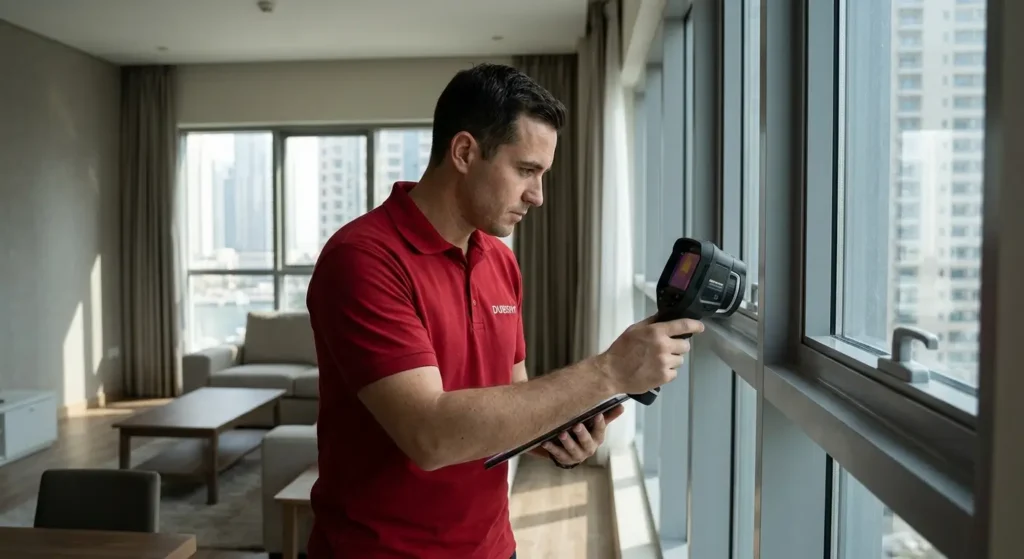
Best Snagging Company Dubai: What to Look For August 24, 2026 Tom Alex Best Snagging Company Dubai: How to Choose Updated 8 October 2026Buyer’s guide7 min read Every company in this market says the same things. Experienced engineers, detailed reports, thorough inspections. The websites are nearly identical and the quotes range from AED 800 to AED 3,200 for the same apartment. So the useful question isn’t who’s best in the abstract. It’s what separates the providers, and which of those differences actually affect whether your developer fixes your defects. In this guide What actually matters Questions to ask before booking Why quotes vary so much Red flags Does company size matter Comparing two quotes What reviews tell you Does qualification matter When to book FAQs Conclusion A note on bias We’re a snagging company, so read this with that in mind. What follows is the criteria we’d give a friend, including the parts that don’t flatter us. What Actually Makes the Best Snagging Company Dubai Owners Can Hire? Four things, in order of importance: who attends, what equipment they bring, what the report contains, and whether they’ll defend their findings afterwards. Everything else is presentation, and the best snagging company Dubai offers for your property is simply the one that answers those four clearly. Notice what isn’t on that list. Years in business, number of inspections completed, and how polished the website looks tell you very little about the person who’ll be standing in your property on the day. What Questions Should You Ask Before Booking? Ask these six and the differences between providers become obvious within one phone call: Who is attending my property? You want a name and a background, not a company brochure. The person inspecting matters more than the brand above the door. What equipment are they bringing? Thermal camera, moisture meter, socket and RCD tester, laser level, tapping rod. If nobody can list it, it isn’t coming. How many hours will they be on site? Two to three for an apartment, four to six for a villa. An hour is a walkthrough. Can I see a sample report? Every serious provider has one. Look for numbered items, severity grades, measurements and indexed photographs. Is a re-inspection included? Some bundle one, most quote separately. Either is fine. Not knowing until the invoice arrives is not. What happens if the developer rejects an item? The answer tells you whether you’re buying a document or a service. Want straight answers to all six? talk to our team Why Do Quotes Vary So Much? Because two genuinely different services are sold under one word. A budget quote usually means a visual walkthrough with a phone camera and a photo-dump PDF. A higher quote usually means technical testing and a structured defect schedule. Neither is dishonest. The problem is that buyers compare on price assuming the products are identical, then wonder why one report gets defects fixed and another gets ignored. Dubai inspections generally run between AED 1,500 and AED 5,000 depending on property type, with per square foot pricing around AED 0.50 to 1.50 for larger villas. If a quote sits well below that range, ask what’s been removed rather than assuming you found a bargain. Our page on choosing a snagging company in Dubai goes through how scope maps to price. What Are the Red Flags? Some of these are dealbreakers and some are just worth a question. All of them are worth noticing: No named inspector on the report, or reluctance to say who’s attending No equipment list, or vague answers about what testing is included A report delivered within an hour of the visit, which means no review took place No severity grading, so 180 items all read as equally urgent Photographs with no numbering and no link to specific defect items Guarantees about how many defects they’ll find, which nobody can promise Any relationship with the developer whose work they’re inspecting The one that actually matters That last one is the one that actually matters. An inspector with a commercial relationship to the party responsible for the defects has an obvious conflict, and it’s a fair question to ask directly. Does Company Size Make a Difference? Only in one direction, and not the one most people assume. Larger firms offer better availability during peak handover periods, which genuinely matters when your slot lands with ten days’ notice at quarter end. What size doesn’t guarantee is who turns up. A large operation running several teams may send an experienced engineer or may send whoever’s free that Tuesday, and you generally can’t tell which from the website. A small operation has the opposite trade-off: you usually know exactly who’s coming, but the diary fills faster. So ask about the individual rather than the organisation. The question is the same either way and the answer tells you more. How Do You Compare Two Quotes Fairly? Put them side by side on scope, not price. Four columns settle it: hours on site, equipment brought, report format, and re-inspection included or not. Do that and the AED 900 quote and the AED 2,600 quote usually stop looking like the same product. One is a photographic record of what a room looks like. The other is a technical schedule with measurements against tolerances, which is the version a developer’s engineer has to engage with. Whether you need the second version depends on your property. A studio with a split unit and one bathroom is a different proposition to a five-bedroom villa with a pool, a plant room and 200 metres of boundary wall. How Much Do Reviews and Ratings Tell You? Less than you’d hope, because most reviews are written the day the report arrives rather than after the developer has responded to it. A thick PDF feels impressive immediately. Whether it got anything fixed takes two months to find out. Read for specifics instead. Reviews that mention what was found, whether the developer accepted the items, and whether a
Off-Plan vs Ready Property Snagging Dubai | Dubshy
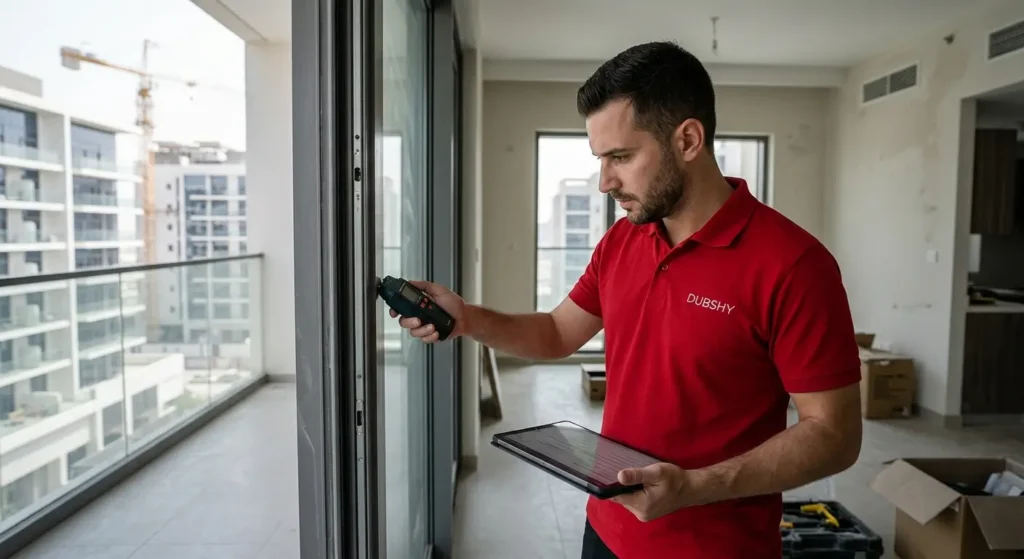
Off-Plan vs Ready Property Snagging Dubai | Dubshy August 24, 2026 Tom Alex Off-Plan vs Ready Property Snagging in Dubai Updated 8 October 2026Guide6 min read Buyers ask whether snagging works differently depending on how they bought, and the honest answer is that the inspection itself barely changes. What changes is everything around it: who’s liable, how long you’ve got, and whether anyone has already used up part of your window. That last point is the one that catches people. Buy a ready unit that someone else took handover of eighteen months ago and there’s no defects liability period left to claim against, regardless of how new the building looks. In this guide The core difference How the timing differs Who is liable Do you find different defects Which needs inspection more A ready unit never lived in What to do differently FAQs Conclusion Here’s how off-plan vs ready property snagging differs across the things that matter: timing, cover, defect types and what your report is actually for. What Is the Core Difference? Off-plan buyers snag a property nobody has lived in, with a full defects liability period ahead of them. Ready buyers snag a property that already has a history, and often little or no developer cover remaining. That single difference changes the purpose of the exercise. For an off-plan buyer, the report is a claim document aimed at the developer. For a ready buyer, it’s usually a decision document aimed at the purchase itself. How Does the Timing Differ? Off-plan snagging happens after handover, on a date you don’t fully control. Ready property snagging happens before you commit, on a date you can negotiate into the process. With off-plan, the developer issues a handover notice, and you get a slot with limited notice, often under two weeks. You arrange utilities, collect keys, and book the inspection for the days immediately after. The sequence is fixed and the window is tight. With a ready purchase, you can inspect during the viewing period before signing, which is a genuine advantage. You find out what you’re buying while you still have the option to renegotiate or walk away. Very few buyers use it. Who Is Liable for the Defects? The developer, for off-plan units inside the one-year period. For ready resale units, usually nobody, which is why the report matters for a different reason entirely. The one-year defects liability period runs from the building’s completion certificate date rather than from any individual sale. So a ready unit in a two-year-old tower has no general cover left, even if you’re the first person to actually live in it. Structural liability under Article 878 and Article 880 of the UAE Civil Code continues for ten years, but that applies to stability rather than finishes. There’s a middle case A ready unit still inside the original DLP, bought from a first owner who took handover recently, may retain the remaining period. The cover generally attaches to the property, not the person, so it’s worth confirming the completion date in writing before assuming either way. Do You Find Different Defects? The categories overlap heavily, but the emphasis shifts. Off-plan units show construction and commissioning defects, while ready units show those plus wear, prior repairs and whatever the last occupant changed. Typical off-plan findings Hollow floor tiles, condensate drains laid without fall, uninsulated pipework in ceiling voids, incomplete perimeter mastic, shower falls that pond, blocked weep holes, sockets with reversed polarity. These are workmanship issues, and they’re claimable. Typical ready property findings All of the above plus failed silicone, grout breakdown around drains, previous repairs done badly, unauthorised alterations, air conditioning that’s never been serviced, and water damage that’s been painted over rather than traced. That last one is the reason a thermal survey matters more on a ready unit than an off-plan one. Not sure what cover your unit still has? talk to our team Which One Needs the Inspection More? Both, for different reasons, but a ready purchase arguably needs it more because nobody else is going to pay for what you miss. With off-plan there’s a safety net. Miss something on handover day and you’ve still got months of cover to catch it, provided you inspect again before the period closes. With a ready unit outside the DLP there’s no second chance and no third party to invoice. The counterargument is value. Off-plan snagging often recovers more money in absolute terms, because a full construction defect list on a new unit runs to considerably more work than the maintenance backlog on a lived-in one. What About a Ready Unit That’s Never Been Lived In? This is the case buyers get wrong most often. A unit completed two years ago, bought as an investment and never occupied, still looks brand new and still has no defects liability period left. Empty doesn’t mean covered. The clock runs from the building’s completion certificate, and it runs whether anyone moved in or not. Worse, an unoccupied unit tends to accumulate its own problems: air conditioning that hasn’t run in months, drainage traps that have dried out and lost their seal, and silicone that’s degraded with nobody noticing. Inspect these as carefully as anything lived in, and budget on the assumption that whatever turns up is yours to fix. What Should You Do Differently for Each? Off-plan: confirm the completion date. Get it in writing at handover, because that’s when your one-year clock started, not when you collected keys. Off-plan: submit inside the first month. The fit-out contractors are still on site during the handover wave, and rectification is measured in weeks rather than months. Off-plan: book a second survey at month nine. Summer and rain expose defects no handover walkthrough can find. Ready: inspect before you sign. Findings are only leverage while the price is still open. Ready: ask for the completion date anyway. If any DLP remains, that changes who pays for what you find. Ready: prioritise thermal and moisture testing. Painted-over water damage is
New Build Snagging Tips for First Year | Dubshy
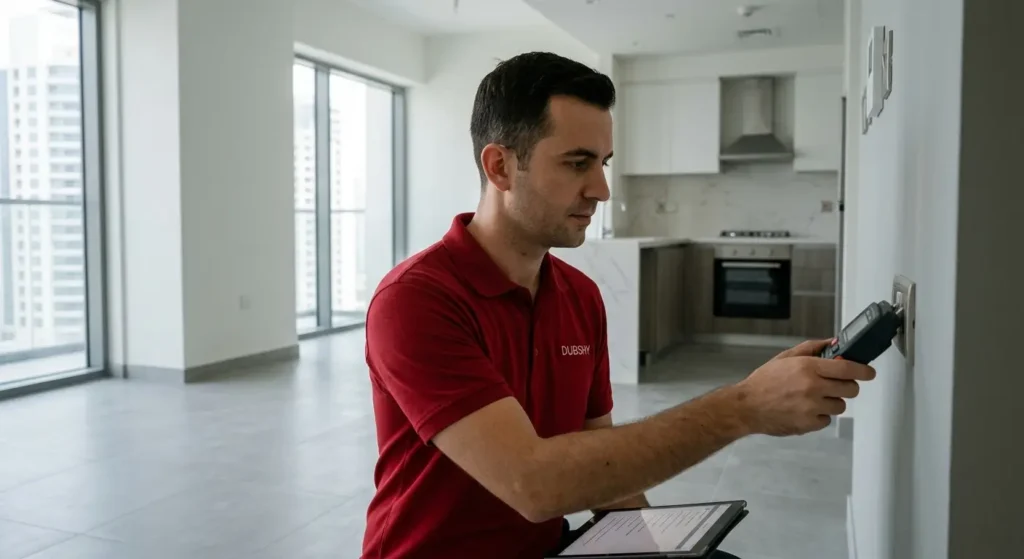
Fire Safety Inspection Dubai: What to Check at Home
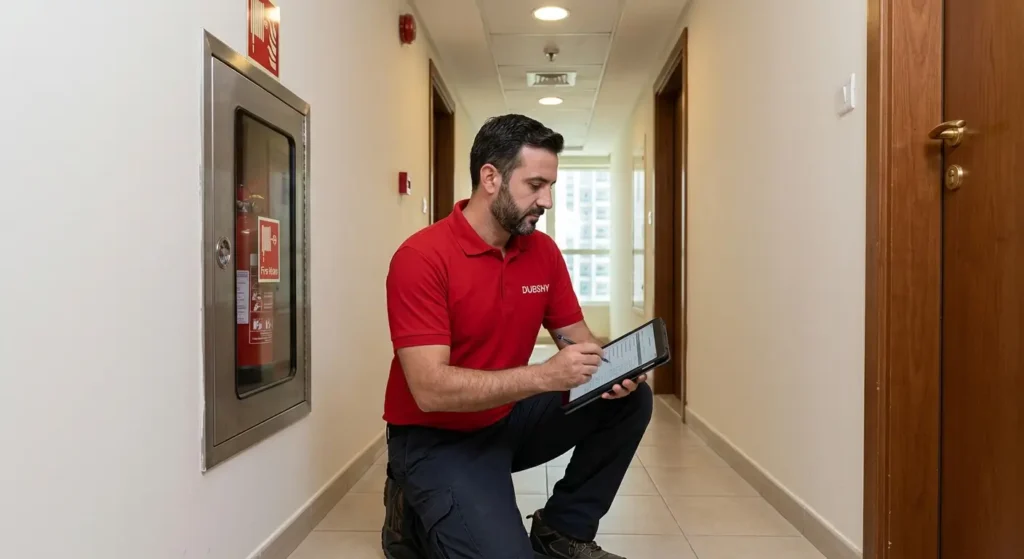
Fire Safety Inspection Dubai: What to Check at Home Updated 8 October 2026Guide7 min read Fire safety in a Dubai building splits into two things that get confused constantly. There’s the building’s certified fire systems, which are the developer’s and the owners association’s responsibility and are signed off by Civil Defence. Then there’s what’s inside your own front door. You have no authority over the first. You have complete responsibility for the second, and that’s where the gaps usually are, because handover inspections tend to skip it entirely. In this guide What the UAE code covers What to check inside your property Villas and townhouses What the developer is responsible for What gets missed most often What changes after you move in What an inspector can’t do FAQs Conclusion A fire safety inspection Dubai property owners can genuinely act on covers the items in your unit: the front door, detection, sprinkler heads if fitted, escape routes and the electrical installation behind them. Here’s what to look at. What Does the UAE Fire Safety Code Cover for Homes? The UAE Fire and Life Safety Code of Practice sets the design and installation requirements for buildings, including detection, suppression, compartmentation and means of escape. It applies to the building as a whole, with your apartment or villa forming part of that system. The practical consequence is that your front door, your detectors and your escape route aren’t just yours. They’re components of the building’s overall fire strategy, which is why altering them without approval matters more than most owners realise. What Should You Check Inside Your Own Property? Five things, listed in order of how often we find them wrong. A fire safety inspection Dubai owners run themselves can cover four of the five, with only the electrical testing needing equipment. The front door In an apartment, your entrance door is a fire door and it’s the single most commonly defective item we log. It must close and latch fully on its own from any position, without being pushed. Check the self-closer works from a narrow opening as well as a wide one, look for the certification label on the hinge edge, and check the intumescent seal is continuous in the frame rebate rather than stopping short at a corner. Gaps matter. A leaf that doesn’t sit evenly in the frame leaves a path for smoke. And a door wedged open, which happens constantly during move-in, defeats the whole thing. Smoke and heat detection Test every detector using its test button and confirm it sounds. Check placement makes sense, since detectors sited directly beside an AC supply grille or a bathroom door get diluted airflow or nuisance triggers. In villas, check each floor has coverage rather than assuming one detector serves the house. Sprinklers where fitted Where sprinkler heads are installed, they need clearance around them. Check nothing is stacked within the spray area, no head has been painted over during decoration, and none are obstructed by a light fitting or curtain track added after handover. A painted sprinkler head will not operate at the temperature it was designed for. Escape routes Walk the route you’d actually take. In an apartment that means the corridor to the protected stairwell, checking the stair door isn’t wedged or obstructed. In a villa it means the internal stair and at least one alternative from each floor. Note where extinguishers sit, and whether any window that forms part of an escape strategy is fitted with a restrictor that can be released. The electrical installation Most domestic fires start electrically, which makes this the part that matters most and the part you can’t see. Sockets need correct polarity and earth continuity. The RCD needs to trip when tested and reset properly. The distribution board needs accurate labelling, so that in an emergency the right circuit gets isolated rather than the whole property. Loose terminations, undersized cabling to high-load circuits and missing earth connections to metalwork all sit behind finishes where nothing reveals them without testing. Our electrical systems inspection covers the full circuit testing that a visual walkthrough cannot. Want the electrical and fire safety items tested properly? book an inspection What About Villas and Townhouses? Villas carry the same principles with a different geometry. There’s no shared corridor and no compartmentation to a common escape stair, so the emphasis shifts to detection coverage across floors and to having more than one way out of each level. Check every floor has working detection rather than assuming one unit covers the house, and walk the escape route from each bedroom. In a three-storey villa the top floor deserves particular attention, because that’s where a single stair can become the only route down. Villa electrical installations also carry more outdoor load: garden lighting, gate motors, pool plant, external sockets. Every one of those needs correct weatherproofing and RCD protection, and every one of them is easier to have corrected during the defects liability period. What’s the Developer Responsible For? The certified building systems and everything in the common areas. That covers the fire alarm panel, the risers, the sprinkler and standpipe network, emergency lighting, stairwell pressurisation, corridor fire doors and the compartmentation between units. Inside your unit, the developer remains responsible for defects during the one-year period. A front door that doesn’t self-close, a detector that doesn’t sound, or an RCD that won’t trip are all defects, not maintenance items, and they should go straight onto your snag list. Log it with both parties Where the issue sits in a corridor or riser, log it with both the developer and the building management on the same day, because those two tracks move at different speeds and each will assume the other has it. What Gets Missed Most Often? Front doors that don’t latch without being pushed Intumescent seals stopping short at the head or a corner of the frame Sprinkler heads painted over during handover decoration Detectors fitted directly beside an AC supply grille Distribution boards labelled generically
Swimming Pool Inspection Dubai Villa: Full Checklist
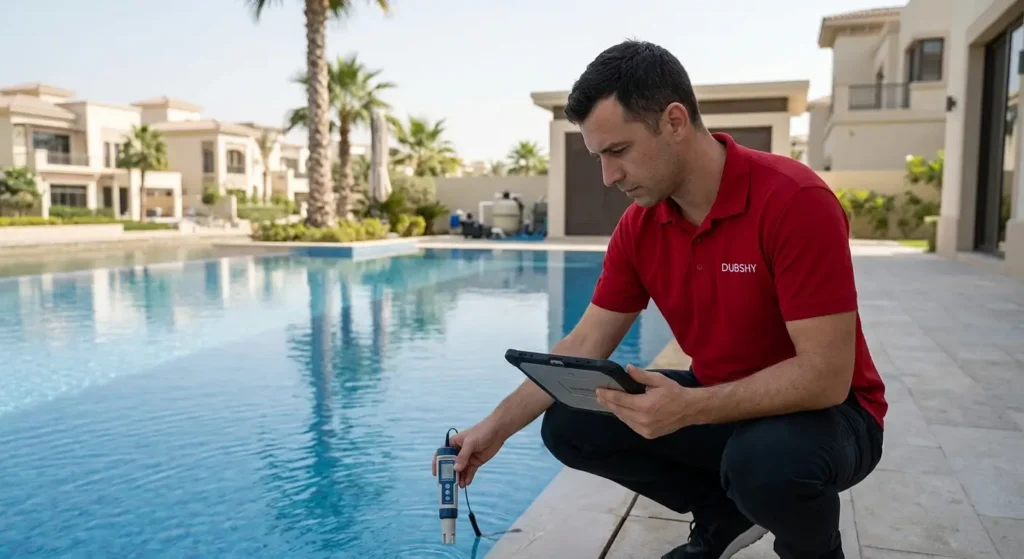
Swimming Pool Inspection Dubai Villa: Full Checklist Updated 8 October 2026Checklist7 min read Pools get signed off with barely a glance. The water’s in, the lights work, it looks like a pool. Everyone moves on to the kitchen. Then twelve months later the level keeps dropping, the pump is short cycling, and a tile has lifted at the waterline. By then the defects liability period has closed and a pool repair is one of the more expensive things you can be handed. In this guide What a pool inspection covers How to test for leaks If the pool isn’t finished Barrier and safety features Ongoing costs Why pool defects get missed What to get in writing FAQs Conclusion A swimming pool inspection Dubai villa owners book at handover covers the shell, the surrounds, the plant and the electrical safety. It’s the amenity most often skipped and the one where skipping costs most. What Does a Pool Inspection Cover? Four areas: the shell and finishes, the surrounds and coping, the plant room and circulation system, and the electrical installation. Each fails in its own way, so a swimming pool inspection Dubai villa requires treating them as four separate surveys rather than one walk around the water. The shell and waterline Check the tiling for lippage, loose bedding, and any tile that sounds hollow when tapped. Waterline grout failure is common within the first year and much easier to raise while the developer is still liable. Look for hairline cracking in the shell, staining that suggests a chemical imbalance during commissioning, and any movement at the step or bench junctions. Coping and surrounds Coping stones should be level, firmly bedded and evenly jointed, with no rocking underfoot. The deck around the pool needs falls running away from the water toward drainage, not back into it. Where the surround meets the coping, the movement joint has to be present and correctly filled, because that’s where cracking starts when the slab moves in summer heat. Plant room and circulation Confirm the pump and filter are commissioned and running rather than simply installed. Check the skimmers draw properly at the correct water level, the balance tank fills and holds, valves are labelled, and pipework is supported and free of leaks at the unions. A plant room with no floor drain is a defect worth logging on its own. Electrical safety This is the part that matters most and gets checked least, because none of it is visible. Pool lighting needs the correct rating for immersion, protected by an RCD that actually trips when tested. Equipotential bonding should connect the metal parts around the pool, including ladder handrails and any metalwork in the deck. Every socket in the pool area needs a proper weatherproof enclosure. Want the plant, bonding and shell tested before you accept the villa? book a villa inspection How Do You Test a Pool for Leaks? With a bucket test, which separates evaporation from an actual leak and costs nothing to run. Dubai loses a lot of water to evaporation in summer, so a dropping level on its own proves nothing. Fill a bucketPlace a weighted bucket on a step, filled with pool water to roughly the same level as the pool itself. Mark both levelsMark the water level inside the bucket and outside it on the pool wall. Leave the pump running normallyRun the pool as usual for 24 hours with no swimming and no topping up. Compare the dropIf both levels dropped equally, that’s evaporation. If the pool dropped more than the bucket, there’s a leak. Repeat with the pump offA larger loss with the pump running points to the circulation pipework rather than the shell. What If the Pool Isn’t Finished at Handover? Record it as an outstanding item rather than a defect, in writing, with the date. Incomplete works and defective works follow different routes, and a pool signed off as complete when it isn’t becomes much harder to challenge later. Take photographs of the state it’s in, note what’s missing, and ask for a completion date in writing. Our external work checks cover the pool alongside the roof, driveway, boundary and plot drainage, since those items tend to be handed over in a similar state of not-quite-finished. What About the Pool Barrier and Safety Features? Check whatever safety provision was part of your handover scope, because this is one area where an omission is a genuine risk rather than an inconvenience. Fencing, self-closing gates, alarms and covers all vary by community and by what was specified in your agreement. Where a barrier was included, check the gate self-closes and self-latches from any position, the latch sits high enough to be out of a child’s reach, and there’s nothing adjacent that could be climbed. Where nothing was specified, that’s worth knowing now rather than assuming otherwise. Community rules matter here too. Some Dubai communities set their own requirements for private pools, and it’s easier to comply at handover than to retrofit later. What Ongoing Costs Should You Expect? A private villa pool in Dubai carries running costs most first-time owners underestimate: electricity for the pump, water to replace evaporation losses through summer, chemicals, and either your own time or a monthly maintenance contract. That matters at handover because a badly commissioned pool costs more to run for its entire life. An undersized or incorrectly set pump runs longer to turn the water over. A skimmer set at the wrong level pulls air and makes the pump work harder. Both are correctable defects on day one and permanent expenses if nobody raises them. Why Do Pool Defects Get Missed? Because the pool is usually full of water on handover day, and water hides almost everything. A filled pool conceals shell cracking, tile bedding, step junctions and outlet condition. The plant room gets skipped for a different reason. It’s a hot cupboard full of pipework at the side of the plot, and nobody wants to spend twenty minutes in it
Waterproofing Inspection Dubai Villa: What We Check
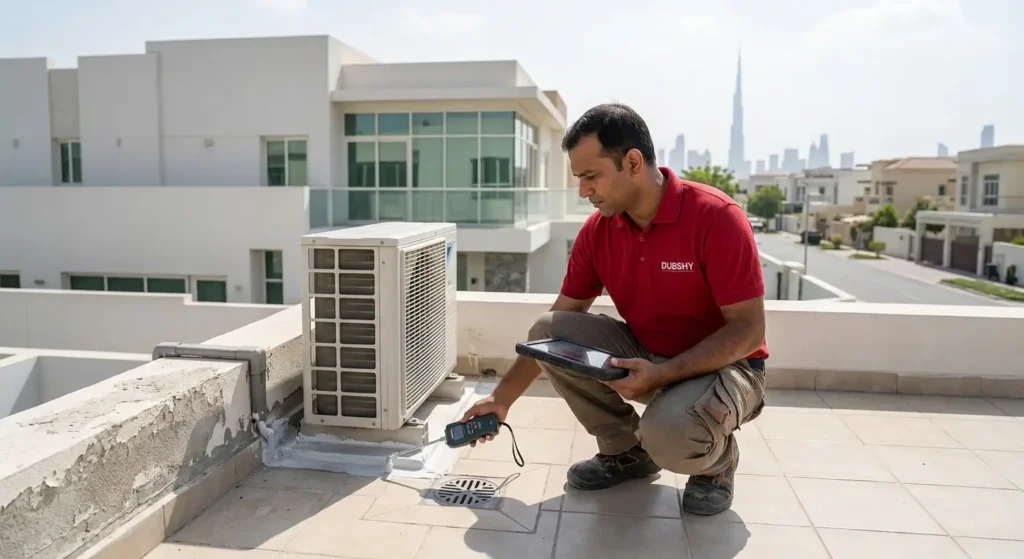
Waterproofing Inspection Dubai Villa: What We Check Updated 8 October 2026Guide7 min read Dubai gets very little rain, and that’s exactly why waterproofing here fails so quietly. A defect can sit undiscovered for two summers because nothing tests it. Then a few days of proper rain arrive and the whole thing announces itself at once. By that point the defects liability period has usually closed. The repair moves from the developer’s cost to yours, and roof or planter waterproofing done retrospectively means lifting finishes, which is where it gets expensive. In this guide Where villa waterproofing fails How it’s tested without damage When to get it checked What a failed roof costs What damp inside a villa means Pool handover paperwork FAQs Conclusion A waterproofing inspection Dubai villa owners commission is really a check on details rather than materials. The membrane itself is rarely the problem. The junctions, upstands and penetrations almost always are. Where Does Villa Waterproofing Actually Fail? A waterproofing inspection Dubai villas need spends most of its time on maybe eight locations, not the whole roof surface. Learn the eight and you understand the whole problem. It fails at transitions Anywhere the membrane has to stop, turn, or be cut around something is where water gets in, and that’s true of every roof and wet area we survey. Parapet upstands This is the single most common failure we log. The membrane has to run up the parapet wall and terminate under a proper flashing or in a chase. Where it’s been cut short, tucked behind render, or simply stopped at the base of the wall, water runs down behind it during heavy rain. The stain appears on a first-floor bedroom ceiling months later, often several metres from the actual entry point. Penetrations Every AC pipe, vent stack, drain and cable that passes through a roof is a hole through the waterproofing. Each needs a collar and a proper lap. On a rushed handover, some get sealed with mastic and nothing else, which lasts about one summer of UV exposure before it cracks. Falls and outlets Flat roofs need falls that actually reach an outlet. We regularly find ponding areas where water sits for days, and outlets choked with construction debris that were never cleared before handover. Standing water finds every weakness in a membrane eventually. Planters and landscaped areas Raised planters against a villa wall are one of the most common sources of persistent damp we see. The tanking has to be continuous up the retaining face, drained at the base, and separated from the structure. When it isn’t, you’ve built a permanently wet box against the house and the damp appears internally at low level. Wet areas and balcony thresholds Inside, the tanking under bathroom floors and shower trays has to be lapped up the walls, not just laid flat. Outside, balcony and terrace waterproofing needs to turn up at the door threshold. Get either wrong and water tracks sideways into the adjoining room without ever showing on the surface it came from. How Do You Test Waterproofing Without Destroying Anything? With flood testing, thermal imaging and moisture mapping, which together confirm whether water is getting through and where it’s travelling. None of these need finishes lifted, which is why a waterproofing inspection Dubai owners commission is non-destructive in almost every case. Flood test. Outlets are temporarily plugged and the area is flooded to a set depth, then held and monitored. Any drop in level, or damp appearing below, confirms a failure. Thermal survey. Wet material holds temperature differently to dry material. A thermal camera maps the extent of moisture behind ceilings and walls that looks perfectly fine to the eye. Moisture mapping. Meter readings on a grid establish how far the damp really extends, which is almost always further than the visible staining suggests. Falls check. A level across the roof or balcony confirms whether the gradient genuinely reaches the outlet or runs back toward the building. Visual detail survey. Upstands, terminations, collars, laps and outlets examined individually, since this is where the defects sit. Want your roof and wet areas flood tested? book an inspection When Should You Get It Checked? Before your defects liability period expires, and ideally after at least one wet season. That combination puts a waterproofing inspection Dubai villa owners can rely on at around month nine or ten of the first year. Waterproofing is the strongest argument for a second inspection. A handover survey in June can’t test rain performance, and the failures only show under real water. Our external work checks cover the roof, terraces, planters and plot drainage where these defects concentrate. If you’re already past the first year and damp has appeared, get it documented anyway. Structural water ingress can fall under the ten-year liability in Article 880 of the UAE Civil Code, and a proper report is the only way to establish which category a defect belongs to. What Does a Failed Roof Actually Cost to Put Right? Far more after the warranty than during it, because the repair changes shape. Inside the defects liability period, the developer’s contractor returns, lifts what’s needed and makes good at their cost. Afterwards you’re paying for the same work plus everything above it. A roof upstand failure means lifting screed and finishes to reach the membrane. A planter failure means excavating the planter and rebuilding it. A wet area failure means removing tiling, replacing the tanking and re-tiling the room. None of that is exotic work. It’s just work that nobody budgets for, arriving at the point when the person responsible for it no longer has to answer the phone. What Does Damp Inside a Villa Usually Mean? The internal symptom rarely sits directly below the defect, so the location tells you less than people assume. Staining at the top of a first-floor wall usually means a parapet or roof upstand failure Damp at low level on a ground-floor wall usually means a planter, landscaping level or