
Damac Villa Defects Guide: What Snagging Reports Show
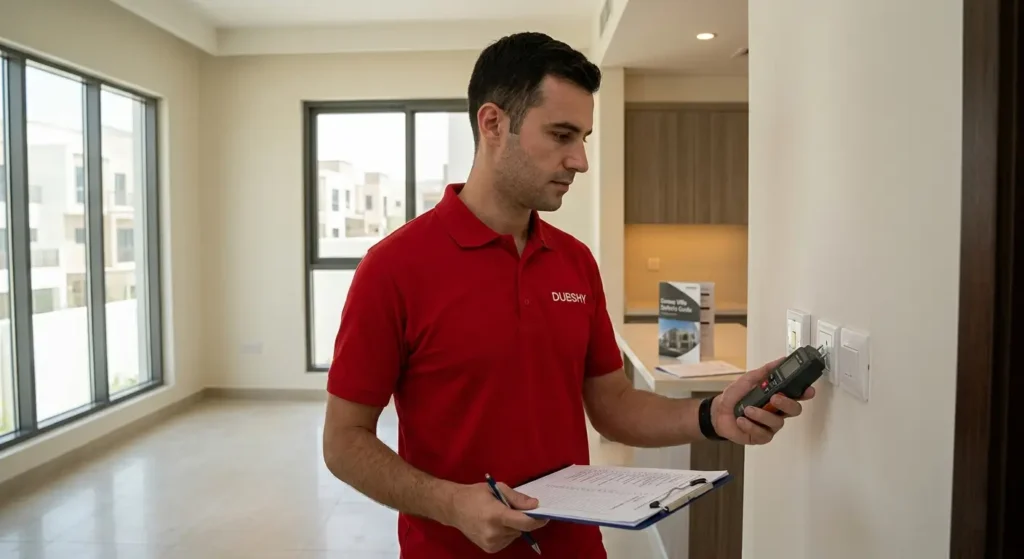
Damac Villa Defects Guide: What Snagging Reports Show Updated 8 October 2026Guide8 min read A Damac villa handover moves fast. The notice lands, you get a slot, and a week later you’re standing in an empty living room holding a set of keys with no real sense of what you’re meant to be looking at. In this guide How Does a Damac Villa Handover Run? What Are the Defects We Find Most in Damac Villas? How Do You Use This Guide on Handover Day? What Happens When a Snag Gets Rejected? Frequently Asked Questions Before You Sign the Acceptance Form We’ve snagged villas and townhouses across Damac Hills, Damac Hills 2 and the Lagoons clusters, and the list is remarkably consistent. Same roof detail. Same condensate drain. Same hollow tiles on the staircase landing. Volume housebuilding at this scale produces repeatable faults, and that’s actually good news, because repeatable faults are easy to go looking for. This Damac villa defects guide covers what we find, where we find it, and which items are worth pushing hard on while your defects liability period is still live. How Does a Damac Villa Handover Run? The sequence is fairly standard, but the timing catches people out. Most buyers get their slot with less than two weeks’ notice, which isn’t long to organise utilities and an inspector. Handover noticeYou’re told the unit is ready and given a window to book your key collection appointment. Final paymentThe closing instalment and any admin or transfer charges have to clear before a slot is confirmed. Key collectionYou sign the acceptance documents at the handover office and collect keys, access cards, and community passes. Snag submissionYour defect list goes in through the Damac customer portal or app, usually with photos attached per item. RectificationContractors are scheduled back to the villa, then you re-check the work rather than taking their word for it. Before any of that is useful, get DEWA activated in your name and sort the cooling account. Some Damac clusters run on district cooling and others use individual split or package units, and that changes what has to be tested. Either way, the AC needs to have been running for two hours before an inspector walks in. What Are the Defects We Find Most in Damac Villas? Across the villa reports we’ve written in these communities, most of the items land in five buckets. Work through them in this order and you’ll catch the bulk of what matters before an acceptance form gets signed. The roof and the waterproofing details Start at the top, because it’s the part nobody checks and the part that costs the most to put right later. On flat roof sections, look for water sitting instead of draining, outlets choked with construction debris, and screed left exposed where the membrane should have carried on. The detail that fails most often is where the waterproofing turns up at the parapet, and where it gets cut around AC pipework and vent penetrations. If that lap isn’t dressed properly, water tracks down inside the wall and shows up as a damp patch in a first-floor bedroom eight months later. AC and everything above the ceiling Condensate drains laid with no fall are the single most common MEP fault we log. Water backs up, the drain pan overflows, and the first sign is a stain on the gypsum. Check the fall along the run, check the insulation on refrigerant and chilled water lines, and check there’s an access hatch big enough to actually service the unit. Then measure the temperature split at each FCU after a proper run, look inside the ducts for construction dust, and confirm every thermostat controls the room it’s labelled for. Swapped bedroom thermostats are common in villas where the first floor was commissioned in a rush. Plumbing and drainage Electric water heaters sitting in ceiling voids with no drip tray and no reachable hatch turn a small leak into a ceiling replacement. Check for both. Then run every outlet: hot and cold reversed at a mixer is quick to fix and easy to miss, and a slow-draining ground floor gully usually means the gradient is wrong. In wet areas, pour water across the floor rather than trusting your eye. If it pools anywhere other than the drain, that’s a screed problem and it needs raising immediately, not after you’ve moved in. Tiling, joinery, and the staircase Tap across floors and stair landings. Hollow tiles are the recurring finish defect in this stock, and they crack under normal use once furniture goes in. Check lippage between tiles, gaps where skirting meets the floor, and the cut tiles at the edges where the tiler ran out of patience. On joinery, open every wardrobe door and drawer, check the soft-close is actually fitted, and push firmly on the staircase balustrade. Loose handrail fixings and a balustrade with movement in it are a safety item, not a cosmetic one. Outside the villa The garden and driveway carry more risk than most buyers realise. We regularly find landscaping graded so water runs back toward the villa, interlock driveways that pond after a wash down, boundary walls with cracks already painted over, and window sills missing the drip groove that stops rain streaking the render. Add the electrical items while you’re out there. Outdoor sockets need proper IP-rated covers, metal gates need earthing, and gate motors and irrigation controllers need to be commissioned rather than just installed. We break down how this developer compares on Damac property quality across apartments and villas, and there’s a wider list of the common defects in Dubai new builds that applies whichever developer built your home. How Do You Use This Guide on Handover Day? Order matters more than people expect. Here’s the sequence we work in on a villa inspection: Utilities firstDEWA on, cooling account open, AC running two hours before anyone starts. Outside before insideRoof, elevations, garden falls, boundary wall, and driveway. Services nextAC, water heaters, distribution board,
Landlord Property Inspection Dubai: Rights and Requirements
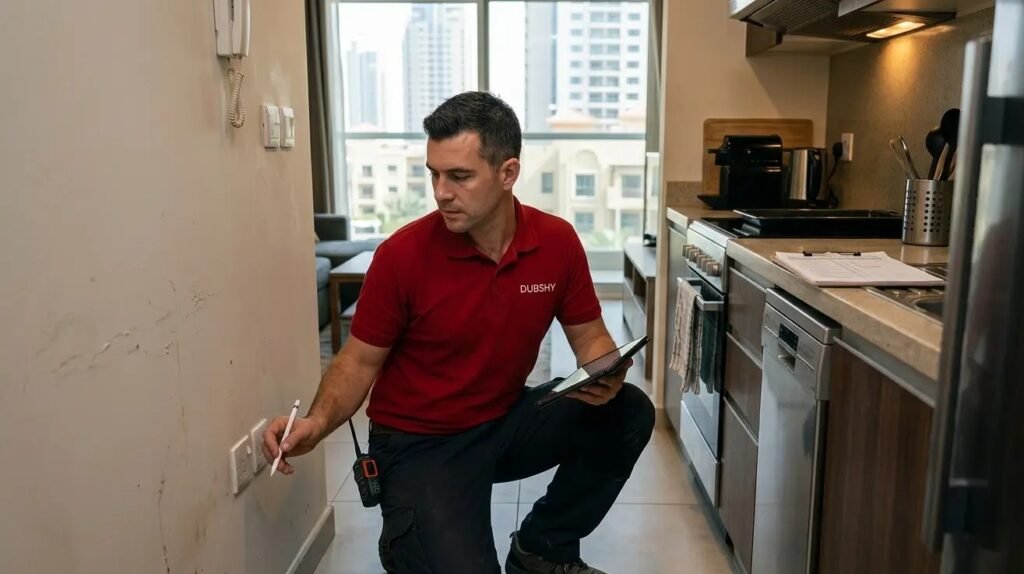
Landlord Property Inspection Dubai: Rights and Requirements Updated 8 October 2026Guide7 min read Renting out property in Dubai is a fast process, and most landlords here are investors first and hands-on managers second. Plenty of owners hold a unit in Dubai Marina while living in London, or a villa in Arabian Ranches while running a business in another emirate. That raises a fair question: when you want to check on your property, what are you actually allowed to do, and what happens if you get it wrong? In this guide Do Landlords Have the Legal Right to Inspect Their Property in Dubai? What Does the 24-Hour Notice Rule Actually Require? What Happens If You Skip the Notice? How Often Can a Landlord Inspect? What Can (and Can’t) a Landlord Check During an Inspection? Why Do Move-In and Move-Out Inspections Matter Most? DIY Walkthrough vs. Professional Inspection Report Remote or Overseas Landlord? How Do You Stay Compliant? FAQs Conclusion A landlord property inspection in Dubai is governed by clearer rules than most owners realise. This guide spells out what the law permits, what’s mandatory, and where landlords most often leave themselves exposed to disputes over inspection rights. Whether you’re renting out a home for the first time or you’ve managed tenancies for years, treat this as your practical reference. Do Landlords Have the Legal Right to Inspect Their Property in Dubai? Yes. As the property owner, you retain the right to inspect your asset at any point during an active tenancy. This isn’t in question: ownership comes with the right to verify that your investment is being maintained properly and that the tenant is complying with the tenancy contract. But this right isn’t unconditional. Under Dubai’s rental laws, which are overseen by the Real Estate Regulatory Agency (RERA), the landlord has the right to inspect and the tenant has the right to “quiet enjoyment” of the property. This is a valid and binding right. In practice, this means you can inspect, but only if you follow the correct process. Skip the process, and your legal right becomes a legal liability. What Does the 24-Hour Notice Rule Actually Require? The one thing to keep in mind is that the landlord has to give the tenant written notice 24 hours before inspecting. This is not a courtesy tip. It’s standard practice in Dubai tenancy law, and it’s what the Rental Disputes Settlement Centre (RDC) would expect if a dispute were to end up in front of it. A few details matter here: The notice must be in writing. A message sent verbally or casually mentioned during a phone call does not satisfy this requirement. WhatsApp or email is generally accepted as valid written notice, as long as it clearly states the date, time, and purpose of the visit. The notice period is a minimum, not a maximum. Giving tenants more advance notice is always better practice. The inspection time should be reasonable and, ideally, mutually convenient for both parties. If a dispute ever escalates to the RDC, the burden is on the landlord to prove proper notice was given. A text message with a clear timestamp holds up. A verbal agreement does not. What Happens If You Skip the Notice? This is where many landlords underestimate the risk. Entering a tenant-occupied property without proper notice, outside of a genuine emergency like a fire, flood, or structural failure, is treated as a breach of the tenant’s right to quiet enjoyment. The consequences aren’t just theoretical. A tenant who feels their privacy was violated can file a complaint with the RDC. Depending on the circumstances, this can result in: Possible compensation payable to the tenant Damage to the landlord’s credibility in any future dispute over the same tenancy Strained relationships that lead to non-renewal, late payments, or uncooperative tenants going forward Genuine emergencies are the only real exception. If there’s an active water leak threatening the unit below or a fire risk, landlords (or their representatives) can act immediately without waiting for the notice period. Outside of that, patience protects you legally. How Often Can a Landlord Inspect? There isn’t a specific number of inspections set in law. Twice a year or once a quarter is not mandated, but reasonableness applies throughout. Inspections should be reasonably timed and have a known reason, such as preparing for a lease renewal, routine maintenance, or addressing a specific concern that has been raised. If visits happen too often or for no valid reason, they may be seen as harassment or an attempt to pressure the tenant, which will reduce the landlord’s leverage if challenged. A good rule of thumb many property owners follow: one routine inspection every 3 to 6 months, plus additional visits only when there’s a specific maintenance concern to address. What Can (and Can’t) a Landlord Check During an Inspection? An inspection should focus on the condition and maintenance of the property, not on the tenant’s personal life or belongings. Landlords can check: Clogged drains, AC problems, and any plumbing or electrical faults Signs of structural damage, mold, or water damage Normal wear and tear versus damage beyond normal use Whether the property is being used in accordance with the tenancy agreement (for example, looking for unauthorized subletting) The line is crossed when you go through personal belongings, enter the home without consent, or impose on the tenant over unrelated issues. Staying strictly within the scope of “property condition and compliance” keeps the inspection legally sound and the relationship professional. Why Do Move-In and Move-Out Inspections Matter Most? If there’s one type of inspection every landlord in Dubai should treat as non-negotiable, it’s the move-in and move-out inspection. This is where most security deposit disputes are won or lost. Here’s the problem landlords run into constantly: a tenant moves out, the landlord claims damage, the tenant disputes it, and there’s no documented proof of the property’s original condition. Without that evidence, the RDC has nothing concrete to base a decision on, and deposit claims
Tenant Property Inspection Dubai: What to Expect and Prepare
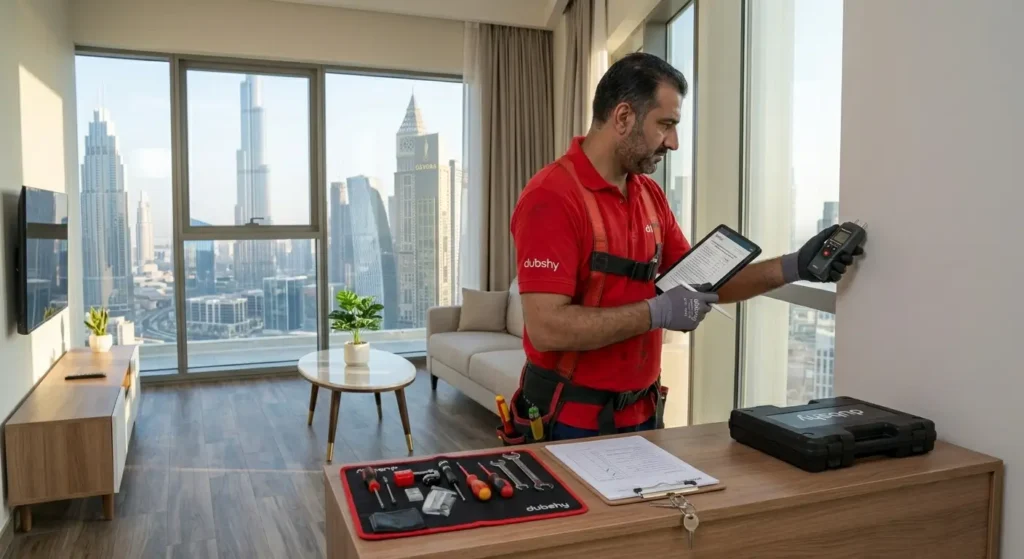
Tenant Property Inspection Dubai: What to Expect and Prepare Updated 8 October 2026Guide7 min read When you’re looking to rent a home in Dubai, there’s more paperwork involved than you expect, and one of the tasks tenants are unlikely to pay attention to is the property inspection. A good tenant property inspection is essential, whether you are moving into a new apartment in Dubai Marina or about to hand back a villa in Damac Hills. It safeguards your security deposit and gives you solid evidence of the property’s condition. One of the most common ways tenants lose part of their deposit is by not documenting that condition. In this guide What Is a Tenant Property Inspection? What Legal Framework Should Tenants Know? What Happens During the Inspection? How Should You Prepare as a Tenant? Move-In vs Move-Out Inspection: What Are the Key Differences? Why Does a Professional Inspection Beat a DIY Checklist? What Common Mistakes Do Tenants Make? FAQs Conclusion This guide takes you through what a tenant property inspection in Dubai involves, what the law says about it, and exactly how to prepare so you don’t lose money over issues that aren’t your fault. What Is a Tenant Property Inspection? A tenant property inspection is an organized review of the condition of a rental property, carried out at set points during a tenancy. In Dubai, this typically happens at two points: Move-in inspection: performed before or at the time of moving in. It establishes a baseline description of the property’s condition. Move-out inspection: conducted when you leave, comparing the property’s condition to the baseline to determine whether there are any deductions from the deposit. Some landlords also conduct a midterm inspection during the lease, primarily to confirm general maintenance rather than to identify who caused damage. The goal is simple: landlord and tenant need a shared written reference point. Without one, damages and cleaning become a guessing game, and guesswork usually goes in favor of whoever holds the deposit. What Legal Framework Should Tenants Know? Dubai rental laws are primarily outlined in Law No. 26 of 2007 (amended by Law No. 33 of 2008), which establishes the main duties and responsibilities of landlords and tenants. A few facts matter most when it comes to inspections: Notice period: landlords should give reasonable notice before coming in to inspect the property, typically 24 hours. Surprise visits are not standard. Appropriate hours: inspections should take place at reasonable times, not very early in the morning or late at night. Normal wear and tear is not chargeable: faded paint, slightly scuffed carpet, and scratches on furniture caused by regular use count as normal wear and tear and cannot be deducted from the deposit. Only damage beyond ordinary use, such as cracked tiles, damaged fixtures, or unauthorized changes, is eligible for a deduction. Documentation is important: when a rental dispute goes to the Rental Dispute Centre in Dubai, tenants who have dated, photo-documented evidence have an overwhelming advantage. With this knowledge before your inspection date, you won’t be taken aback by unfair claims, and you’ll know what you can push back on. What Happens During the Inspection? A typical tenant inspection, whether self-conducted, done by the landlord’s agent, or handled by a certified inspection company, covers the same core areas room by room: Structural elements: walls, ceilings, and flooring checked for cracks, stains, or visible damage. Plumbing: water pressure, taps, drains, and bathroom fixtures checked for leaks or blockages. Electrical systems: sockets, switches, lighting, and distribution boards tested for safety and function. AC and ventilation: cooling performance and airflow, since AC issues are one of the most disputed items at move-out. Doors, windows, and fittings: smooth operation, locks, seals, and general finish. Furnished item inventory: if the unit is furnished, every appliance and furniture piece is logged against the original inventory list. Each area is noted with written comments and timestamped photos. This is what turns a casual walkthrough into something that actually holds up if a dispute arises later. How Should You Prepare as a Tenant? Preparation is where most tenants either protect their deposit or lose part of it unnecessarily. Before your inspection date: Take dated photos and videos of every room, including close-ups of existing marks or damage Fix small, low-cost issues yourself. A dripping tap or a loose cabinet handle is cheaper to repair now than to have deducted later Clean thoroughly, including AC filters, grout lines, and often-missed spots like behind appliances Keep a copy of your move-in inspection report or photos on hand for comparison Check your lease for any specific clauses on repainting, deep cleaning, or condition requirements at handover Walk through with the inspector if possible, and raise any disagreement about a noted item on the spot rather than after signing off Doing this even a day or two ahead can be the difference between a full deposit refund and an unexpected deduction list. Move-In vs Move-Out Inspection: What Are the Key Differences? Aspect Move-in Move-out When it happens Before or at the start of the tenancy At the end of the lease Purpose Set the baseline condition Compare condition against the baseline Who benefits most Tenant (protects against pre-existing damage) Landlord and tenant (settles the deposit fairly) Key output Signed condition report with photos Deduction list, if any, based on the comparison The move-in report is arguably more important than most tenants realize. Without it, there’s nothing to compare your move-out condition against, and disputes tend to default in the landlord’s favor. Why Does a Professional Inspection Beat a DIY Checklist? A phone camera and a checklist can catch obvious issues, but they miss what an untrained eye simply isn’t looking for: hairline cracks in tiling, early-stage moisture behind a wall, or an AC unit that’s cooling inefficiently due to a duct issue. This is where a certified inspection makes a real difference. At Dubshy, our RERA and InterNACHI-certified engineers use a 400+ point inspection process covering structural, electrical, plumbing, AC, and finishing systems.
Termite Inspection Dubai: Signs, Process and What It Costs
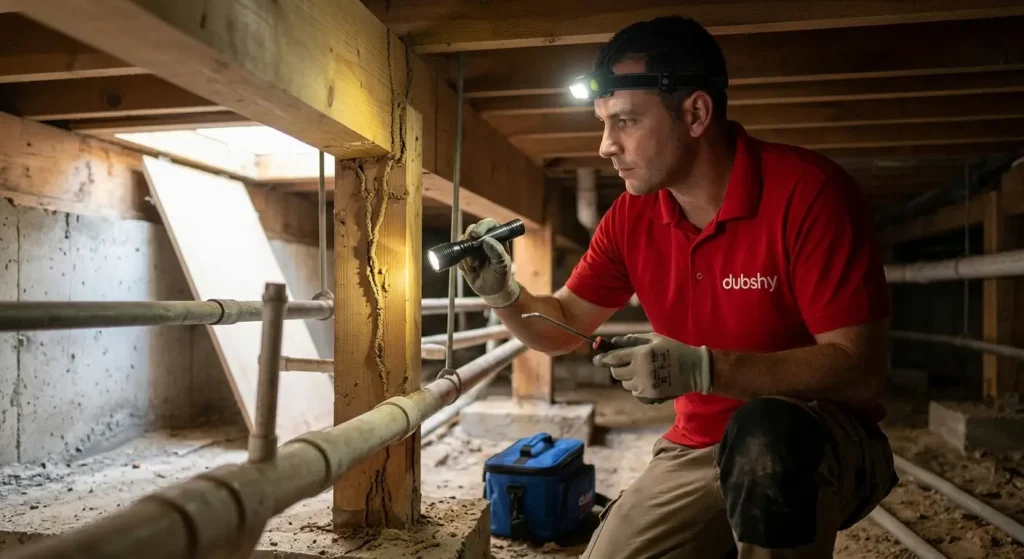
Termite Inspection Dubai: Signs, Process and What It Costs Updated 8 October 2026Guide8 min read Dubai’s skyline may be dominated by steel, glass, and marble, but behind the facade, thousands of villas and low-rise buildings still use a lot of wood, in the form of door frames, skirting boards, kitchen cabinets, decking, and structural supports. Once termites get an opportunity, they take advantage of wood, moisture, and heat to invade. Homeowners in Dubai generally assume termites are not a problem in a desert environment. In fact, it’s the opposite: irrigation systems, landscaped gardens, and leaking plumbing produce just the moist microclimates that desert termites need near your foundation. In this guide Are Termites Actually a Problem in Dubai? What Are the 7 Warning Signs of Termites in Your Property? Where Do Termites Hide Most in Dubai Homes? What Is the Termite Inspection Process, Step by Step? What Are the Termite Inspection Costs in Dubai? Termite Inspection vs. Termite Treatment: What’s the Difference? When Should You Book a Termite Inspection? How Does This Tie Into Your Handover or Snagging Report? FAQs Conclusion Whether you are looking at a resale home, nearing the end of your Defects Liability Period (DLP), or just noticing something slightly unusual with your skirting boards, it is important to know what a termite inspection is and what you should expect to pay for it, so you don’t end up paying thousands of dirhams for repairs later. Are Termites Actually a Problem in Dubai? Yes, and the reason surprises most people. Psammotermes hybostoma is a subterranean termite found in the desert and is the most common species in Dubai. It does not require regular rain, only a regular but localized source of moisture. Garden irrigation lines, AC condensate drain lines, and small plumbing leaks provide exactly that. These termites then travel through the soil, sometimes up to 10m (and beyond), to the timber in your property. Villas in landscaped communities with lawns and wooden pergolas are more susceptible to termites than high-rise apartments, where the problem is more likely to be around the bathroom, kitchen cabinetry, and wooden floors. The bigger issue is timing. Termite damage is silent. Colonies can operate inside a wall or under a floor for months, sometimes years, before any visible sign appears, by which point the timber has already lost significant structural integrity. What Are the 7 Warning Signs of Termites in Your Property? Most people miss these signs simply because they don’t know what to look for. Keep an eye out for: Mud tubes: thin, pencil-width tunnels of dried soil running along foundations, walls, or garden walls. These are termite highways connecting the colony to its food source. Hollow-sounding wood: tap a skirting board or door frame. A dull, hollow sound (instead of a solid knock) suggests the wood has been eaten from the inside. Discarded wings: small, translucent wings near windowsills or light fixtures, left behind after a termite swarm. Frass (termite droppings): tiny, pellet-like sawdust piles near wooden furniture or frames. Bubbling or peeling paint: often mistaken for water damage, but can indicate moisture and termite activity trapped beneath the surface. Doors and windows that suddenly stick: termite tunnels distort wood, causing frames to warp slightly. Visible damage to skirting or floor timber: crumbling edges, small holes, or a papery texture on wood surfaces. If you spot even one of these signs, it’s worth booking a professional inspection before assuming the worst, or dismissing it as nothing. Where Do Termites Hide Most in Dubai Homes? Depending on your property type, the hiding spots vary: In villas, the most vulnerable areas include walls that face the garden, wooden decking, pergolas, and any timber structures near irrigation systems. Basements and ground-floor rooms next to gardens are frequent entry points. In apartments, termites are less likely to come from the soil itself but can move through common building elements and through imported furniture. The typical culprits are kitchen cabinets, wooden flooring, and false ceiling frames around bathrooms, where the air is moister. In both cases, termites focus on the least disturbed areas of the home, such as behind furniture, within wall cavities, and under flooring. That’s where professional tools come in far more handy than a stroll through the house. What Is the Termite Inspection Process, Step by Step? A proper termite inspection isn’t a five-minute glance at your skirting boards. Here’s what a thorough process typically looks like: Initial visual assessmentThe inspector walks through the property, checking all timber elements, garden boundaries, and areas with visible moisture history. Moisture mappingUsing a moisture meter, the inspector identifies damp zones in walls, floors, and near plumbing lines, since moisture is the strongest predictor of termite risk. Thermal imagingA thermal camera can detect subtle temperature differences behind walls and under flooring, often revealing termite activity that’s completely invisible to the eye. Soil and foundation checkFor villas, the inspector examines soil near the foundation and garden walls for mud tubes or entry points. Structural timber inspectionEvery accessible wooden element (frames, skirting, decking, cabinetry) is tapped, probed, and visually checked for hollowing or frass. Detailed reportYou receive a photo-documented report showing exactly where activity or risk was found, the severity, and recommended next steps. This combination of visual inspection plus moisture and thermal tools is what separates a genuine inspection from a quick guess. It’s the same standard of documentation you’d expect from a certified property inspection, not just a pest control sales visit. What Are the Termite Inspection Costs in Dubai? Termite inspection pricing in Dubai typically depends on three factors: property size, property type, and whether thermal imaging or moisture mapping is included. As a general guide: Apartments and small units: inspections tend to be priced at the lower end, since there’s less timber and no garden or foundation exposure to check. Townhouses and mid-sized villas: pricing sits higher due to garden areas, decking, and larger foundation perimeters. Large villas with extensive landscaping: these cost the most, since soil mapping and multiple structural zones
Commercial Property Inspection Dubai: A Complete Checklist
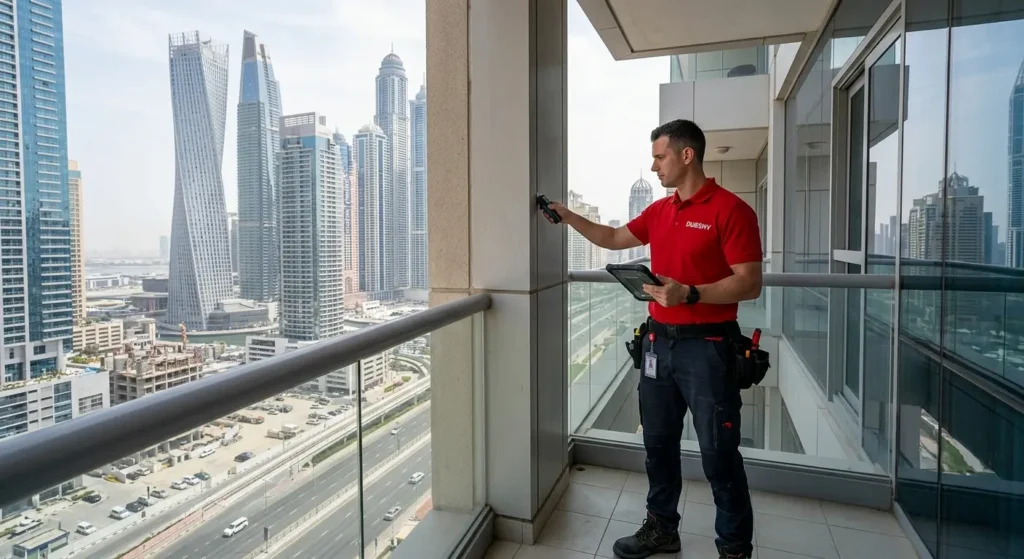
Commercial Property Inspection Dubai: A Complete Checklist August 5, 2026 Tom Alex Commercial Property Inspection Dubai Updated 8 October 2026Guide8 min read Dubai’s commercial property market is a dynamic one. Offices in Business Bay lease up in days, warehouses in DIP change hands before due diligence is completed, and retail units in JLT are fitted out on tight deadlines. It’s easy to overlook the one thing that makes the biggest difference in safeguarding your money: a good commercial property inspection. In this guide What Is a Commercial Property Inspection in Dubai? Why Do You Need a Commercial Inspection in Dubai? What Is on the Complete Commercial Property Inspection Checklist? Which Tools Are Used in Professional Commercial Inspections? How Much Does a Commercial Property Inspection Cost in Dubai? How Do You Choose the Right Inspection Company in Dubai? FAQs Ready to Start Whether you’re purchasing an office floor, leasing a warehouse, or taking over a retail shell for fit-out, a commercial inspection gives you the real truth about the property’s condition before you sign anything. This guide covers the full checklist Dubai’s certified inspectors follow, the tools they use, the cost involved, and how to choose a provider. What Is a Commercial Property Inspection in Dubai? A commercial property inspection is an engineering-based, detailed inspection of a non-residential building, such as an office, retail unit, restaurant, clinic, showroom, or industrial building. The certified inspector reviews the structure, mechanical and electrical systems, fire safety compliance, HVAC performance, and the quality of the finishes, and provides a detailed written report supported by photographs. Unlike residential snagging, it has a few distinct characteristics: Commercial buildings have larger electrical loads, more complex MEP systems, and specific fire safety regulations tied to occupancy type. Inspections often have to consider the operational use of the space: floor load capacity checks for a warehouse, or data cabling and server room power checks for an office. Reports usually need to satisfy Dubai Civil Defence and municipal compliance standards, not just cosmetic finish quality. In short, a commercial inspection isn’t a scaled-up version of a home inspection. It’s a separate discipline with its own checklist. Why Do You Need a Commercial Inspection in Dubai? Dubai’s commercial property market is active across every segment: office towers, logistics parks, retail strips, and mixed-use developments. With that much movement, an inspection protects you at multiple points in the ownership or leasing cycle. You typically need one when you are: Buying a commercial unit, off-plan or ready Leasing or renewing a commercial space Taking over from the developer or main contractor Fitting out or renovating a space Preparing a building for a Civil Defence or building safety compliance inspection Running an annual facility condition assessment Without this step, you can be stuck with the code violations, defects, and maintenance problems that the previous owner or contractor left behind. In commercial properties, these problems can lead to your business being shut down or fined, and they cost much more to correct once your operation is up and running. What Is on the Complete Commercial Property Inspection Checklist? This is the system-by-system process a certified inspector follows. Structure and exterior Building envelope, columns, beams, and load-bearing walls Roofing condition and waterproofing integrity Facade finishes, external walls, and signage mounting points Cracks, settlement, or water ingress at structural joints Electrical and power systems Main distribution boards, sub-panels, and circuit breakers Load balancing across three-phase power connections Socket functionality, lighting circuits, and emergency lighting Data cabling pathways and server room power supply (for offices) Grounding, earthing resistance, and overall wiring compliance with UAE standards Plumbing and water systems Main water supply lines and pressure at all levels Drainage slope, blockages, and sewer connections Toilets, sinks, pumps, and tank systems Leak detection around risers and wet areas HVAC and mechanical systems Central AC units, chillers, and split systems Ductwork condition and airflow distribution Thermostats and air handling unit performance Cooling efficiency, which is critical in Dubai’s climate, where an underperforming HVAC system directly affects both comfort and utility bills Fire safety and Civil Defence compliance Safety devices such as smoke detectors, fire alarms, and sprinkler systems Location and expiry dates of fire extinguishers Fire exit routes, signage, and emergency lighting Overall conformance with Dubai Civil Defence requirements Interior fit-out and finishes Flooring, tiling, and levelling in all zones Partitions, ceilings, doors, and glazing systems Quality of paint, wall finishes, and joinery Accessibility standards for staff and customers Operational suitability Warehouses: floor load capacity, epoxy coating condition, and loading dock functionality. Offices: efficient workspace layout, noise levels, and IT infrastructure readiness. Retail and F&B: customer flow, machinery vibration impact, and kitchen extraction systems. A commercial inspection involves a large number of checkpoints, at least 100 and often many more, because the stakes in commercial spaces are higher when it comes to operations and compliance. Which Tools Are Used in Professional Commercial Inspections? Certified inspectors in Dubai don’t rely on a visual walkthrough alone. They use engineering-grade tools to catch defects that aren’t visible to the naked eye: Thermal imaging cameras: reveal insulation gaps, overheating electrical connections, and hidden water leaks. Moisture meters: detect dampness behind walls, floors, and ceilings before it turns into mold or structural damage. Electrical testers and multimeters: check voltage, grounding, and circuit safety. Laser levels: identify uneven floors, misaligned walls, and sloping surfaces. Endoscope cameras: inspect inside ducting and wall cavities without damaging the structure. Tapping rods: detect hollow or poorly bonded floor and wall tiles. This is the difference between a professional report and a quick walkthrough: visual inspection combined with instrument-based testing. How Much Does a Commercial Property Inspection Cost in Dubai? Prices depend on the type of inspection and the property’s size and type. As a general guide: Small retail units or offices under 2,000 sq ft sit at the lower end of the price range. Mid-size offices, showrooms, and restaurants cost more because of the additional MEP and fire safety checks. Warehouses and large industrial units cost the most, due to
Move-Out Inspection Dubai: What Tenants and Landlords Need
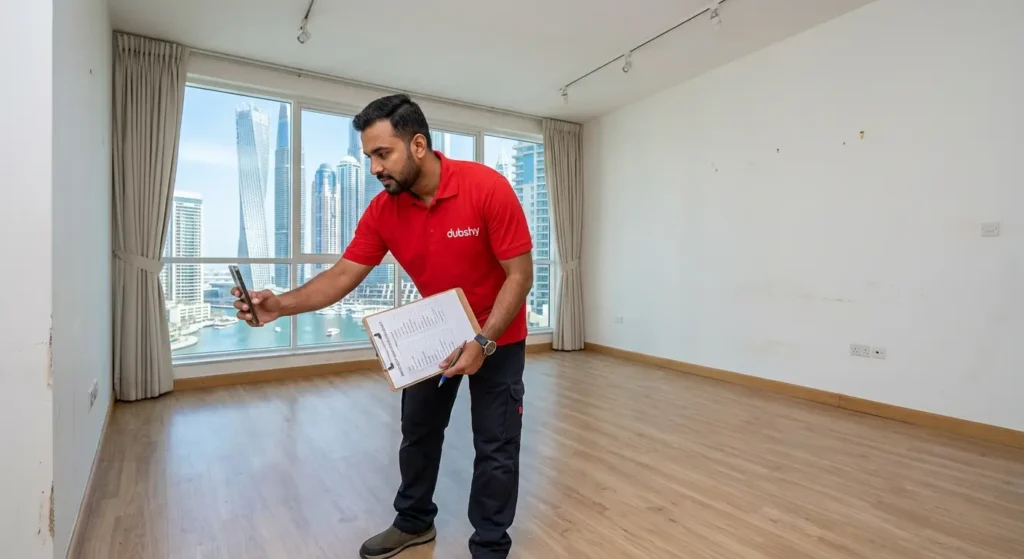
Move-Out Inspection Dubai: What Tenants and Landlords Need August 4, 2026 Tom Alex Move-Out Inspection Dubai Updated 8 October 2026Guide7 min read In Dubai, ending a tenancy agreement is supposed to be easy. You return the keys, collect your deposit, and walk away. In practice, it seldom works like this without documentation. Dubai sees thousands of landlords and tenants in disputes over security deposits, whether the issue is a cracked tile, a broken AC, or a stained wall. One thing removes the guesswork and protects both parties to the agreement: the move-out inspection. In this guide What Is a Move-Out Inspection in Dubai? Why Does a Move-Out Inspection Matter for Tenants? Why Does It Matter for Landlords? What Does a Move-Out Inspection Cover? What Are the Security Deposit Rules Under RERA? How Does the Move-Out Inspection Process Work? What Happens If There’s a Dispute? Move-In vs Move-Out Inspection: What’s the Key Difference? Why Hire a Professional Instead of Doing It Yourself? FAQs Ready to Start Whether you are a tenant moving out of a Dubai Marina apartment or a villa landlord in Damac Hills, knowing the ins and outs of a move-out inspection can save you thousands of dirhams and may even save you weeks of unnecessary stress. What Is a Move-Out Inspection in Dubai? A move-out inspection is a comprehensive, written evaluation by a professional of the condition of a rental unit at the end of a lease. It takes place just before the tenant returns the keys to the landlord, and is generally compared against the move-in report (if there is one) to determine what has changed. The inspection covers wall paint, flooring, plumbing, electrical systems, and appliances. A certified engineer documents all defects in a report with photos, notes, and severity ratings, so both parties can trust it. This is not just a formality. In Dubai’s rental market, a documented move-out inspection is the critical piece of evidence in deciding whether a security deposit deduction is fair. Why Does a Move-Out Inspection Matter for Tenants? When moving out of a rental apartment or villa in Dubai, one of the best things you can do is arrange a professional inspection. It protects your money and your reputation as a tenant: Provides evidence of the actual condition of the property, helping you avoid unfair deposit deductions Distinguishes between normal wear and tear and tenant-caused damage Gives you written documentation if a landlord claims money back Speeds up the deposit return process, since disagreements are minimized Protects you legally if the matter escalates to Dubai’s Rental Dispute Center (RDC) Without an independent inspection, tenants are often left arguing against a landlord’s word alone, and that rarely ends well. Why Does It Matter for Landlords? A well-documented move-out inspection is just as valuable for landlords, if not more so: Maintains a clear, timestamped record to back up any deposit deductions Helps you avoid future conflicts when re-letting or selling the unit Identifies maintenance requirements before the next tenant moves in Reduces tenant complaints of unfair billing at the RDC Supports the long-term value of the property If a disagreement over damages escalates to formal dispute resolution, one of the most important pieces of evidence a landlord can provide is a well-documented inspection report. What Does a Move-Out Inspection Cover? A move-out inspection usually follows the same systems and components as a handover snagging inspection, but with a different purpose: comparing the current condition against the original baseline. Walls and ceilings: stains, cracks, non-conforming finishes, and unauthorized changes. Plumbing: leaks, cracks, and discoloration that signal damage. Outdoor areas and yard: damage to the ground, cracks, or discoloration, especially in yards or other outdoor spaces. Cleanliness: condition of the bathroom, shower, and toilet bowl or cubicle. Electrical systems: sockets, switches, circuit breakers, and lighting. AC and ventilation: cooling performance, filter condition, and unusual noise. Doors and windows: locks, seals, glass condition, and smooth operation. Kitchen and bathroom fixtures: cabinets, countertops, fittings, and drainage. Appliances and inventory (if furnished): function and condition against the original inventory list. A comprehensive inspection typically checks 300–400+ individual points, depending on the property size, ensuring nothing is missed before you hand back the keys. What Are the Security Deposit Rules Under RERA? Dubai’s rental laws, managed by RERA (Real Estate Regulatory Agency) and enforced through the Rental Dispute Center, rest on one principle: landlords can only deduct for damage that goes beyond normal wear and tear. Fair wear and tear covers issues such as faded paint, minor carpet wear from normal use, or a few worn fittings after years of ordinary use. These are NOT legally deductible from a tenant’s deposit. Tenant-caused damage covers items broken by the tenant, unauthorized changes to the walls, water damage due to tenant negligence, or items stolen or lost. These can be the basis for a deduction, as long as there is clear evidence. In Dubai, the security deposit is normally between 5% and 10% of the yearly rent. If no documentation exists on either side, the conflict typically goes to the party with the better evidence, and an independent move-out inspection can make all the difference. How Does the Move-Out Inspection Process Work? Book the inspectionSchedule it before your official handover date, ideally with enough notice for both parties to coordinate access. Engineer visits the propertyA certified inspector arrives with professional tools, including thermal cameras and moisture meters for hidden issues. Full property assessmentEvery major system is checked and compared against the move-in condition, if available. Report deliveryA detailed report with photos, defect descriptions, and severity ratings is delivered, typically within 24–48 hours. ResolutionTenant and landlord review the findings together to agree on deposit deductions, if any. What Happens If There’s a Dispute? If the tenant and landlord can’t agree on the inspection findings, the matter can be escalated to Dubai’s Rental Dispute Center (RDC). This is where having a professional, independent report becomes critical. The RDC reviews evidence from both sides (photos, reports, and correspondence) to reach a fair
First Time Buyer Snagging Dubai: Complete Guide 2026
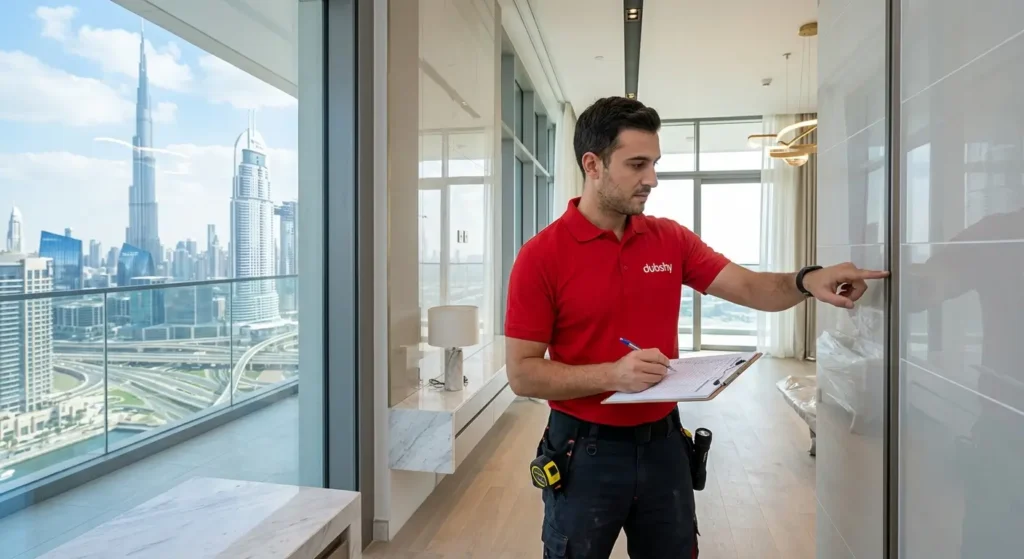
First Time Buyer Snagging Dubai: Complete Guide 2026 July 18, 2026 Tom Alex First Time Buyer Snagging Dubai Updated 8 October 2026Guide8 min read The first property you buy in Dubai is an exciting milestone, but it’s one that could be costly if you miss a detail. If this is your first handover, it’s likely that no one has told you about snagging, or perhaps you’ve been told it’s “optional.” It isn’t. It’s the one thing that will protect you from ending up with a property full of hidden defects. In this guide What Is Property Snagging, and Why Do First-Time Buyers Skip It? What Are Your Legal Rights as a First-Time Buyer in Dubai? When Should You Book a Snagging Inspection? What Gets Checked in a Snagging Inspection? Which Common Defects Do First-Time Buyers Miss? DIY Snagging vs Hiring a Professional How Much Does Snagging Cost in Dubai? What Happens During a Professional Inspection, Step by Step? Which Red Flags Should First-Time Buyers Never Ignore? FAQs Ready to Start This guide explains everything you need to know about property snagging in Dubai as a first-time buyer: what it involves, your legal rights, what gets checked, what it costs, and the red flags that catch first-time buyers out every day. What Is Property Snagging, and Why Do First-Time Buyers Skip It? Property snagging is a thorough inspection of the property before accepting handover from the developer. It aims to detect defects, unfinished work, and quality problems that don’t match what your Sales and Purchase Agreement promised. The issue is that most first-time buyers think “new” equals “perfect.” When you walk into a new apartment or villa, everything is shiny, polished, and freshly painted. But cosmetic perfection can hide a lot. None of this is apparent to the untrained eye: hollow tiles, faulty electrical wiring, AC units that never had their filters replaced, and drainage that backs up the first time it rains. Once you sign the handover documents, you legally take over the property in whatever state it is in. If you fail to identify a defect, it becomes your problem and not the developer’s. Snagging is not a “nice to have.” It’s one of your last safeguards before you take ownership. A formal snagging report is how you document what you find. What Are Your Legal Rights as a First-Time Buyer in Dubai? Dubai’s real estate sector is far more regulated than most first-time buyers realize, and when you know your rights, you feel more confident walking into handover day. RERA (Real Estate Regulatory Agency) regulates the conduct of developers and protects the interests of buyers in Dubai. When a developer is unwilling to resolve legitimate issues, it’s time to take matters to RERA. Dubai Land Department (DLD) controls the legal framework for property transactions, handling the legal aspects of deals as well as dispute resolution if a problem arises. SPA (Sales and Purchase Agreement) or Form F is the binding contract that outlines what you were promised: the quality standard your finished unit should actually meet. DLP (Defect Liability Period) is a period after handover, usually one year (it can differ between developers and contracts), in which the developer is legally liable to rectify structural and quality issues free of charge to you. The bottom line: you have the right to a property free of flaws that matches what you agreed to in your contract. Don’t let anyone, including the developer’s own sales team, convince you otherwise. When Should You Book a Snagging Inspection? Timing matters more than most first-time buyers expect. Here’s a simple breakdown: Before handover: the most critical window. Once you sign, you’ve accepted the property as-is. During the DLP: even after moving in, book a follow-up inspection before the DLP expires. Some defects (AC performance, leaks, and settlement cracks) only show up after a few months of actual use. Before buying a resale or secondary-market property: just because a property isn’t new doesn’t mean it’s defect-free. Previous ownership can hide issues too. If you only do one inspection, do it before handover. If you can afford two, do a second one near the end of your DLP window. What Gets Checked in a Snagging Inspection? A thorough inspection is not a few minutes of walking around. It is a systematic, room-by-room evaluation of all the major systems in your property: Structural integrity: cracks, weaknesses, and safety risks. Electrical systems: wiring, sockets, circuit breakers, and fire risk. Plumbing and maintenance items: garage doors, roof leaks, faucet leaks, water shut-off, and similar fittings. AC/HVAC performance: cooling efficiency, duct condition, and thermal testing. Floors and tiling: uneven levels, cracks, and hollow tiles. Windows, doors, and carpentry: seals, alignment, and locks. Painting and finishing: peeling, bubbling, and uneven paint coats. External areas: balconies, facades, driveways, and gardens, where applicable. A proper inspection typically checks 400+ individual points across a property, which is far beyond what an untrained buyer can realistically assess in a single walkthrough. Which Common Defects Do First-Time Buyers Miss? Every major Dubai developer has patterns: recurring issues that show up across their projects more often than others. As a first-time buyer, you won’t know these patterns going in, which is exactly why they get missed: Emaar properties: commonly flagged for finishing inconsistencies and minor plastering defects. Damac properties: frequently show electrical and plumbing snags in high-density buildings. Nakheel properties: villa-specific issues around external work, landscaping, and drainage. Sobha properties: generally higher finishing quality, but AC and ventilation snags still appear. Beyond developer-specific patterns, the defects first-timers miss most often are the invisible ones: hairline structural cracks, moisture behind walls, and AC ducts that look fine but underperform. These require thermal cameras and moisture meters to detect, not a visual walkthrough. DIY Snagging vs Hiring a Professional It’s tempting to save money and do your own inspection, especially if you’re detail-oriented. But it’s worth being honest about the trade-offs. DIY snagging works if: You have construction or property experience You can dedicate multiple visits and
Snagging vs Desnagging Dubai: Understanding the Full Process
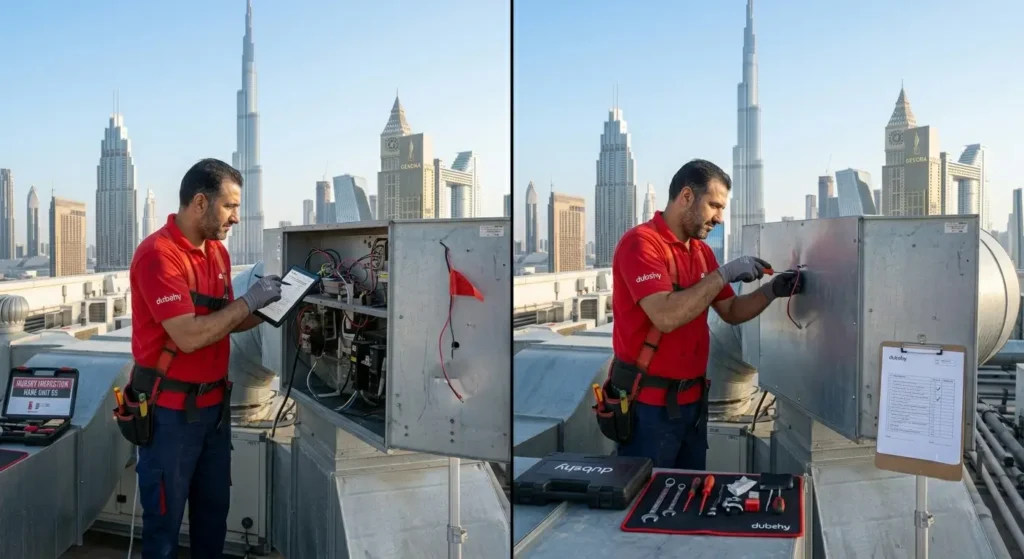
Snagging vs Desnagging Dubai: Understanding the Full Process July 16, 2026 Tom Alex Snagging vs Desnagging Dubai Updated 8 October 2026Guide7 min read A house in Dubai is one of the greatest financial commitments anyone can make, and the handover is where buyers either protect their investment or stumble into a slew of hidden repair costs. When dealing with Dubai property handovers, you’re likely to encounter two terms that sound similar but have very different meanings: snagging and de-snagging. In this guide What Is Snagging in Dubai? What Is De-Snagging in Dubai? What Are the Key Differences Between Snagging and De-Snagging? Why Do Both Matter Under Dubai’s DLP and RERA Framework? How Does the Process Work, Step by Step? Do Different Developers Have Different Snagging Patterns? What Common Mistakes Do Buyers Make? What Are the Cost and Timeline Expectations? FAQs Ready to Start One of the most common and expensive errors is confusing the two, or worse, missing one of them completely when buying a property in Dubai. This guide explains what each process involves, when and why it is necessary, and why using only one of them is not enough to safeguard a six or seven-figure investment. What Is Snagging in Dubai? Snagging is the initial inspection in the handover process. It takes place before you take possession of your new apartment, villa, or townhouse. A qualified engineer inspects all visible structural, electrical, plumbing, and finishing systems in the building for defects, unfinished work, or anything that has not been built to UAE building standards. The result of this inspection is a snag list: a written report that records all the issues identified, with photos and severity ratings, which is then shared with the developer to be addressed. A formal snagging report is what makes that list hard to dispute. Typical snagging problems include: Walls that are cracked or have holes, or tiles that are not flat A leaking or broken pipe, or low water pressure Doors, windows, or wardrobes that do not align properly Faulty sockets, switches, or AC units Missing safety devices such as smoke detectors Poor paint finishes or plastering defects The earlier these are caught, the stronger your negotiating position with the developer, because once you sign the handover documents, you legally accept the property in its current condition. What Is De-Snagging in Dubai? De-snagging is the second and equally important step, and it’s the one buyers most often skip, usually because they assume the developer’s word is enough. It shouldn’t be. Once the developer claims to have fixed everything on your original snag list, de-snagging is the follow-up inspection that verifies the repairs were actually done properly. It’s essentially a quality control check on the developer’s own quality control. A de-snagging inspection typically checks: Whether previously flagged cracks and paint issues were properly repaired Whether plumbing leaks are fully resolved, not just patched Whether waterproofing holds up after rework Whether AC and electrical systems function as expected after repair Whether any new issues appeared during the rectification work itself This last point matters more than most buyers realize. Repair work done in a rush can sometimes introduce fresh problems, especially around plumbing and electrical points that were opened up to fix something else. What Are the Key Differences Between Snagging and De-Snagging? Aspect Snagging De-snagging Timing Before handover / move-in After the developer claims repairs are complete Main goal Identify defects Verify that defects were properly fixed Report type Initial snag list Follow-up verification report Who needs it Every buyer, before signing the handover Every buyer, before accepting final repairs Risk if skipped Accepting a defective property Accepting incomplete or poor-quality fixes Think of it this way: snagging tells the developer what’s wrong. De-snagging confirms they actually fixed it, not just told you they did. Why Do Both Matter Under Dubai’s DLP and RERA Framework? Dubai’s real estate market is governed by a legal system that places the buyer in a strong position, provided it is used properly. The Defects Liability Period (DLP) is a period of one year, commencing from the date of handover, during which developers are responsible for rectifying structural and other quality defects in the property at no cost to the owner. This is where the snagging-then-de-snagging sequence becomes more than just good practice. It’s how you actually exercise your rights under the DLP. A snag list creates a documented, time-stamped record of issues the developer is contractually obligated to fix. Without de-snagging, you have no independent verification that they met that obligation, which weakens your position if a dispute arises later, whether with the developer, the Dubai Land Department, or during a resale. How Does the Process Work, Step by Step? Book your inspection before handoverShare your property type, location, and expected handover date. Most reputable snagging companies confirm within a couple of hours. Engineer visits the propertyA certified engineer, not a generalist technician, carries out the inspection using professional-grade tools. Full-system inspectionA comprehensive inspection includes 400+ specific checkpoints across structural, electrical, plumbing, HVAC, and finishing systems. Thermal imaging cameras and moisture meters can detect defects that are not visible to the naked eye, such as moisture behind walls or insulation gaps. Snag report deliveredA detailed report with high-resolution photos, defect descriptions, and a developer action plan typically arrives within 24–48 hours. De-snagging after repairsOnce the developer confirms the fixes are done, the same rigorous process repeats, this time verifying rather than identifying. Do Different Developers Have Different Snagging Patterns? Different developers tend to have recurring defect patterns, and knowing what to expect helps set realistic expectations: Emaar (Downtown, Dubai Creek Harbour, Dubai Hills Estate): commonly shows finishing-level issues like paint inconsistencies and minor tiling defects. Damac (Damac Hills, Business Bay): plumbing and AC ductwork issues appear more frequently during DLP inspections. Nakheel (Palm Jumeirah, Jumeirah Village, Al Furjan): villa-specific issues around external work, landscaping, and drainage are common. Sobha Realty (Sobha Hartland, MBR City): generally strong on finishing quality, but structural-level checks still matter for peace of
Common Defects New Dubai Property: Full Buyer Guide 2026
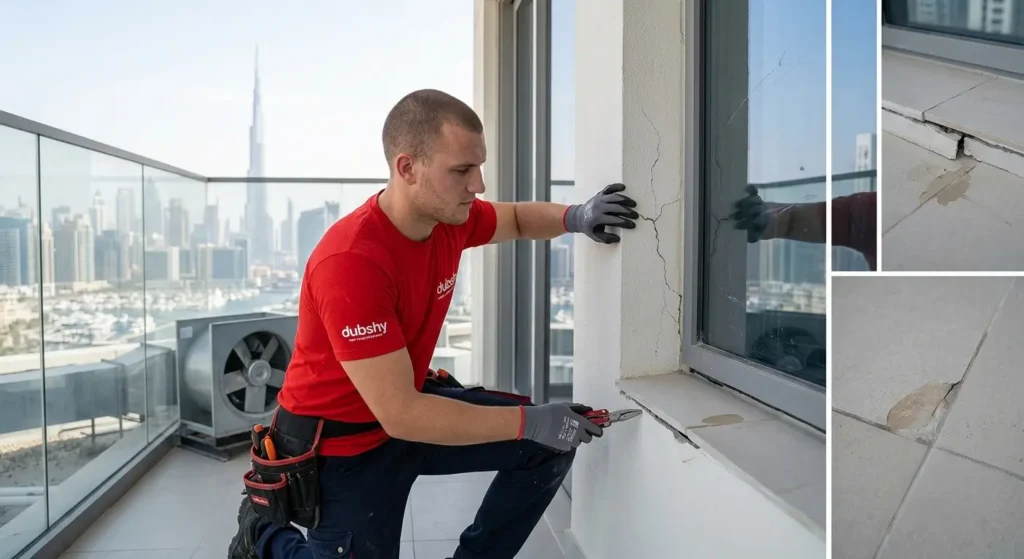
Common Defects New Dubai Property: Full Buyer Guide 2026 July 15, 2026 Tom Alex Handover day feels like the finish line — keys in hand, months of waiting finally over. But that same-day excitement is exactly when most buyers miss the defects that matter most. In the rush to move furniture in and start settling, dozens of issues sitting in plain sight go unnoticed, only surfacing weeks later when they’re harder—and more expensive—to fix. Before you sign off on your new Dubai property, here are the 10 defects that show up most often and how to spot each one before it becomes your problem instead of your developer’s. How Common Are Defects in New Dubai Properties? Short answer: very common. It’s rare for a new property in Dubai to have zero defects at handover. Apartments typically show 50–150+ snags, depending on size and finish quality Villas and townhouses often reveal 150–300+ defects, given the larger surface area and additional external elements like gardens, driveways, and facades Even premium developments from major names like Emaar, Damac, Nakheel, and Sobha are not exempt—luxury finishes don’t guarantee defect-free workmanship A detailed inspection typically checks 400+ points across structural, electrical, plumbing, HVAC, and finishing systems to catch what a buyer’s eye would miss If your unannounced walkthrough turns up “just a few scratches,” that’s usually a sign the inspection wasn’t thorough enough—not that the property is unusually clean. The Top 10 Common Defects New Dubai Property Hollow or Misaligned Tiles Tiles that look flawless can still be poorly bonded underneath. A hollow-sounding tap when you knock on the surface usually means weak adhesive—and a tile that will eventually crack or lift. Tap-test flooring in every room, especially near edges and corners Check grout lines for consistency and missing sections Look for slight height differences between adjacent tiles Paint and Plaster Imperfections The most common defect category by far, and often the easiest to overlook, because it looks purely cosmetic. Roller marks, uneven sheen, or visible brush strokes Hairline cracks at ceiling joints or wall corners Patchy touch-up spots where surface prep was rushed Leaking Taps and Poor Water Pressure Plumbing issues rarely announce themselves loudly at first — a slow drip today can mean a damaged cabinet or moldy wall in a few months. Run every tap and shower for at least a minute, checking pressure and temperature Check under sinks for moisture or drip marks Flush every toilet and check the refill speed Weak AC Cooling or Leaking Units In Dubai’s climate, this isn’t a comfort issue—it’s a functionality issue from day one. Run the AC for 15–20 minutes and check for consistent cooling across the room Look for condensation stains or drip marks below indoor units Listen for unusual rattling or compressor noise Faulty Electrical Outlets or Wiring In Dubai’s climate, this isn’t a comfort issue—it’s a functionality issue from day one. Run the AC for 15–20 minutes and check for consistent cooling across the room Look for condensation stains or drip marks below indoor units Listen for unusual rattling or compressor noise Doors and Windows That Don’t Close Properly Beyond the annoyance, this affects insulation, noise levels, and security. Open and close every door and window fully, checking for scraping or resistance Check for gaps around frames that let in dust or heat Test all locks and hinges for smooth operation Poor Waterproofing or Damp Patches Especially common in villas and townhouses with rooftop terraces, balconies, or gardens. Check ceilings below bathrooms and balconies for staining Look for musty smells in enclosed or low-ventilation areas Inspect external walls near rooftop access points Uneven Flooring or Level Issues Not always visible—but noticeable the moment you place furniture or roll a ball across the floor. Use a spirit level or marble on flat sections to check for slopes Pay attention to transitions between rooms and flooring types Note any dips near doorways or thresholds Cracked or Damaged Countertops and Cabinetry The most common cosmetic snags are often kitchens and bathrooms due to their high number of fixtures. Inspect edges and corners of the countertop for chips and hairline cracks Check alignment and closing of all cabinets and drawers Inspect sink installation for gaps or poor sealing Missing or Faulty Safety Features Easy to forget in the excitement of a walkthrough, but critical for occupant safety. Test smoke alarms in every room where they’re installed Check the balcony and staircase railings for secure fitting Confirm fire extinguishers are present and accessible where required What This Means for Your Handover None of these defects is unusual, and finding several of them doesn’t mean your property was poorly built overall. What it does mean is that handover day is a negotiation point, not just a formality. Every defect documented before you sign becomes the developer’s responsibility to fix — and every defect discovered after signing becomes significantly harder to claim. How to Protect Yourself Never rely on a visual-only walkthrough — many of the defects above (hollow tiles, wiring faults, AC inefficiency) are invisible without the right tools Document before you sign — photos and a written report create a record the developer can’t dispute later Know your Defects Liability Period (DLP) — typically 12 months post-handover, during which the developer must fix covered issues at no cost Use RERA guidelines as your reference point — Dubai’s regulator requires developers to deliver units matching the promised specification This snagging inspection includes a 400+ point checklist, moisture meters, and thermal cameras, and provides a report in 24-48 hours – a timeframe that a same-day physical inspection cannot achieve—so you’re not racing your handover deadline. Property Snagging Experts Every fault we miss, you pay for later Book now — certified inspection, DEWA-ready report in 24 hours. WhatsApp Us Now Book Inspection Now +971 5889 90456 hello@dubshy.com FAQ’s About Common Defects New Dubai Property Which defect is most commonly found in new Dubai properties? Paint and plastering imperfections top the list by frequency, though plumbing and AC issues
Building Condition Assessment UAE: A Full Guide for Owners
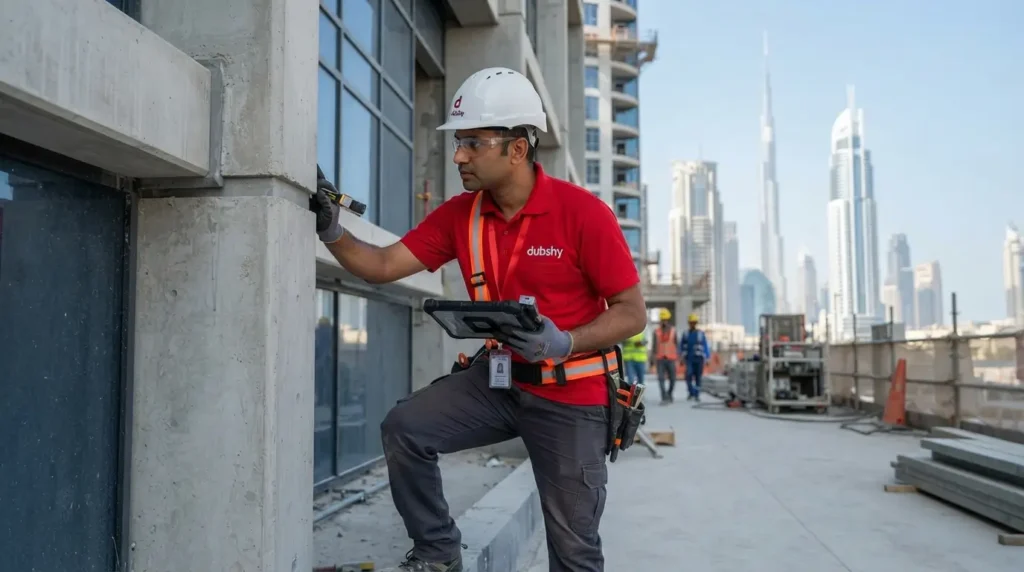
Building Condition Assessment UAE: A Full Guide for Owners </h1 > July 13, 2026 Tom Alex From the outside, Dubai’s skyline is unparalleled. However, the buildings age quickly in this climate—and not only as the owners would want. The UAE’s extreme climate conditions put properties and buildings under stress that most buildings in temperate climates never experience; high humidity, intense heat, exposure to coastal salt, and sandstorms. This is exactly why a building condition assessment (BCA) has become an essential component for every property owner, investor, and buyer in the UAE. This guide outlines the essential details on how to create a building condition assessment, what it will measure, when it is required, the cost of having a building condition assessment, and how to choose a provider. If you are looking for an apartment for sale in Dubai Marina, have a commercial tower under consideration before you purchase, or simply want to learn more about your property, this guide can help you. What Is a Building Condition Assessment (BCA)? A building condition assessment is an engineering-based project that assesses a building’s physical condition through a structured process. A proper BCA is performed by qualified engineers or certified inspectors, with a systematic examination of the building, that is, structure, envelope, mechanical, electrical and plumbing (MEP) systems, and safety compliance. The result is a comprehensive report, which includes a record of: Current condition of major building components Existing defects, deterioration, or safety concerns Estimated remaining useful life of key systems Recommended repairs, with rough cost and urgency ranking Think of it as a full health check for a building—not just a list of visible cracks, but an evidence-based picture of what’s happening structurally, mechanically, and beneath the surface. BCA vs Snagging Inspection vs DLP Inspection: What’s the Difference? This is where a lot of UAE property owners get confused, and it’s worth clearing up before going further. Snagging inspection – Done on a new handover unit, before or shortly after taking possession from the developer. It concentrates on finish-level defects—paint, tiling, fittings, doors, and the developer’s workmanship. DLP (Defects Liability Period) inspection – A post-developer warranty inspection (typically 12 months in the UAE) that is used to look for any defects that occur after the property has been occupied. Building condition assessment—This is a more extensive assessment, usually carried out for an existing building or one that is older, or before a resale, renovation, or investment decision. It is not only about cosmetic snags but also structural integrity, MEP life, and building health. In short, snagging and DLP inspections are about catching what a developer got wrong at handover. A BCA is about understanding the true condition of a building at any stage of its life, new or decades old. When Do You Need a Building Condition Assessment in the UAE? A BCA isn’t only for old buildings. In the UAE market, it’s become standard practice in several situations: Before buying a resale or secondary market property, Many buyers skip this step and inherit expensive surprises You need to understand what you are building on before undertaking major renovations or fit-outs. For older structures (15+ years) – Structural wear, degradation of MEP, and failure of waterproofing increase. As soon as a red flag is visible, it is a warning sign to crack, stain, sag or persistently less than dry—dispose of it immediately. When assessing an investment’s due diligence, particularly when it comes to off-plan resales or portfolio purchases Some lenders and insurers may want a condition report before approval for insurance, financing, or compliance purposes. Buying, financing, insuring, or refurbishing anything other than a brand-new unit off-the-shelf directly from the developer should include a BCA in your list. What Does a Professional BCA Cover? A comprehensive building condition assessment will include the following: Structural elements – Foundation, columns, beams, slabs, and load-bearing walls. Building envelope—Roofing, door and window, waterproofing, facade, insulation MEP systems – Mechanical, electrical, and plumbing systems, such as HVAC conditions Installation of fire-rated doors and alarm systems and compliance with emergency exits. Moisture and thermal performance – Thermal imaging cameras and moisture meters can identify hidden moisture intrusion, deterioration of insulation, or condensation potential before causing visible damage. That’s particularly important in the UAE compared to most other countries. The combination of high humidity and differences in temperature between the indoor and outdoor air, due to air conditioning, provides perfect conditions for moisture to become trapped and form mold, corrode metal, or cause materials to fail—only to become apparent when it has already done significant damage. This is why thermal and moisture-based inspection tools are no longer an option but a standard part of all credible BCA’s in this region. UAE Climate Factors That Affect Building Condition Buildings in the UAE age differently from those in temperate regions. A few climate-specific stressors worth understanding: Extreme heat – Accelerates material expansion and contraction, stressing joints and facades High humidity – Encourages condensation, mold growth, and corrosion of embedded metal components Coastal salinity – In areas near the coast, salt-laden air speeds up corrosion of rebar and exposed metal fittings Sandstorms and dust – Contribute to HVAC strain and surface abrasion over time These factors are exactly why building condition assessments in the UAE need to be climate-aware, not generic checklist exercises borrowed from other markets. What Happens During the Assessment A typical BCA follows a fairly consistent process: Document review – Existing building plans, previous reports, warranty documents (if available) Visual inspection – Walkthrough of common areas, units, roof access, and mechanical rooms Inspect for moisture intrusion or gaps in insulation using instrument-based testing – Thermal imaging for moisture intrusion, gaps in insulation or other instrument testing as necessary, moisture meters on suspect areas System checks for the MEP – analysis of the age and maintenance history of major systems, as well as an assessment of their functional condition. Report compilation – A systematic document that contains findings, photos, severity ratings, and repair recommendations. Most residential BCAs are completed