
Moisture Testing Property Dubai | Accurate Detection
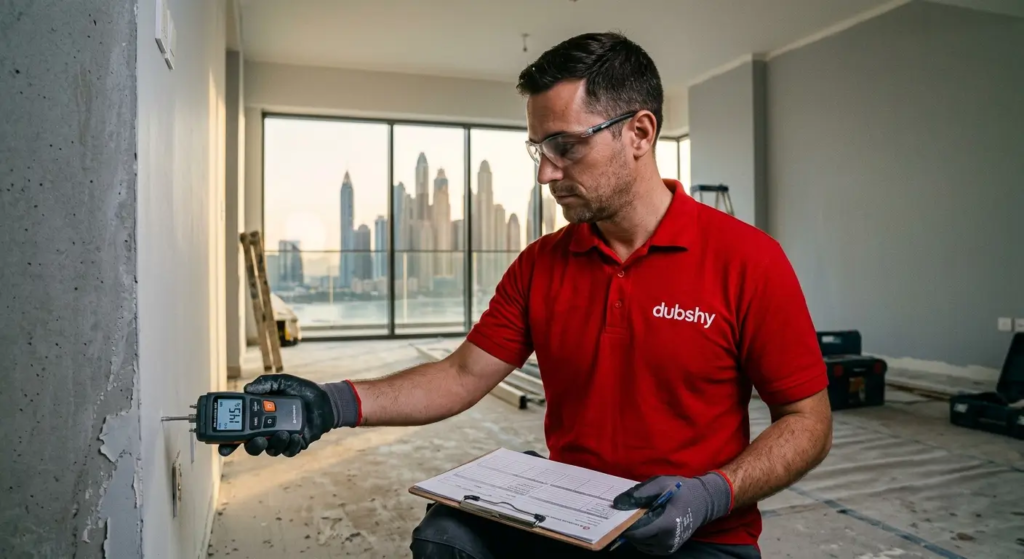
Thermal Camera Inspection Dubai: Hidden Property Defects
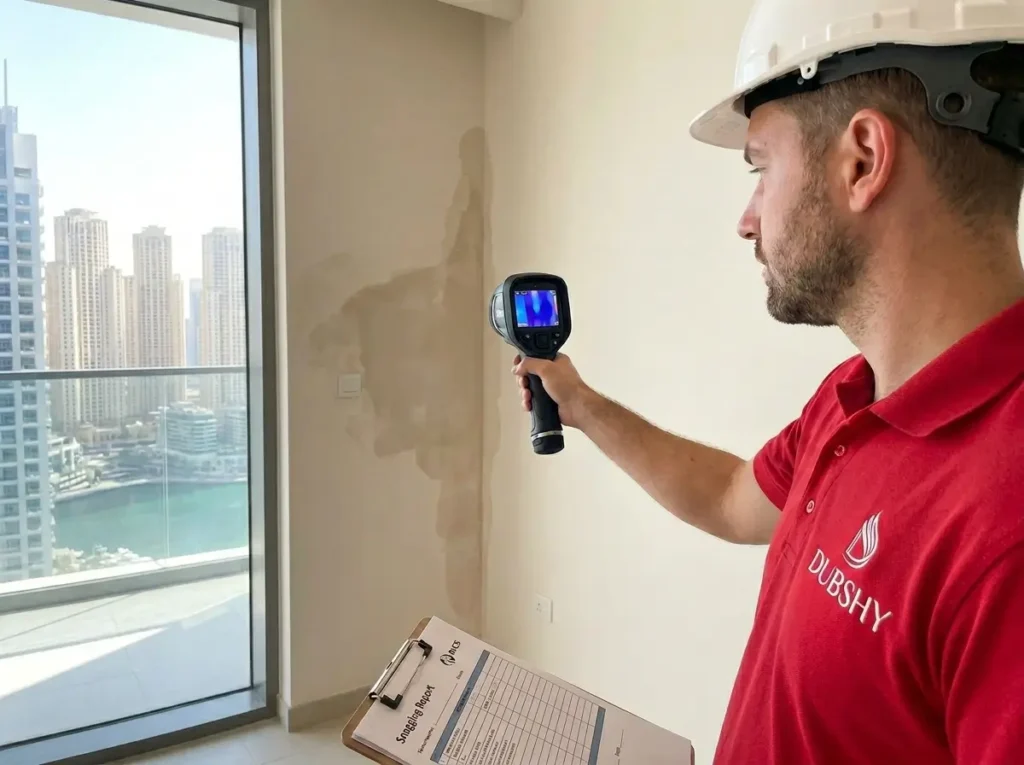
Thermal Camera Inspection Dubai: Hidden Property Defects Updated 8 October 2026Guide7 min read When you’re buying or handing over a property in Dubai, the biggest risks are rarely the ones you can see. A hairline crack in the paint is easy to spot. A water leak building up inside a wall, an electrical connection slowly overheating behind a switchboard, or insulation gaps that are quietly pushing up your DEWA bill: these stay invisible until they become expensive problems. That’s exactly where a thermal camera inspection in Dubai comes in. In this guide What Is a Thermal Camera Inspection in Dubai? Which Hidden Defects Do Thermal Cameras Catch in Dubai Properties? Why Do Dubai Properties Especially Need This? Thermal Inspection vs Traditional Visual Snagging How Does the Thermal Inspection Process Work at Dubshy? What Do You Get in the Report? How Much Does It Cost, and When Should You Book? FAQs Conclusion Buyers, investors, and even developers in Dubai have found thermal imaging to be one of the most reliable ways to discover problems early, before they turn into property damage or costly repairs after the Defects Liability Period (DLP) has expired, and before any conflict arises. What Is a Thermal Camera Inspection in Dubai? Thermal (infrared) cameras can see temperature differences on a surface that the human eye cannot. Different materials such as concrete, drywall, tiles, and wiring radiate heat differently, depending on what is happening behind or under the material. When moisture is present in a wall, when the wall has not been insulated, or when an electrical connection is overheating, the temperature of the surface shifts. A thermal camera picks this up instantly and shows the invisible problem as a color-coded heat map. It is not a guessing game. In professional property inspections, thermal imaging is used together with a moisture meter and the experienced eye of the inspector, so the results are accurate rather than assumed. Which Hidden Defects Do Thermal Cameras Catch in Dubai Properties? Thermal inspection is especially useful for catching issues that don’t show any visible sign until they’ve already caused damage. Common findings in Dubai homes include: Water leaks inside walls and ceilings: often from plumbing lines or waterproofing failures, long before staining or mold appears on the surface. Insulation gaps: missing or poorly installed insulation in walls and roofs, a major reason for uneven cooling and high AC costs. Electrical hotspots: overheating wiring, loose connections, or overloaded circuits behind switchboards and outlets, a genuine fire-risk indicator. AC duct leakage: cool air escaping inside ceiling voids instead of reaching the room, forcing the system to work harder. Early moisture and mold formation: dampness building up inside walls or under flooring before it becomes visible or starts smelling. Each of these can be minor and cheap to fix when caught early, or a major repair bill if discovered after the DLP has expired and the developer is no longer obligated to fix it for free. Why Do Dubai Properties Especially Need This? Dubai’s climate and construction pace make thermal inspection more relevant here than in most markets. Extreme summer heat means AC systems run almost year-round, so insulation gaps and duct leaks show up as real cost problems, not just comfort issues. High humidity swings between seasons also create ideal conditions for hidden moisture to sit inside walls without drying out naturally. On top of that, Dubai’s fast-paced handover cycles for off-plan and newly completed projects mean some finishing work is rushed. Waterproofing membranes, insulation layers, and electrical terminations are exactly the kind of behind-the-wall work that’s easy to miss during a standard visual walkthrough, and exactly what a thermal scan is built to catch. Thermal Inspection vs Traditional Visual Snagging Traditional snagging relies on what an inspector can see, touch, and test manually: paint finish, tile alignment, door alignment, visible cracks, and functional checks on switches and fittings. Thermal inspection adds a layer that visual snagging simply cannot reach: Visual snagging finds surface-level issues: cosmetic defects, alignment problems, visible cracks, and functional faults. Thermal inspection finds sub-surface issues: leaks, insulation gaps, and electrical heat build-up hidden behind finished surfaces. Together, they give a complete defect picture: what’s wrong on the surface, and what’s developing underneath it. Relying on visual snagging alone means you’re only getting half the picture, especially in a market where “the wall looks perfect” often doesn’t tell you what’s happening inside it. How Does the Thermal Inspection Process Work at Dubshy? Getting a thermal inspection doesn’t need to be complicated. At Dubshy, the process is built to be fast, transparent, and easy to book around your handover schedule: Book your inspectionChoose a slot that fits your handover date or DLP timeline. On-site visitA RERA-approved, InterNACHI-certified inspector attends with thermal cameras and moisture meters as part of a full 400+ point checkpoint inspection. Thermal scanningWalls, ceilings, AC ducting, and electrical panels are scanned room by room for temperature anomalies. Cross-verificationAny flagged spot is checked with a moisture meter or closer physical inspection to confirm it’s a genuine defect, not a false read. Report deliveryA detailed report with heat map images, defect photos, severity ratings, and clear action items is delivered within 24–48 hours. This process is designed specifically for buyers, not developers, so the findings work in your favor when you’re raising defects during handover or before your DLP expires. What Do You Get in the Report? A proper thermal inspection report should give you more than just images. At Dubshy, every report includes: Color-coded heat map photos for each flagged area Standard photos of the same spot for easy comparison A clear description of what the anomaly likely indicates (leak, insulation gap, electrical hotspot, etc.) A severity rating, so you know what needs urgent developer action versus what to monitor A checklist format you can hand directly to your developer or facilities team for rectification This makes it easy to raise defects formally, rather than relying on a verbal description of “something felt off” during handover. How Much Does
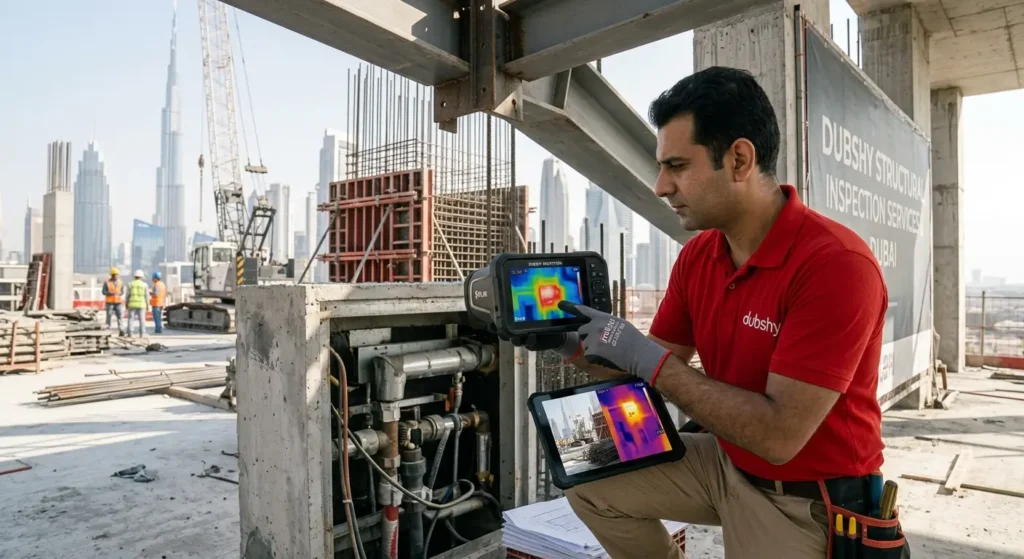
Structural Inspection Dubai: What Engineers Check
Structural Inspection Dubai: What Engineers Check Updated 8 October 2026Guide8 min read When you’re considering buying real estate in Dubai, there are several questions you’ll want to ask yourself before finalizing the purchase of your dream apartment or villa, one of which is, “Does the building itself have a solid structure?” All sorts of problems can be concealed with a new paint job and shiny marble floors, ranging from hairline cracks in the foundation to water on load-bearing walls. This is what a structural inspection is meant to detect. In this guide What Is a Structural Inspection? Why Do Dubai Properties Need a Structural Inspection? What Do Engineers Actually Check? What Tools and Methods Do Engineers Use? Structural Inspection vs. Snagging Inspection When Should You Book a Structural Inspection in Dubai? How Much Does a Structural Inspection Cost in Dubai? How Do You Choose a Certified Structural Inspector? FAQs Conclusion This is not a formality, given the climate and construction activity in Dubai. From the heat, high humidity, and sandy soil conditions to the rapid rate of tower and community construction, structural problems can arise sooner than in more temperate markets. Whether you are buying off-plan, buying a resale unit, or getting close to handover on a new build, it’s important to know what a structural inspection entails, because it puts you in a much stronger financial and legal position. This guide explains what a structural inspection is, why it is important in Dubai specifically, what an engineer inspects point by point, and how to find a certified inspector who will protect your investment. What Is a Structural Inspection? A structural inspection is an in-depth assessment of the structural heart of a building: the foundation, columns, beams, load-bearing walls, and slabs that support the structure. A licensed structural engineer or certified inspector performs it, checking that these elements are working as intended and that no cracks, settlement, water damage, or stress can be seen. This differs from a general snagging inspection, which addresses a much wider range of issues across a property, including tiling, paint finishes, doors, windows, electrical points, plumbing fixtures, and hundreds of smaller items. A structural inspection focuses specifically on the “bones” of the building, whereas snagging focuses on the finished product that a purchaser will live in day to day. Many buyers assume these are the same service. They’re not, and understanding the difference can save you from a costly gap in your due diligence. Why Do Dubai Properties Need a Structural Inspection? A few factors make structural inspection particularly important in the local market: Extreme heat and humidity cause thermal expansion and contraction in concrete and steel, which over time can lead to micro-cracking and material fatigue. Sandy, shifting soil conditions across much of Dubai require careful foundation engineering. Settlement issues are more common than buyers realize. Fast construction times for off-plan developments make independent verification vital, as works can progress quickly from groundbreaking to completion. High winds and salt air add extra strain on coastal and high-rise structures, particularly in waterfront communities. None of this means Dubai construction is inherently unsafe. The market has strong regulatory oversight through RERA and Dubai Municipality. But it does mean an independent structural check is a smart safeguard rather than an optional extra, particularly for high-value purchases. What Do Engineers Actually Check? This is the core of any structural inspection. A qualified engineer will systematically work through the building’s structural elements, looking for both visible defects and early warning signs that aren’t obvious to an untrained eye. Foundation and settlement Signs of uneven settling, such as sloping floors or gaps around doorframes Cracks near the base of the walls that could indicate foundation movement Drainage issues around the property that may be undermining the foundation over time Load-bearing walls, columns, and beams Vertical or diagonal cracks, which can be a sign of structural distress rather than simple settling Corrosion on exposed steel reinforcement (rebar), particularly in older or coastal structures Misalignment where columns or beams are bowing, tilting, or offsetting Slabs and ceilings Cracking patterns across ceiling slabs, which can indicate deflection or overloading Sagging or uneven ceiling lines Water stains that suggest leaks originating from structural penetrations above Waterproofing and moisture ingress Damp patches on walls or ceilings, particularly near bathrooms, kitchens, and external walls Efflorescence: the white, chalky mineral deposits that indicate water has been moving through concrete or masonry Condition of waterproofing membranes in wet areas and roof terraces Facade and external wall integrity Cracking or spalling (chipping) of external concrete and cladding Loose tiles, panels, or render that could pose safety risks Sealant condition around windows and expansion joints Expansion joints and movement cracks Whether expansion joints are functioning correctly to absorb building movement Cracks that follow a straight, consistent pattern (often normal shrinkage) versus irregular, widening cracks (a red flag) Each of these areas is documented with photos, measurements, and, where needed, a recommendation for further specialist assessment. What Tools and Methods Do Engineers Use? A visual walk-through is only half the inspection. Problems that cannot be seen with the naked eye are detected by certified inspectors using specialist testing equipment: Thermal imaging cameras reveal insulation gaps behind walls and ceilings, and moisture intrusion. Moisture meters measure moisture levels in concrete, drywall, and masonry. Endoscopic cameras allow examination of hard-to-reach structural voids, ducts, and wall cavities. Crack monitoring tools help determine and track the stability or movement of existing cracks. This combination of trained visual assessment and diagnostic tools is what separates a professional structural inspection from a quick walk-through with a checklist. Structural Inspection vs. Snagging Inspection Buyers often ask whether they need one or the other. The honest answer is that they serve different purposes and, in many cases, work best together. A snagging inspection is essential at handover for any new-build property. It captures the finishing defects (paint, tiling, cabinetry, appliances, and electrical points) that developers are contractually obligated to fix under the Defects Liability Period (DLP). A structural
Villa vs Apartment Snagging Dubai: 2026 Comparison Guide
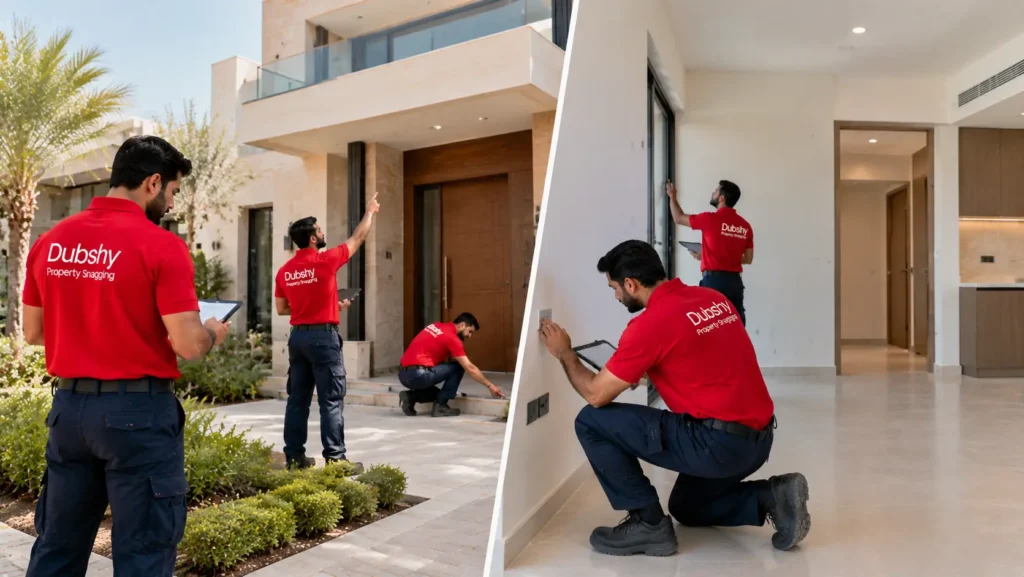
Villa vs Apartment Snagging Dubai: 2026 Comparison Guide Updated 7 October 2026Comparison guide9 min read Villa vs apartment snagging in Dubai comes down to one core difference: a villa gives you an entire private structure to inspect, including the roof, garden, pool and external walls, while an apartment inspection focuses on a single sealed unit inside a shared building. That difference changes the cost, the checklist, the time on site and even which defects show up most often. Quick answer2026 figures Apartment cost AED 1,500–3,500 Villa cost AED 3,500–8,000+ Apartment time on site 2–4 hours Villa time on site 4–8 hours Average defects found 25–35 (apartment) vs 35–45+ (villa) Defect Liability Period 12 months for both If you are weighing a villa purchase against an apartment purchase, or you already own one and are booking your handover inspection, this guide lays out every meaningful difference between the two. In this guide Core differences Cost comparison Checklist comparison Common defects Timeline and process DIY vs professional Legal rights Pros and cons Common mistakes Choosing a company FAQs What Are the Core Differences Between Villa and Apartment Snagging? Snagging, also called a defect inspection or snag list, is the process of documenting construction flaws and unfinished work before you formally accept a new property from the developer. The objective is identical for both property types: protect your right to free rectification during the Defect Liability Period. The execution, however, is not. Factor Apartment snagging Villa snagging Inspection scope Single indoor unit Full standalone structure: indoor, outdoor, roof Typical cost AED 1,500–3,500 AED 3,500–8,000+ Time on site 2–4 hours 4–8 hours External elements None (building management’s responsibility) Roof, garden, pool, driveway, boundary walls MEP complexity Shared building systems plus unit-level MEP Independent, standalone MEP for the entire property Average defects found 25–35 per unit 35–45+ per unit Common defect focus Finishes, sockets, AC, plumbing fixtures All of the above, plus roofing, landscaping, pool plant, structural cracks The one-sentence version: apartment snagging is deep but narrow, while villa snagging is broad and deep, because a villa owner is responsible for far more of the physical structure than an apartment owner is. How Much Does Villa Snagging Cost Compared With Apartment Snagging? Snagging companies in Dubai typically price using either a flat fee, which is common for standardized apartments, or a per-square-foot model, which is more common for larger and more complex villas. Property type Typical cost (AED) Pricing model Studio / 1-bed apartment 1,500–2,500 Flat fee 2–3 bed apartment 2,000–3,500 Flat fee Townhouse 2,500–5,000 Flat fee or per sq ft Standard villa 3,500–6,000 Per sq ft (BUA) common Luxury villa 5,000–8,000+ Per sq ft (BUA) common Per sq ft alternative About AED 1 per sq ft of BUA + VAT Used across all types Villas cost more to snag, and it is not just about size. A 4,000 sq ft villa with multiple balconies, a private garden, a swimming pool and outbuildings has a genuinely larger inspection scope than a similarly sized apartment. The apartment sits inside a building where roofing, structure and common systems are the developer’s or owners’ association’s responsibility, not yours. Cost versus risk Whether you are comparing villa or apartment snagging costs, the fee is small next to the cost of a single missed defect. A hidden plumbing leak or an unaddressed electrical fault can cost many times the inspection fee once it falls outside the Defect Liability Period. What Gets Inspected in a Villa vs an Apartment? The apartment checklist is the core of every snagging inspection in Dubai. Villa snagging extends that same core outward, onto the roof, into the garden and around the entire perimeter of the plot. Apartment snagging checklist Walls, ceilings and floors. Cracks, uneven plaster and paint blemishes. Tiling. Tap test for hollow sounds, and check grout consistency. Doors and windows. Alignment, seals and smooth operation. Plumbing. Water pressure, drainage and under-sink leaks. Electrical. Every switch and socket tested, and the DB checked for open terminations. AC. Performance and airflow at each vent. Kitchen. Cabinetry and appliance function, if included. Balcony. Floor slope and railing security. Villa snagging checklist Everything in the apartment checklist, plus: Roof and terrace waterproofing. Check for ponding water and correct drainage fall. External walls. Cracks, and render and paint condition. Garden. Irrigation, landscaping drainage and outdoor lighting. Swimming pool, where applicable. Plant room, filtration and pool tiling. Driveway and boundary. Garage door and boundary wall or fencing condition. Roof water tank. Pressure is a frequent post-handover complaint in villas. Staircases. Handrail stability and tread evenness across multiple floors. Standalone MEP. Independent systems rather than shared building infrastructure. Want an engineer to work through the full list? book an inspection Which Defects Are Most Common in Villas vs Apartments? Both property types share a common core of construction issues. Hollow or lippage-prone tiling, paint film defects, joinery alignment problems and MEP commissioning gaps are consistently among the most frequently reported items across every property type in Dubai. Where they diverge: Apartments most commonly show MEP commissioning gaps concentrated in the unit itself. Waterproofing failures at wet-area transitions, such as bathrooms and kitchens. Finishes inconsistency across tiling, paint and joinery. Villas most commonly show Water damage from rooftop leaks, one of the most frequently reported villa-specific issues. Structural cracking, given the larger and more exposed building envelope. Poorly laid garden tiling or landscaping drainage. HVAC zoning issues across multiple floors. Roof tank pressure imbalance. Professional inspectors report that villa developments average 35–45 defects per unit, compared with 25–35 for apartment developments. That gap is driven almost entirely by the added outdoor and structural scope, not by worse workmanship. How Do the Timeline and Process Differ? Stage Apartment Villa On-site inspection time 2–4 hours 4–8 hours Report turnaround 24–48 hours 48–72 hours (larger scope) Ideal booking window 14–30 days before handover signing 14–30 days before handover signing Re-inspection after fixes Recommended Strongly recommended (larger defect count) 11th-month DLP check Recommended Strongly recommended The process itself is identical for both property types:
Townhouse Snagging Dubai: Complete 2026 Checklist & Cost
Townhouse Snagging Dubai: Complete 2026 Checklist & Cost Updated 8 October 2026Checklist12 min read A townhouse handover feels like the finish line, until you notice the bedroom door doesn’t close, the balcony floor slopes the wrong way, or the garden drainage backs up in the first rainstorm. Townhouses sit in an awkward middle ground in Dubai’s property market: they share the multi-level complexity of a villa but with shared party walls and tighter plot lines, which creates a defect profile that’s genuinely different from either apartments or standalone villas. In this guide What Is Townhouse Snagging? Why Do Townhouses Snag Differently? How Much Does Townhouse Snagging Cost in Dubai in 2026? The Complete Townhouse Snagging Checklist DIY vs Professional Snagging Your Legal Rights: RERA, DLD, and the Defect Liability Period What Is the Step-by-Step Snagging Process? What Common Mistakes Do Buyers Make? Pros and Cons of Hiring a Professional Snagging Company Post-Handover and 11th-Month Snagging How Do You Choose a Snagging Company in Dubai? Frequently Asked Questions Conclusion This guide is built specifically around that gap: what to inspect, what it costs, and how to protect your legal rights during Dubai’s Defect Liability Period. Quick answer: Townhouse snagging in Dubai is a professional or DIY inspection of a newly handed-over townhouse to identify construction defects before you sign the handover certificate. Professional inspections typically cost AED 2,500–5,000, take 3–5 hours on site, and commonly uncover 40–80 defects per unit. That is more than an apartment, due to the added scope of external walls, roofing, garden drainage, and a private garage. What Is Townhouse Snagging? Snagging, sometimes called a defect inspection or snag list, is the systematic process of documenting every construction flaw, incomplete item, or specification mismatch in a property before you formally accept it from the developer. The term comes from British construction terminology and is standard practice across the UAE property market. For a townhouse specifically, the inspection covers everything an apartment inspection covers (walls, tiling, plumbing, electrical, AC) plus the elements unique to a low-rise, multi-level unit with external exposure: roof or terrace waterproofing, party (shared) wall integrity, garden and landscaping infrastructure, garage doors, and private entrance drainage. Why it matters: once you sign the handover certificate, your legal leverage to demand free rectification drops significantly. A documented snag list, submitted before signing, keeps the developer contractually obligated to fix the issues at no cost to you. A formal snagging report is what makes that list hard to dispute. Why Do Townhouses Snag Differently? Property type genuinely changes the defect profile, and townhouses sit at an interesting intersection: Defect category Apartments Townhouses Standalone villas MEP commissioning High frequency High frequency High frequency Waterproofing (wet areas) High frequency High frequency High frequency Roof / terrace drainage Rare (shared building) Common, added risk Common External wall waterproofing Not applicable Common, added risk Common Party / shared wall issues Not applicable Townhouse-specific Not applicable Garden & landscape infrastructure Not applicable Common (smaller scope) Extensive Garage door & driveway Not applicable Common Common Pool plant room Not applicable Rare Common in luxury villas Field insight: back-falling balconies and terraces, where the slope of the floor sends rainwater toward the building instead of away from it, are a recurring issue specifically flagged in townhouse communities like JVC and JVT. Heavy but infrequent rainstorms expose the defect months after handover rather than immediately. Because townhouses include an external building envelope (roof, exterior walls, party walls) that apartments simply don’t have, a townhouse inspection scope is meaningfully larger than an apartment inspection, even when the internal floor area is similar. For a wider comparison, see villa vs apartment snagging. How Much Does Townhouse Snagging Cost in Dubai in 2026? Pricing for professional snagging in Dubai is generally quoted either as a flat fee (common for standardized units) or per square foot of built-up area (more common for larger, more complex properties like townhouses and villas). Property type Typical cost range (AED) Studio / 1-bed apartment 1,500–2,500 2–3 bed apartment 2,000–3,500 Townhouse 2,500–5,000 Standard villa 3,500–6,000 Luxury villa 5,000–8,000+ Per sq ft (BUA) model ~AED 1 per sq ft + VAT What drives the price within that range: Number of bedrooms, floors, and bathrooms Whether the unit includes a private garden, pool, or roof terrace Whether it’s a pre-handover inspection (within the 14–30 day contractual window) or a post-handover / 11th-month warranty inspection Use of advanced equipment: thermal imaging cameras, moisture meters, and electrical testers typically sit at the higher end of the range Cost versus risk: a townhouse snagging inspection costs a small fraction of a single major rectification. A hidden plumbing leak or electrical fault caught early can save many times the inspection fee in avoided water damage, mould remediation, or rewiring costs after the Defect Liability Period closes. The Complete Townhouse Snagging Checklist Work through this room by room and system by system. Bring blue painter’s tape to mark each defect location before photographing, and number every item sequentially from 1 through the end of your inspection. Exterior and structural Roof and terrace waterproofing: check for ponding water and correct fall/slope toward drains External walls: cracks, render defects, or paint film failure Party (shared) wall: check for cracking, gaps, or sound transmission issues at the boundary Garage door: alignment, smooth operation, and remote functionality Driveway and entrance drainage: confirm water flows away from the building, not toward it Boundary: perimeter fencing, gates, and boundary wall condition Garden and outdoor areas Irrigation: system function and coverage Landscaping drainage: check for pooling after a hose test Outdoor lighting and power points: weatherproof-rated Balcony and terrace floor slope: a “back-falling” surface is a critical defect, not cosmetic Structural and finishes (interior) Walls and ceilings: cracks, uneven plaster, bulging paint Floor and wall tiling: tap every tile for hollow sounds; check grout consistency and lippage Staircases: handrail stability, tread evenness, and lighting (a genuine safety item in multi-floor townhouses) Doors and windows: alignment, seals, and smooth operation on every level Plumbing Taps: water pressure and
Dubai Hills Snagging Inspection — What Our Engineers Find
Dubai Hills Snagging Inspection — What Our Engineers Find Dubai Hills Estate is one of Emaar’s most ambitious master communities: a green, golf-fronted address that has attracted thousands of buyers looking for premium villas, townhouses, and apartments in the heart of new Dubai. With sub-communities like Sidra Villas, Park Heights, Maple Townhouses, The Collective, and Golf Place now delivering handovers at a rapid pace, more property owners are reaching that critical moment: the day they receive their keys. But here is the thing most buyers don’t realize: that key-collection day is also one of the most financially risky moments of your entire property journey. At Dubshy, our RERA and InterNACHI-certified engineers have conducted thousands of handover inspections across Dubai Hills Estate. What we consistently find is this: even premium Emaar-delivered properties in Dubai Hills carry an average of 80 to 200+ defects at handover. And many buyers, without a professional Dubai Hills snagging inspection, walk straight past them. This guide breaks down exactly what our engineers discover, why it matters, and how a professional snagging inspection protects your investment before you sign anything. What Is a Snagging Inspection at Handover? A snagging inspection, also called a pre-handover inspection or property defect inspection, is a detailed, room-by-room assessment of a newly built property carried out before the buyer officially accepts the keys from the developer. The purpose is simple: identify every defect, finishing flaw, safety concern, and non-compliant installation before you take legal ownership of them. Once you sign the handover papers and accept the property, you accept its condition. The developer’s responsibility does not disappear entirely, as they are bound by a two-year defect liability period (DLP) under UAE law, but getting defects recorded before handover is dramatically more effective than chasing them afterward. A professional Dubai Hills snagging inspection covers: Structural elements (walls, ceilings, columns, floor slabs) MEP systems (mechanical, electrical, and plumbing) HVAC and air conditioning Waterproofing and moisture detection All interior finishes and fixtures Windows, doors, and external works Safety compliance checks Why Do Dubai Hills Properties Need Professional Snagging? Dubai Hills Estate is a fast-expanding master-planned community. Emaar is delivering thousands of units across multiple phases simultaneously, and like any large-scale construction effort, speed sometimes comes at the cost of detail. Our engineers have inspected properties across Sidra Villas Phase 1, 2, and 3, Maple Townhouses, Park Heights apartments, The Collective, Golf Place, and Acacia. Across all of these, we see consistent patterns. Dubai Hills properties are premium, but premium does not mean defect-free. In fact, higher-specification properties often carry more complex systems, such as smart home integrations, premium HVAC zoning, and large-format tiling, and each of these introduces more points of potential failure. If you are buying a villa or townhouse, see how villa and apartment snagging differ. Additionally, Dubai Hills Estate has seen a significant volume of handovers between 2024 and 2026. This means construction teams across contractors are under intense schedule pressure. The handover rush is real, and it shows in the snag counts our engineers are recording. What Our Engineers Actually Find: The Top Defects in Dubai Hills Based on our handover inspection data from Dubai Hills Estate properties, here are the most common defect categories our certified engineers identify. Hollow tiles and loose flooring This is consistently one of the top findings across Dubai Hills apartments and villas. Large-format marble and porcelain tiles are popular in the community, and without proper adhesive coverage and curing time, tiles become hollow underneath. You cannot detect this with the naked eye. Our engineers use calibrated sounding tools and tap-testing equipment to identify every hollow section. Left unreported, hollow tiles crack, lift, and become safety hazards within months of occupation. Waterproofing failures in wet areas Bathrooms, wet rooms, balconies, and kitchen areas are the highest-risk zones for waterproofing defects. Our engineers use moisture meters and thermal cameras to detect damp readings inside walls and under floor screed, even when the surface appears dry. In Dubai Hills villas, we frequently find waterproofing membrane failures around shower trays, bathtub edges, and balcony drainage points. The consequences of missing these are significant: water infiltration into structural slabs and walls can cost tens of thousands of dirhams to remediate after handover. AC and HVAC system deficiencies Air conditioning is not optional in Dubai. It is a structural necessity. Our HVAC-certified engineers test every AC unit for cooling efficiency, airflow balance, refrigerant pressure, and ductwork integrity. In Dubai Hills properties, particularly in larger villas and townhouses, we regularly find: Undersized units that cannot meet the cooling load of the space Duct distribution that leaves some rooms significantly warmer Poorly sealed duct joints that waste conditioned air into cavities Drainage pipe blockages that will cause water to spill into the ceilings All of these are developer rectification items, but only if you have them in a professional inspection report before handover. Paint and plastering defects These are among the most visible findings, but also among the most commonly missed by buyers doing their own walkthrough. Our engineers systematically check every wall and ceiling surface under consistent lighting conditions. Typical findings include: Paint drips, brush marks, and uneven coverage Poorly filled hairline cracks in plaster Rough texture patches where walls were patched and re-painted Paint bleed around switch plates, skirting boards, and door frames Missing paint in corners and behind radiator fittings While cosmetic, these are legitimate developer obligations under the handover specification. A professional snagging report documents every instance with photographs and location references. Window and door alignment issues Across Dubai Hills townhouses and villas, door and window frame issues are extremely common findings. These include: Doors that do not close or latch properly due to frame misalignment Window seals that are incomplete or poorly applied, allowing air and water infiltration Glass defects including scratches, chips, and installation stress marks Missing or misaligned handles and locking mechanisms In a premium community like Dubai Hills, these finishing details represent a meaningful gap between what was promised and what was delivered. Electrical
Off-Plan Property Inspection Dubai — Do You Need One?
Off-Plan Property Inspection Dubai — Do You Need One? Handover day is supposed to feel like a milestone. You’ve waited months, sometimes years, tracking construction updates, making payments on schedule, and imagining the day you finally walk into your new Dubai property. But for a surprising number of buyers, that moment quickly turns frustrating. The walls have cracks. The AC isn’t cooling properly. A bathroom tile is hollow underfoot. And you’ve already signed the handover documents. That single signature changes everything. Once you accept the keys, the legal responsibility for proving pre-existing defects shifts heavily onto you. What should have been the developer’s problem to fix before handover has become a dispute you now have to fight, often without enough documentation to support your case. This is exactly why an off-plan property inspection in Dubai isn’t a luxury or a nice-to-have. For anyone investing in a new development, it’s one of the most financially important decisions you’ll make before taking ownership. What Is an Off-Plan Property in Dubai? An off-plan property is one that you purchase before it’s fully built, directly from a developer, based on floor plans, architectural renderings, and a promised completion date. Dubai’s real estate market has made off-plan buying extremely popular, and for good reason. Buyers typically benefit from: Lower entry prices compared to ready properties Flexible payment plans spread across the construction period The potential for capital appreciation between purchase and handover Newer designs, modern layouts, and state-of-the-art amenities Communities like Dubai Hills Estate, DAMAC Lagoons, Emaar Beachfront, and Sobha Hartland have all been built largely on the strength of off-plan demand. But the same model that makes off-plan attractive also creates a fundamental challenge: you’re buying something that doesn’t fully exist yet, and when it finally does, you have a limited window to inspect it before you accept legal ownership. That window is everything. Why Off-Plan Properties Come With Hidden Risks Dubai’s construction sector is moving at an extraordinary pace. Thousands of residential units are delivered every quarter across the emirate, with developers under commercial pressure to hit completion deadlines, release keys, and move on to the next project. Speed is not always the enemy of quality, but it creates conditions where defects are far more likely to slip through. Construction teams often work across multiple towers or phases simultaneously. Subcontractors finish their work and move on before a comprehensive quality check takes place. And the sheer volume of units means individual apartments rarely get the detailed attention they need before handover day arrives. The result? Even premium developments from well-known developers regularly produce properties with defects ranging from cosmetic finishing issues to more serious problems involving plumbing, electrical systems, or structural integrity. Most buyers have no technical background in construction, so they walk through their new home and see what looks like a finished apartment. What they don’t see are the hollow tiles beneath the surface, the moisture building behind a bathroom wall, the AC drainage line with an improper gradient, or the window seal that’s already allowing air ingress. A professional off-plan property inspection is how those hidden problems get identified before you sign anything. What Does an Off-Plan Property Inspection Actually Cover? Many buyers assume an inspection is a quick visual walkthrough. In reality, a certified off-plan property inspection in Dubai is a structured, systematic process covering every critical system and surface across 400+ inspection checkpoints. Here’s what gets examined: Structural and civil works Wall and ceiling surfaces checked for cracks, uneven plaster, and hollow spots Floor level tolerances measured against Dubai building code standards Balcony railings, parapets, and staircases inspected for movement or instability MEP systems (mechanical, electrical, plumbing) All electrical points, switches, sockets, circuit breakers, and wiring tested Plumbing checked for correct gradient, drainage flow, pressure, and leak points Hot and cold water connections verified at every outlet HVAC and ventilation AC performance tested in each room using specialist tools Airflow tested for efficiency, and ductwork checked for blockages and incorrect installation Ventilation systems and exhaust fans examined for proper function Finishing and aesthetics Paint quality examined for drips, uneven coverage, bubbling, and staining Tiling inspected for cracks, grout gaps, and hollow bedding Cabinetry, wardrobes, and kitchen units checked for alignment, damage, and finish quality Windows, doors, and external works Frames, seals, locking mechanisms, and glass checked for defects and air leakage Balconies, terraces, exterior walls, and drainage locations checked Skirting, cornices, and edge finishing checked throughout At Dubshy, all inspections are carried out by a RERA-approved, InterNACHI-certified engineer, not a generalist or technician. Thermal cameras, moisture meters, and laser levels are used to detect problems that aren’t visible to the naked eye. An inspection report is delivered within 24 hours and includes high-resolution photos and a developer action plan. Buying a villa rather than an apartment? Read how villa and apartment snagging differ. RERA, DLP, and Your Legal Rights as a Dubai Property Buyer One of the most important things an off-plan buyer in Dubai needs to understand is the Defect Liability Period, commonly referred to as the DLP. Under UAE property law and RERA regulations, developers are legally obligated to fix defects in your property for a defined period after handover: 1 year covering finishing defects: paint, tiles, fixtures, cabinetry, and similar cosmetic issues 2 years covering MEP systems: plumbing, electrical, and HVAC installations 10 years covering structural defects: foundations, load-bearing walls, and core building integrity These protections exist precisely because defects in new-build properties are common. The law gives you the right to demand repairs from your developer at no cost to you, but only if you can prove the defects existed at handover. This is where an independent inspection report becomes critical. Without a professionally documented snagging report completed before you sign the handover, it becomes your word against the developer’s when disputes arise. Developers frequently argue that damage occurred after possession was taken. A certified report with timestamped photographs, created before the handover signature, removes that argument entirely. An off-plan property inspection isn’t
Property Snagging Abu Dhabi Guide | Full 2026 Breakdown
Property Snagging Abu Dhabi Guide: Full 2026 Breakdown Updated 10 October 2026Guide9 min read You’ve just received your handover notice for a new apartment on Yas Island. Excited, you call a snagging company, one you’d heard about from a friend who bought in Dubai’s Business Bay. They quote you, book the appointment, and show up with the same checklist they use in Dubai. Three weeks later, you’re dealing with condensation damage behind your master bedroom wall, a waterproofing failure on the terrace, and an AC drainage issue your snagging report completely missed. In this guide What snagging is and why it matters Who governs snagging Common defects: Abu Dhabi vs Dubai The handover process What to expect from an inspection How to choose a company Pricing guide FAQs Conclusion This is not a hypothetical. It happens more often than buyers realize. Abu Dhabi and Dubai are two emirates in the same country, but when it comes to property snagging, they are two very different worlds. Different regulators, different climatic risks, different developer processes, and different defect patterns. If you’re buying, investing, or taking handover in Abu Dhabi, whether on Saadiyat Island, Al Reem Island, or Khalifa City, understanding these differences isn’t optional. It’s what protects your investment. This guide breaks it all down clearly, so you walk into your Abu Dhabi handover fully prepared. What Is Property Snagging and Why Does It Matter in Abu Dhabi? A detailed technical inspection made before or shortly after the official handover of a property is known as property snagging. Its purpose is to find defects, incomplete workmanship, safety issues, and non-compliant installations before they become your responsibility. Many buyers assume that Abu Dhabi developers keep a more conservative construction schedule than Dubai, so their properties arrive cleaner. There’s some truth in that, but it’s also risky. Abu Dhabi has recurrent problems unique to the region, due to its coastal humidity, geology, and the materials used in construction. Not all of these issues will appear on a checklist built for Dubai. Snagging in Abu Dhabi is not a box-ticking exercise. It is a legal and financial safeguard that ensures your developer, not you, pays for every defect found before you accept the keys. At Dubshy, we’ve completed over 15,000 property inspections across the UAE, including Abu Dhabi communities such as Yas Island, Saadiyat Island, Al Reem Island, and Al Raha Beach. What we’ve learned is that Abu Dhabi requires its own inspection lens, and buyers who arrive without that knowledge consistently pay for it later. Who Governs Property Snagging in Abu Dhabi vs Dubai? This is where the two emirates diverge most significantly, and where most buyers are caught off guard. Dubai’s Regulatory Framework The Dubai Real Estate Regulatory Agency (RERA) and Dubai Land Department (DLD) regulate handovers and snagging procedures in Dubai. Before handover, developers are required to obtain a Building Completion Certificate (BCC) from Dubai Municipality. The Defect Liability Period (DLP) is well specified: 1 year for mechanical, electrical and plumbing systems and 10 years for structural defects. Off-plan transactions are registered via the Oqood system, giving buyers a traceable paper trail. RERA formally recognises certified snagging reports as valid documentation in dispute proceedings. This means Dubai buyers have a relatively standardized process. You know your rights, you know the timelines, and a professionally produced snag report carries real weight. Abu Dhabi’s Regulatory Framework Abu Dhabi operates under the Abu Dhabi Department of Municipalities and Transport (DMT) and the Abu Dhabi Real Estate Centre (ADREC). The framework is evolving and has improved significantly in recent years, but key differences remain: Less standardised procedures. Processes can vary significantly depending on whether you’re dealing with Aldar, Modon, or a smaller developer. More coordination for access. Pre-handover snagging inspections can need more coordination and advance scheduling than in Dubai. Project-specific submissions. Documentation and defect submission processes may differ by development, so learn the protocol for your project before booking. A developing framework. The DMT-registered inspection framework is not yet as uniformly enforced as Dubai’s RERA system. What this means for you as a buyer Don’t assume your rights are automatically the same as in Dubai. Work with a snagging company that understands both regulatory environments, one that can document your defects in a format that aligns with Abu Dhabi’s developer processes and, if needed, can support formal escalation through ADREC or the relevant dispute resolution body. The Most Common Property Defects in Abu Dhabi vs Dubai The defect profile of a property in Abu Dhabi is genuinely different from Dubai. This isn’t a theoretical claim; it’s what our engineers see inspection after inspection. Abu Dhabi: what our inspectors find most Abu Dhabi’s coastal geography and island-based communities create a specific set of vulnerability points: Waterproofing failures. Terraces, wet areas, and basement levels in island communities like Al Reem and Yas Island are particularly exposed to humidity ingress. Failures often don’t show immediately; they appear weeks or months after move-in. Window and facade insulation deficiencies. Salt air accelerates wear on window seals and facade cladding. Poor-quality sealing is common and leads to air leakage, condensation, and eventually mold. AC drainage and condensation issues. Extreme humidity puts significant pressure on AC drainage systems. Blocked or poorly sloped lines cause water to back up inside wall and ceiling cavities, invisible to the naked eye but detectable with moisture meters. Bathroom and kitchen silicone failures. Faster degradation due to humidity exposure compared to inland properties. Structural settlement cracks. More prevalent in reclaimed land areas, especially communities built on made ground near the waterfront. Dubai: what differs on the inspection report Dubai’s defect profile is shaped by rapid construction timelines, high-rise density, and extreme summer heat: AC performance and duct balancing. A common failure point in new Dubai apartments, especially in towers above 20 floors. Tile lippage and uneven floor levels. Frequently flagged in Business Bay, JVC, and newer Downtown handovers. Balcony and terrace drainage. Poor fall on drainage channels is a recurring issue across multiple developers. Paint and
How to Negotiate Developer Defects Dubai Property 2026
How to Negotiate Developer Defects on a Dubai Property (2026) Updated 8 October 2026Negotiation Guide8 min read You can negotiate developer defects in Dubai by presenting a professional snagging report, submitted in writing, before you sign the handover form. The keys are finally in your hand, perhaps after years waiting on an off-plan purchase, but that excitement can work against you. Many buyers notice a few obvious problems, accept verbal assurances from the sales team and sign. Once you sign, your negotiating power drops sharply. Negotiating defects at a glanceDubai When to inspect Before you sign the handover form How to submit In writing, as a PDF, with acknowledgement Follow up after 7 to 10 days without a response Typical DLP 12 months from handover In this guide Why buyers lose leverage Why a report is your strongest tool Step-by-step negotiation What you can realistically negotiate Common mistakes If the developer refuses Developer-ready reports FAQs Conclusion With a snagging report you do not rely on memory, phone photos or a developer’s word. You arrive with proof. This guide explains how to use a report to discuss repairs, deadlines and fixes with your developer, what is realistic, and what to do if they refuse. Why Do Most Buyers Lose Negotiating Power at Handover? Handover day is rushed by design. You are excited, the developer’s representative moves you through a checklist quickly, and there is pressure to sign so the unit can be transferred. In that setting most defects are missed, or flagged verbally and then forgotten. The core problem: Signing the handover certificate confirms the property was delivered in acceptable condition. Verbal complaints made afterwards carry almost no weight. Developers can simply say “we weren’t informed” or “that wasn’t raised at handover”. Without a written, time-stamped, photo-backed report, you have little proof anything was wrong. A snagging report flips this. It is a formal, dated, professional document listing every defect, where it is and how severe it is. That is the difference between asking a developer to “please fix some things” and handing over a structured list they are obliged to act on under the Defect Liability Period (DLP). What Makes a Snagging Report Your Strongest Negotiation Tool? Not all documentation carries the same weight. A few photos texted to a sales agent are easy to dismiss, while a certified snagging report is a different conversation. A proper report includes: High-resolution photos of each defect. A written description of the issue. A severity rating. The exact location within the property. When RERA-approved, InterNACHI-certified engineers carry out the inspection, as at Dubshy, the report also has a professional credibility that is hard for a customer service team to argue with. With 400+ checkpoints per property and reports in 24 to 48 hours, you negotiate from evidence, not frustration. This matters because Dubai’s DLP rules require developers to fix defects identified during the warranty period at no cost to the buyer. But “identified” is the key word: if a defect is not documented, it does not exist as far as the developer’s obligations go. Handover date confirmed? Get the report first. book an inspection Step-by-Step: How to Use Your Report to Negotiate With the Developer Get inspected before you signThis is the most important step and the one buyers skip most. Book as soon as your handover date is confirmed, and avoid signing any handover or acceptance document until the report is in hand. If the developer pressures you to sign first, request a short delay in writing. Categorise defects by severityNot all defects have equal negotiating value (see the table below). Knowing the hierarchy lets you focus on what matters most, rather than getting lost in a long list from which the developer picks the “easy” items. Submit your snag list in writingSend the full report as a PDF by email or the developer’s official customer portal, never just verbally on a site visit. Quote your unit number, handover date and DLP start date, and request written acknowledgement of receipt. This creates a timestamp and a paper trail. Use specific, confident languageVague complaints get vague responses, while specific documented requests get scheduled. Be clear, point to the document, and stay calm rather than aggressive or emotional. Set a fix deadline and follow up“We’ll get to it” rarely happens on time. Ask for a written rectification schedule in your first request, follow up in writing if there is no reply within 7 to 10 days, and keep a simple record of all correspondence, dates and responses. How severity affects your leverage Priority Examples Leverage Structural and safety Cracked load-bearing walls, electrical faults, water leaks Most urgent, with the strongest legal support Mid-priority AC performance, plumbing, ventilation Also covered by the DLP Cosmetic Paint, minor tile misalignment, scuff marks Valid, but usually less important to the developer A sample message “Here is our certified snagging report showing 47 defects found on inspection, 6 of which were rated high severity. Please provide a rectification schedule within the Defect Liability Period, as per the terms.” It is clear, points to the documents, and does not sound aggressive. What You Can Realistically Negotiate (and What You Cannot) Knowing what is on the table saves time and keeps your requests credible. Typically negotiable Generally not negotiable Free repairs for any documented defect within the DLP Personal preferences that are not defects, such as a different tile colour An extended DLP if major MEP or structural issues are found late Issues caused by your own use after move-in Delaying handover sign-off until critical defects are resolved Cosmetic complaints raised long after the DLP has closed In rare cases with significant defects, compensation or service charge adjustments Anything that is not a construction fault Keeping this distinction clear makes developers more likely to act quickly on the items that genuinely qualify. Common Mistakes Buyers Make When Negotiating Defects Even with a good report, buyers often weaken their own position. Avoid these: Signing the handover certificate before the inspection is
Handover Inspection Dubai – Protect Your Property
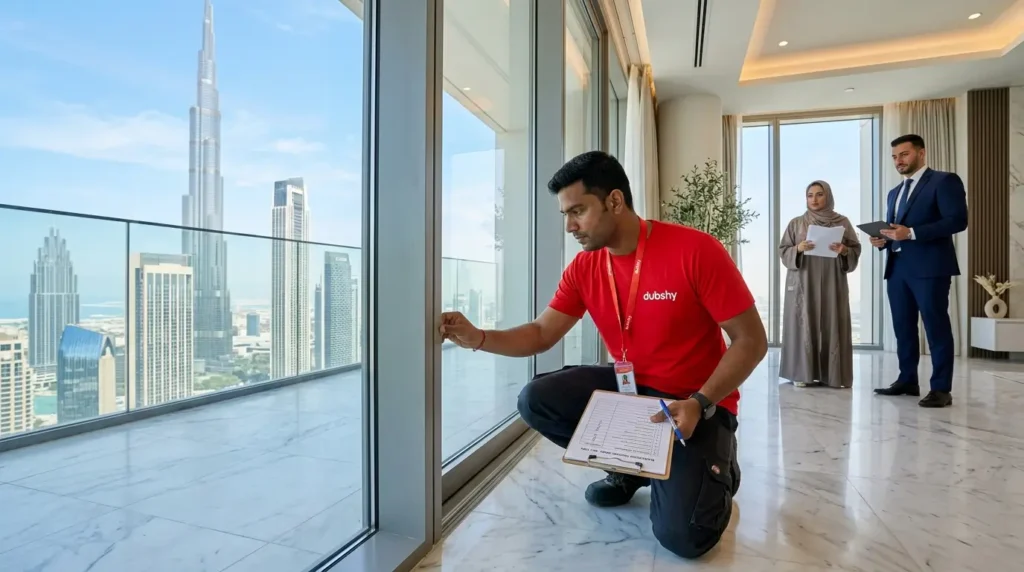
Handover Inspection Dubai: Protect Your Property Updated 8 October 2026Buyer Guide8 min read A handover inspection and a snagging inspection are not quite the same thing, even though Dubai buyers often use the terms interchangeably. Snagging is what you do to prepare, before you accept the property. The handover inspection is the documented walk-through at the moment of key transfer. Mixing them up can cost you thousands of dirhams. Snagging vs handover at a glanceDubai Snagging inspection Before or during handover Handover inspection At the official key handover Best time to book 1 to 2 weeks before handover Defect Liability Period Usually 1 year from handover In this guide What a handover inspection is What snagging is The core difference RERA and building codes After the inspection Do you need both? FAQs Conclusion With developers delivering thousands of units a year in Dubai Marina, Downtown Dubai, Dubai Hills Estate and DAMAC Hills, understanding the difference directly affects your legal rights, your leverage with the developer and the condition of the property you are paying for. This guide explains both processes, when to use each, and how to combine them to protect yourself from day one. What Is a Handover Inspection in Dubai? A handover inspection is the formal, documented walk-through that takes place when a developer hands the property to the buyer. It happens when the developer is about to release the keys but before you sign, and it records every defect in writing. It is closely tied to Dubai’s Defect Liability Period (DLP), which generally runs for one year from handover. During that time the developer must repair defects at its own expense. Your protection is strongest for defects documented at or before handover, and without a proper inspection you have little legal leverage once you sign off. During a handover inspection, a certified engineer typically checks: Structure. Walls, ceilings, columns and floors. Electrical. Switches, sockets, circuit breakers and wiring. Plumbing. Water pressure, drainage, leaks and pipe connections. HVAC and AC. Cooling performance, airflow and duct integrity. Windows and doors. Alignment, seals, locks and glazing. Kitchen and bathrooms. Tiles, fixtures, drainage and countertops. Paint. Bubbles, peeling, uneven coverage and stains. Externals. Balconies, terraces, gardens and facades. The report should include high-resolution photos of every defect, a detailed description, a severity rating and a clear action plan for the developer. Dubshy’s engineers use thermal imaging cameras and moisture meters to find what the naked eye cannot, such as moisture behind walls or AC duct leaks in ceilings. What Is Snagging in Dubai? Snagging is the slightly broader process of identifying defects, incomplete work and substandard finishes in a newly built property, typically before official handover. A “snag” is simply a defect, and a snagging inspection builds a complete list of every one. Often it is done proactively, before the developer even contacts you for the handover appointment. Instead of walking into that meeting blind, you arrive with a full snag list, so the developer knows from the start what must be fixed before you accept the keys. Common snags in Dubai new builds include: Hollow tiles that will crack under foot traffic. Uneven or poorly finished plastering and drylining. Paint patches, colour inconsistencies and brush marks. Faulty light fittings and non-working sockets. AC units that cool poorly or make noise. Bathroom fixtures that leak or drain slowly. Warped cabinet doors and misaligned carpentry. Gaps in window and door seals that let in dust and moisture. Cracked or uneven floor tiles and poorly finished grout lines. Snagging means finding every problem before you sign and before you move in, while the developer is still fully responsible for the cost. Once you sign the handover certificate, recovering those costs becomes a legal battle that many buyers lose. Handover date coming up? book an inspection Handover Inspection vs Snagging: The Core Difference Both aim to find defects. The difference lies in timing, purpose and legal context. Snagging inspection Handover inspection When Before or during handover At the official key handover Purpose Identify all defects before acceptance Document defects at the moment of transfer Who does it Independent inspector hired by the buyer An inspector, ideally independent Legal status Creates the pre-handover snag list Triggers the Defect Liability Period Leverage Maximum: the developer must fix before you sign High: the developer is responsible during the DLP Risk if skipped You may accept defects unknowingly You lose DLP protection Ideally, you do your snagging first, present the snag list at the handover inspection, and have everything officially documented on key collection day. Dubshy recommends booking your snagging inspection one to two weeks before your handover date, which gives you time to review the report, share it with the developer and arrive in full control. Why do Dubai buyers confuse the two? Many companies in Dubai use the two terms interchangeably, and often they mean the same service delivered at the same time. For most buyers, the inspection booked before collecting keys covers both: it finds every snag and doubles as handover documentation. That is fine. What matters is the thoroughness of the process and the quality of the report, not the label. Watch out for a rushed walk-through Some developers, under pressure to close their handover schedules, rush you through a walk-through and ask you to sign the handover certificate before any independent inspection has happened. Never sign without an independent, certified inspection. The Role of RERA and Dubai Building Codes RERA and the Dubai Land Department (DLD) set clear guidelines for property handovers. Developers must obtain a Building Completion Certificate (BCC) from Dubai Municipality before scheduling handovers. A BCC does not mean the property is defect-free: it only means the building has passed minimum regulatory approval. That is why independent snagging and handover inspections exist. RERA encourages buyers to put all faults on record, and a well-prepared snag report is useful evidence in disputes. If a developer will not repair known defects, you can escalate through RERA and the relevant dispute resolution channels,